

🌿 Philodendron | The Complete Growing and Care Guide
 המוצר מהמדריך זמין באתר
Philodendron Painted Lady 6 liters
145.00 ₪
המוצר מהמדריך זמין באתר
Philodendron Painted Lady 6 liters
145.00 ₪
📋 Quick Summary - Everything you need to know at a glance
Bright, indirect light
Variegated varieties need more light
Moderate
When top 2-3 cm are dry
Easy
Great for beginners
Tropical plant type
Climbing and upright
1-2 m in a pot
On support / moss pole
🌱 Getting to know the plant
Philodendron is not just one plant but an entire genus of hundreds of tropical species in the Araceae family. They all share the same simple care principles, which is why the Philodendron is considered one of the easiest and most rewarding house plants - with impressive, glossy green foliage almost all year round.
Names and Identification
- Hebrew name: Philodendron
- Scientific name: Philodendron (genus)
- English: Philodendron
- Family: Araceae
- Type: Foliage houseplant, climbing or upright
Origin and Background
It originates from the tropical rainforests of Central and South America, Mexico, and the Caribbean. In the wild, most varieties grow in the lower layer of the forest and climb tree trunks - hence their preference for filtered light and vertical support for climbing.
Unique Characteristics
- 💪 Hardy and forgiving - recovers well from slight neglect
- 🍃 Variegated foliage - heart-shaped, striped, velvety, or pink-speckled
- 🌿 Two growth habits: climbing varieties (on a moss pole) and upright/shrubby varieties
- 🏠 Air purifying and adds green volume to any corner of the house
- ⚡ Fast growth in spring and summer with proper care
⚠️ Don't be confused - Philodendron vs. similar plants
Philodendron / Pothos
Both are climbing plants with heart-shaped leaves and look very similar. The difference: Philodendron leaves have a sharp heart-shaped base and new leaves emerge from an enveloping "sheath"; Pothos has a thicker leaf and no sheath. The care is similar, so no drama if you got them mixed up.
Pink Princess / "Pink Congo"
Be careful when buying: The pink of the Pink Princess (and Pink Bikini) is a stable genetic mutation that remains. In contrast, the "Pink Congo" gets its pink from a temporary chemical treatment - and the pink fades away and turns green. At Deco Garden, we sell only the true varieties.
💚 Why choose a Philodendron?
Forgiving, requires no prior knowledge
From green climber to rare pink-speckled
Even in spots with medium light
Results visible within weeks
One cutting = a new plant in water
Green foliage that adds life
🍃 Varieties and types - What we sell at Deco Garden
Before the varieties, it's worth knowing the two growth habits - this determines if you will need a moss pole:
Climbing stems that love a moss pole or vertical support. Most varieties: Hedera-heart, Brasil, Micans, Painted Lady, Pink Princess, White Wizard.
Grow as a full, standalone shrub, without the need for support. For example: Birkin and Xanadu.
💚 Hedera / Green Heart
The classic - heart-shaped green, glossy leaves on climbing stems. The most forgiving and easy, great for beginners and hanging.
💛 Brasil
A variegated version of the Green Heart, with a lime-yellow stripe in the center of the leaf. Needs a bit more light to maintain color.
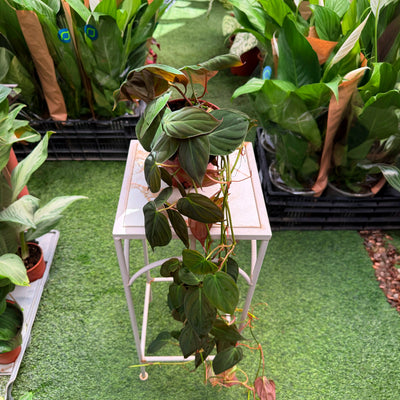
🤎 Micans
Velvety leaves in a bronze-green shade. Likes slightly more humidity and consistently moist soil (sensitive to overwatering).
🤍 Birkin
An upright and shrubby variety with thin white stripes on green leaves. Compact, needs no support.
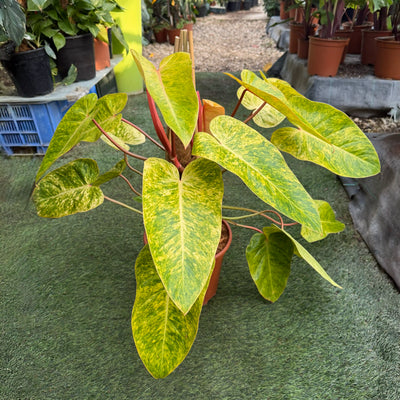
💛 Painted Lady
New leaves emerge yellow-gold and lighten to green over time - this is normal, not a problem. Beautiful pinkish stem. Climber that loves bright light.
💗 Pink Princess
The star - dark leaves with deep pink spots. The pink is genetically stable but light-dependent: too little light and the plant reverts to green.
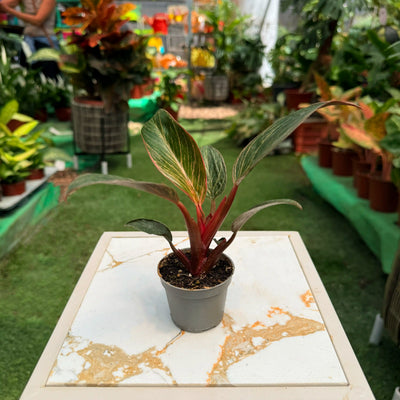
💕 Pink Bikini
A relative of the Pink Princess, with light pink splashes on green leaves. Variegated and stable, needs bright light to maintain color.
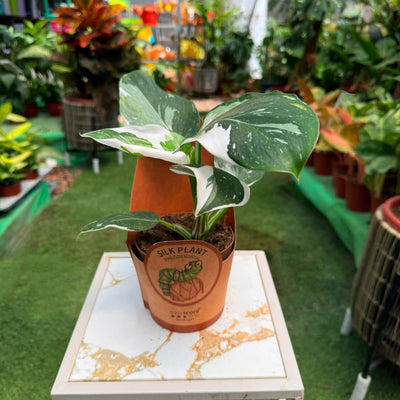
🤍 White Wizard
Dark green leaves with clean white-cream patches and a green stem. An impressive climber - give it a moss pole and bright indirect light.
🌟 Tip: The more white/pink in the leaf (less chlorophyll), the more light the variety needs - and the slower it grows. Completely green varieties are forgiving even in medium light.
🌤️ Detailed growing conditions
☀️ Light
- Bright, indirect light is ideal - an east or north window is excellent.
- In a south/west window, move it back slightly or filter with a sheer curtain - direct midday sun burns the leaves and causes spots.
- Green varieties (Green Heart, Micans) can tolerate medium light, but they grow slowly and stems become "leggy".
- Variegated varieties (Pink Princess, White Wizard, Brasil, Birkin) need more light - because the white/pink parts don't produce energy.
💧 Watering
The rule: Water when the top 2-3 cm of the soil have dried out. Stick your finger in - dry? Water. Still damp? Wait. Philodendron tolerates slight drought much better than waterlogging - overwatering and root rot are the #1 cause of failure.
About once a week, when the soil dries out on top. On hot, dry days - check more frequently.
Reduce - about every 10-14 days. The soil dries slowly, so wait.
How do you know? Yellow and soft leaves = too much water. Brown, crispy, and drooping leaves = too little. Use room-temperature water and empty the saucer so the roots don't stand in water.
🌡️ Temperature
The ideal range is 18-27°C - exactly standard home temperature. The plant is sensitive to cold and frost: do not let it drop below 13°C.
💦 Humidity
Most varieties (Green Heart, Brasil, Birkin) get along fine with standard home humidity of 40-50%. Velvety varieties like Micans prefer more - 50-60%. In the dry air of the Israeli summer and air-conditioned rooms, it's a good idea to mist the leaves occasionally or set it on a tray of pebbles and water.
🌍 Soil and Media
- Well-draining and airy soil - this is critical for preventing root rot.
- Rich in organic matter, slightly acidic (pH around 5-6).
- Good mix: potting soil for houseplants + bark/coconut chips + a bit of perlite for drainage.
- A pot with drainage holes is a must.
🌿 Fertilizing
🌸 Spring-Summer (Growing season)
Balanced houseplant fertilizer once or twice a month. This is the season when the plant grows and responds excellently to fertilization.
🍂 Autumn-Winter
Stop or dilute significantly. The plant is resting - excess fertilizer in winter only damages and burns the roots.
💡 Always fertilize on moist soil (not bone dry), and prefer a weak dose over too strong.
✂️ Pruning, Support, and Maintenance
- 🧗 Moss pole for climbing varieties: Vertical support encourages larger, healthier leaves and a tidier plant. Gently attach the stems to the pole.
- ✂️ Pruning: You can trim long stems to encourage branching and a fuller plant - save the cuttings for propagation.
- 💗 Pink Princess reverted to green? Prune back to a stem with pink leaves to encourage new pink growth, and provide more light.
- 🧽 Leaf cleaning: Wipe the broad leaves with a damp cloth occasionally - dust blocks light and attracts pests.
🌱 Propagation - Easy to multiply
Philodendron is one of the easiest plants to propagate, especially the climbing varieties. Best time: spring to late summer.
- Take a cutting about 10 cm long, just below a leaf node (the bump from which an aerial root emerges).
- Remove the lower leaves so the node is exposed.
- Place in room-temperature water, in a bright spot away from direct sun.
- Change the water every few days. Roots appear within about two weeks.
- When roots are 3-5 cm long - plant in well-draining soil, and water well the first time.
🌟 You can also stick the cutting directly into moist soil - just keep it consistently moist until rooting.
🔧 Common problems and solutions
🟡 Yellowing Leaves
Cause: Usually overwatering and root rot (or too little light).
Solution: Let the soil dry out between waterings, ensure drainage, and check that the roots are healthy.
🟤 Brown, crispy leaf edges
Cause: Dry air, too little water, or intense direct sun.
Solution: Increase humidity, water regularly, and keep away from direct midday sun.
💚 Plant turning green / losing pink
Cause: Too little light - the plant is producing chlorophyll to survive.
Solution: Move to brighter indirect light (gradually) and prune back to a variegated leaf.
📉 "Leggy" and thin stems
Cause: Too little light - the plant is stretching toward the source.
Solution: Move closer to a bright indirect light source; consider a moss pole for support.
🐛 Pests
Common pests according to the RHS and Missouri Botanical Garden: scale insects, mealybugs, spider mites, and aphids. Check the backs of leaves and leaf axils periodically.
Treatment: Wipe with a cloth dipped in water + mild soap, or spray with neem oil. Isolate an infested plant from the rest of the collection until clean.
❓ FAQ
When the top 2-3 cm of the soil have dried out - in summer about once a week, in winter every 10-14 days. It is better to underwater than to overwater.
The most common cause is overwatering. Let the soil dry out between waterings and ensure good drainage. Low light can also contribute to this.
This is a sign that it lacks light. Gradually move it to brighter (indirect) light, and prune the stem back to a leaf that is still pink - to encourage new pink growth.
Climbing varieties (most varieties) benefit greatly from a moss pole - resulting in larger leaves and a tidier plant. Upright varieties like Birkin and Xanadu do not need one.
In the summer you can keep it on a shaded balcony, but it is sensitive to cold below 13°C and strong direct sun. In mountainous and valley regions, bring it back inside for the winter. Safest - as an indoor plant all year round.
📊 Summary Table
| Category | Details |
|---|---|
| ☀️ Light | Bright and indirect; variegated varieties need more; no strong direct sun |
| 💧 Watering | When the top 2-3 cm are dry; summer ~weekly, winter every 10-14 days |
| 🌡️ Temperature | 18-27°C; not below 13°C; cold-sensitive |
| 💦 Humidity | 40-50% is enough for most; Micans likes 50-60% |
| 🌍 Soil | Well-draining and airy, slightly acidic (pH 5-6), rich in organic matter |
| 🌿 Fertilization | Spring-summer once or twice a month; stop in winter |
| 📏 Size | 1-2 m in a pot with support; in the wild it climbs much higher |
| 📊 Difficulty Level | Easy - great for beginners |
| ⭐ Special | Hundreds of varieties; climbs on moss poles; very easy to propagate |
🛒 Shop at Deco Garden
Choose your Philodendron - and everything needed for it to thrive:
🌿 Deco Garden - Love for Plants
A Philodendron is a perfect starting point for any houseplant collection - easy, impressive, and diverse. Do you have a question about your variety? The Deco Garden team is here for you. 🌱
© 2026 Deco Garden - All rights reserved
This guide was written by the expert team at Deco Garden
🛒 המוצרים מהמדריך
הצמחים והמוצרים שהמדריך מדבר עליהם — לחיצה על כרטיס מעבירה לעמוד המוצר.
-
 Philodendron Painted Lady 6 liters
145.00 ₪לעמוד המוצר
Philodendron Painted Lady 6 liters
145.00 ₪לעמוד המוצר
-
 Philodendron Pink Bikini, pot diameter 6 cm
65.00 ₪לעמוד המוצר
Philodendron Pink Bikini, pot diameter 6 cm
65.00 ₪לעמוד המוצר
-
 Philodendron White Wizard
החל מ-65.00 ₪אזל כרגעלעמוד המוצר
Philodendron White Wizard
החל מ-65.00 ₪אזל כרגעלעמוד המוצר
-
 Philodendron Pink Princess 6 liter
180.00 ₪לעמוד המוצר
Philodendron Pink Princess 6 liter
180.00 ₪לעמוד המוצר
-
 Philodendron Florida Ghost 22 cm pot diameter (6 liters)
550.00 ₪לעמוד המוצר
Philodendron Florida Ghost 22 cm pot diameter (6 liters)
550.00 ₪לעמוד המוצר
-
 Philodendron Ring of Fire 3 liter
150.00 ₪לעמוד המוצר
Philodendron Ring of Fire 3 liter
150.00 ₪לעמוד המוצר
-
 Trailing Philodendron Micans, 12 cm pot diameter
30.00 ₪לעמוד המוצר
Trailing Philodendron Micans, 12 cm pot diameter
30.00 ₪לעמוד המוצר
-
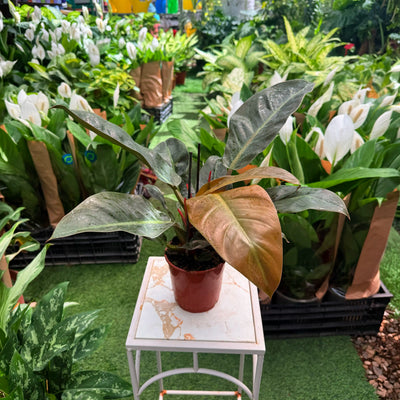 Philodendron Imperial Red, 12 cm pot diameter
30.00 ₪לעמוד המוצר
Philodendron Imperial Red, 12 cm pot diameter
30.00 ₪לעמוד המוצר


