Skip To Product Info
1 of 1
4.8 · מבוסס על 330+ ביקורות בגוגל

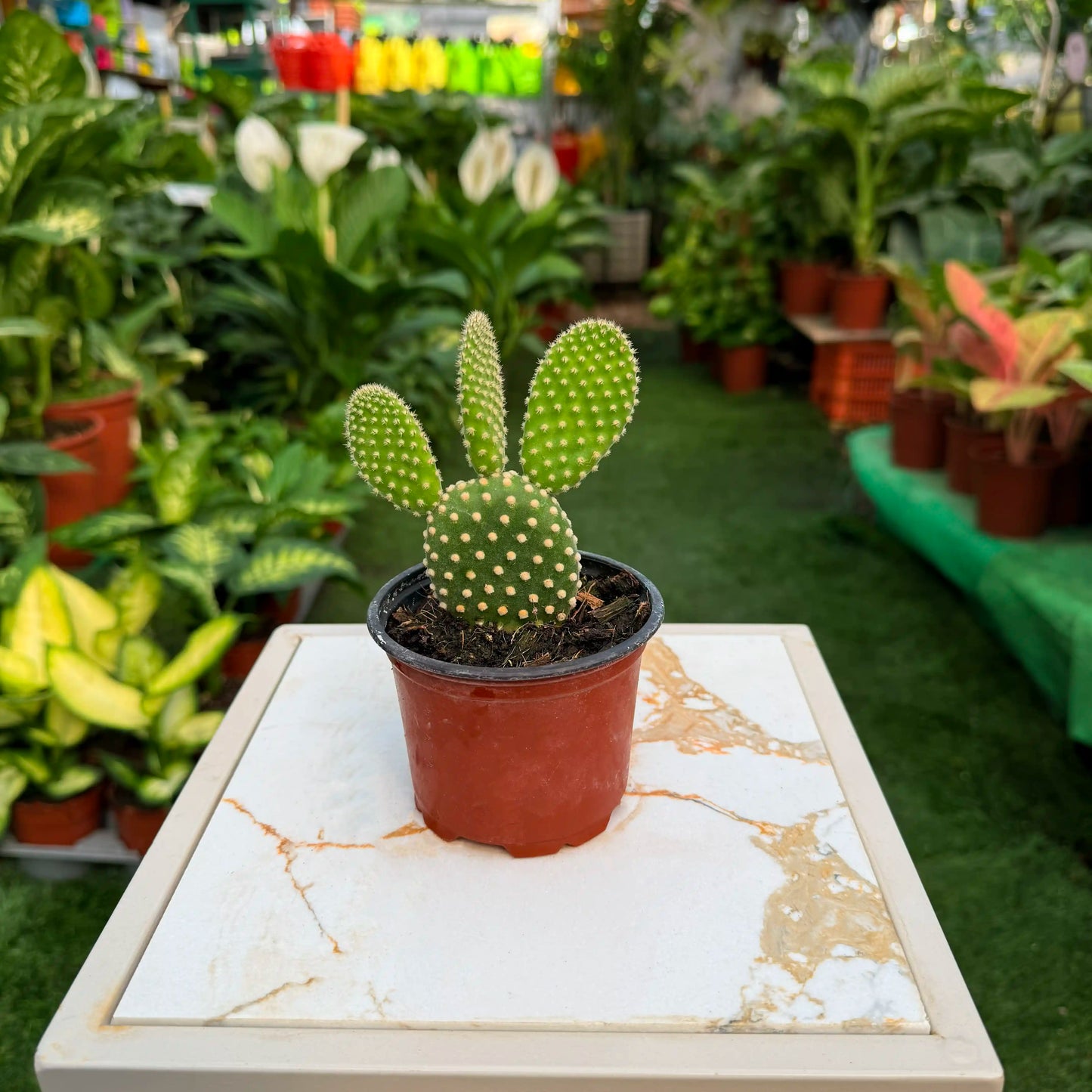
Bunny ear cactus, 9 cm pot diameter

Bunny ear cactus, 9 cm pot diameter

Regular price 30.00 ₪
Regular price Sale price 30.00 ₪
Sale Sold out
Including VAT
  • בקרת איכות מקצועית על כל מוצר לפני שליחתו
  • אריזה מוקפדת לבטיחות כל מוצר
  • משלוח עד הביתהאספקה מתבצעת בהתאם לאזורי החלוקה ולזמני האספקה
🔒 תשלום מאובטח📦 אריזה מוקפדת💬 ייעוץ אישי

לקקטוס הזה: שלושה דברים שעוזרים לטפל נכון

מומלץ
Soil for succulents and cacti - Succulent potting mixמצע 1 ליטר להעברה קטנה — מהיר ניקוז · 1 liter
13.00 ₪
Classic terracotta clay jugבחרו מידה לפי כדור השורשים והעומק — לא לפי המספר בלבד
החל מ־5.00 ₪
לבחירה
Liquid fertilizer for cacti and succulents Flower – 300 mlדשן לקקטוסים וסוקולנטים — מדללים לפי התווית
28.00 ₪
  • אורשמש מלאה
  • השקיהמעטה
  • רמת גידולקל — מתאים למתחילים
  • מיקוםBalcony and garden · Full sun
View full details

Full product description Click for description

🐰
Type
Opuntia Cactus
Flat, rounded pads
🟡
Dots
Glochids
Tiny bristles - do not touch
☀️
Light
Full sun
Also handles partial shade
💧
Watering
Minimal
Only after soil dries
😊
Difficulty
Easy
Home, balcony, and garden

🐰 Bunny Ear Cactus - flat pads with golden dots

Bunny Ear Cactus (Opuntia microdasys) in a 9 cm growing pot. The stem is formed of flat, rounded pads that grow from one another, sometimes in pairs that resemble bunny ears. The pads are densely covered in golden-yellow dots.

These dots may look soft, but they are glochids - tiny, hooked bristles that detach upon the slightest touch and stick to the skin. Therefore, handle it with gloves. Besides that, it is an easy cactus: sun, well-draining soil, and little water. Originating from northern Mexico, it is suitable for a sunny indoor window, a balcony, or a garden.

🐰 Why choose a Bunny Ear Cactus?

🐰
Unique shape

Flat, rounded pads that grow from one another, resembling bunny ears.

💧
Minimal water

A desert cactus that should only be watered after the soil has dried out completely.

🏡
Home, balcony, and garden

Suitable for a sunny window, a sunny balcony, or a garden in a well-draining spot.

🌼
Yellow blooms

In full sun, a mature plant may bloom in the spring with cream-yellow flowers.

🪴
Easy propagation

A pad separated in the spring and placed on well-draining soil will easily root and become a new plant.

🏠 Where to place it?

Important: The more sun the cactus receives, the more compact it will be and the rounder its pads will be. If a plant has been growing in the shade, move it to full sun gradually.

🪟 Sunny windowsill

South or west-facing

🌤️ Sunny balcony

After acclimation to the sun

🏡 Garden

Well-draining bed in the sun

🪴 Cactus arrangement

With other desert plants

💼 Bright office

Right next to a sunny window

⚠️ Avoid: High-traffic areas where you might accidentally brush against the plant (the glochids stick to skin and clothes), wet soil, saucers with standing water, and dark corners.

💧 Care and Watering

💧
Watering

Wait until the soil is completely dry, water thoroughly, and drain excess water.
Summer: The soil dries out faster | Winter: Water very sparingly

☀️
Light

Full sun - also tolerates partial shade.
If the plant was not in the sun, acclimate it gradually.

🌍
Soil and Pot

Fast-draining cactus mix.
A pot with a drainage hole, slightly larger than the root ball.

🌡️
Temperature

Loves heat and handles the Israeli summer well.
Strong frost may cause damage; protect it in colder areas during winter.

🧤
Safe Handling

Use thick gloves, tongs, or a folded paper strip when moving it.
Do not touch with bare hands.

📝 Important to know

🟡 Glochids

The yellow dots are clusters of tiny, hooked bristles that detach upon the slightest touch. If they stick to your skin, remove them using adhesive tape, and remove any remaining ones with tweezers.

❄️ Winter dormancy

In winter, the cactus barely grows. Water very sparingly and keep it in a bright, relatively cool (but not freezing) place - a dry winter dormancy encourages spring blooming.

📏 Elongated pads

Long, narrow, and pale pads are a sign of insufficient sunlight. Gradually move the plant to a sunnier location, and new pads will emerge rounder.

🌵 Prickly pear relative

Bunny Ear Cactus and the common Prickly Pear (Opuntia ficus-indica) belong to the same genus - Opuntia. The Prickly Pear grows into a very large bush, while the Bunny Ear remains much smaller and grows slowly.

📋 Technical Specifications

🏷️ Name Bunny Ear Cactus
🔬 Scientific Name Opuntia microdasys
🌍 Origin Northern Mexico
🪴 Pot Diameter 9 cm (growing pot)
📏 Mature Height 60-90 cm (in the garden, slow-growing)
↔️ Mature Width Up to 1.2-1.5 m (in the garden)
🌼 Flowering Spring - cream-yellow, on mature plants
☀️ Light Full sun to partial shade
💧 Watering Sparse - only after the substrate has dried
😊 Difficulty Level Easy

❓ FAQ

❓ Do the yellow spots prick?

Yes. These are glochids—tiny, hooked bristles that detach easily upon touch and stick to the skin. Do not touch with bare hands; if they get stuck, remove using adhesive tape and then tweezers.

❓ Can I grow it outdoors?

Yes. It is suitable for sunny balconies and gardens in well-drained soil, and it handles the Israeli heat well. Protect it in winter in areas with heavy frost.

❓ How often should I water?

Not on a fixed day: only after the substrate has dried out completely. Water thoroughly and drain excess; water very sparingly in winter.

❓ Why are the pads long and narrow?

It is lacking sunlight. Gradually move it to a sunnier spot, and new pads will grow rounder and more compact.

❓ How do you propagate Bunny Ears?

In the spring, detach a healthy pad (with gloves), let the cut dry for a few days, and place it on cactus soil. Water sparingly until it roots.

❓ When should I repot to a larger container?

When the roots fill the pot or the plant becomes top-heavy and unstable. Move to a slightly larger container with a drainage hole, and handle the plant using a folded strip of paper.

❓ The base of the cactus is getting soft—what happened?

Likely overwatering. Stop watering and check the drainage. If there is rot, cut away the rotten part and let the cut dry.

🐰 In short—who is this for?

The Bunny Ear Cactus is perfect for those who want an easy cactus with a unique shape and have access to sunlight—in a window, on a balcony, or in the garden. Just remember: do not touch it with bare hands.

💡 Tip: When moving the cactus, wrap it in a strip of newspaper or folded cardboard—this is how to hold it without touching the glochids.

📖

Want to dive deeper? The complete guide to the Bunny Ear Cactus

Everything you need to know about caring for the plant—light, watering, fertilizing, and common issues—in one guide.

Read the full guide ←

📘 Another useful guide: How to care for cacti and succulents by type?
With over 330 Google reviews and a 4.8⭐ rating – you’re in good hands. ♥️