

🌿 Croton | The Complete Guide to Growing and Care
 המוצר מהמדריך זמין באתר
Perennial curly croton
36.00 ₪
המוצר מהמדריך זמין באתר
Perennial curly croton
36.00 ₪
📋 Quick Summary - Everything you need to know at a glance
Lots of bright light
Includes some direct sun - essential for color
Moderate and regular
When the top layer dries out
Moderate
Sensitive to changes, but recovers
Tropical foliage shrub
Evergreen, colorful leaves
60-120 cm in a pot
Up to 3m in its natural habitat
🌱 Getting to know the plant
Names and Identification
- Hebrew name: Croton (Codiaeum)
- Scientific name: Codiaeum variegatum
- English: Croton / Garden Croton / Joseph's Coat
- Family: Euphorbiaceae
- Type: Perennial evergreen shrub for colorful foliage
Origin and Background
The Croton originates from the tropical forests of Southeast Asia, the Pacific Islands, and Northern Australia. In nature, it is a shrub that can reach a height of about 3 meters, while at home it remains compact - usually 60 to 120 cm. It is grown solely for its leaves: leathery, shiny, and exceptionally colorful, in combinations of green, yellow, orange, red, bronze, and purple with spots and stripes.
Unique Characteristics
- 🎨 Leaves in every color of autumn - green, yellow, orange, red, and purple on the same plant
- ☀️ Color depends on light - more light = intense colors; little light = reverts to green
- 🍃 Leathery and shiny leaves - can reach up to ~45 cm in length in their natural habitat
- 🌡️ Loves heat and humidity - a true tropical plant
- 🔄 Drops leaves as a shock response - to moving house, cold, or irregular watering, but usually recovers
⚠️ Please note - Confusion in names
The "Croton" houseplant we grow is Codiaeum variegatum - and not the true botanical genus named Croton (a separate genus in the same family). It is confusing because the common name in the market is "Croton". When searching for information, ensure the source discusses Codiaeum - that is the plant with the colorful leaves. It is also sold under cultivar names such as "Petra" or "Gold Dust," but they are all the same species.
💚 Why choose a Croton?
The leaves themselves provide all the color, all year round
An impressive indoor plant, and in warm areas, outdoors during the warm season
Suitable for a pot on a windowsill or a bright corner
Pruning encourages new branches and a fuller shape
Petra, Gold Dust, Curly - leaves in every shape and shade
Even after leaf drop - it stabilizes and sprouts anew
🎨 Cultivars and types at Deco Garden
All cultivars require the same care - the difference is in the shape and color of the leaf. These are the cultivars you will find with us:
🔥 Petra
The most common and familiar cultivar. Large, elliptical, and shiny leaves with yellow, orange, and red veins against a dark green background. The most colorful and dramatic of all.
✨ Gold Dust
Dark green leaves "speckled" with yellow-gold dots and spots, as if gold dust had been sprinkled on them. Delicate and clean, it blends beautifully with other green plants.
🌀 Curly
Narrow, twisted leaves that curl along their length, in shades of green-yellow-orange. A special and interesting shape that adds movement and texture.
🌤️ Detailed Growing Conditions
☀️ Light - Most important for color
- Plenty of bright light is the secret to intense colors. We recommend 4-6 hours of bright light a day, including a little direct morning sun.
- Ideal location: South or West-facing window, close to the glass.
- ⚠️ Little light = loss of color: The new leaves revert to green and the plant becomes sparse. This is the most common reason for a "boring" Croton.
- In summer, avoid strong, direct midday sun through the glass, which can scorch the leaves.
💧 Watering - Consistency above all
Keep the soil consistently moist but not saturated. Water when the top layer (1-2 cm) of soil is dry to the touch. The Croton hates both extreme dryness and "wet feet" - both cause leaf drop.
Usually every 2-3 days - the soil dries quickly in the heat and AC
Once a week or less - wait for the soil to dry out more
How do you know? Stick a finger 2-3 cm into the soil. Dry - water; moist - wait. Use room-temperature water (cold water "stresses" a tropical plant), and always use a pot with drainage.
🌡️ Temperature - Sensitive to cold
The comfortable range is 18-27°C (it certainly tolerates 15-29°C). This is a tropical plant that is not cold-hardy.
❄️ Cold warning: Below 10°C the leaves wilt and fall from "cold shock." In Israel, do not leave a Croton outside on cold winter nights, and do not place it near a cold window in winter or in front of an AC vent. Keep it away from drafts (doors, windows, AC) and sharp temperature changes - they are the number one cause of leaf drop.
💦 Humidity
- Likes medium-high humidity (around 50-70%).
- The dry air from AC in the summer and heating in the winter in Israel causes brown and dry leaf tips.
- Solutions: A pebble tray with water under the pot, a humidifier, or grouping plants together. Misting helps a little but is less effective than a humidity tray.
🌍 Soil
- Soil that is rich, well-draining, and retains moisture in balance.
- A good recipe: High-quality potting soil + 20-30% perlite for drainage.
- Prefers slightly acidic pH (5.5-6.5).
- Repot every 2-3 years or when roots fill the pot.
🌾 Fertilization
Balanced fertilizer (e.g., 10-10-10) once every two weeks. This is the period when the plant grows and produces new, colorful foliage.
Reduce significantly, and in winter, stop almost entirely - the plant is in a natural slowdown and fertilization is not needed.
💡 Tip: Fertilize only on moist soil, not dry soil, to avoid burning the roots.
✂️ Pruning and Maintenance
- Pruning for a full shape: You can prune the Croton heavily in early spring to encourage branching and fuller, denser growth.
- Cleaning leaves: Wipe dust off the shiny leaves with a damp cloth - this helps the plant absorb light and reduces pests.
- Do not move unnecessarily: The Croton "likes routine." Choose a permanent, bright spot for it and avoid frequent moving, which causes leaf drop.
🌱 Plant Propagation
Propagate relatively easily from soft stem cuttings in the summer (or air layering in the spring):
- Cut a 10-15 cm long cutting at the tip of a branch with 3-5 leaves.
- Remove the lower leaves and leave 2-3 at the top.
- Dip the end in rooting hormone (increases success chances).
- Plant in a small pot with a moist, draining mixture, and keep humidity high (you can cover it with a transparent bag like a greenhouse).
- Place in a warm, indirectly lit spot, keep moisture constant - roots will appear within a few weeks. >
🔧 Common problems and solutions
🍂 Leaf drop (Problem #1)
Cause: Shock - moving house/relocation, cold below 10°C, air draft, or irregular watering (dryness or flood).
Solution: A permanent, cold- and draft-protected spot, regular watering. The plant usually recovers and sprouts anew - do not panic.
🟢 Leaves lose color / turn green
Cause: Too little light.
Solution: Move the plant to a brighter window. Color returns in the new leaves.
🟤 Brown and dry leaf tips
Cause: Dry air (AC/heating) or low humidity.
Solution: Humidity tray/humidifier, and moving away from AC vents.
💧 Yellow and soft leaves / lower leaf drop
Cause: Overwatering and poor drainage.
Solution: Ensure drainage, wait for the soil to dry out slightly between waterings.
🐛 Pests
The Croton is particularly susceptible to pests in dry air. The most common:
- Spider mites: The most common pest, loves dry air. Signs - thin webs and light stippling on the leaves. Solution: Increase humidity, wash leaves, myrtle oil/soap.
- Mealybugs: White, cotton-like clumps in the leaf axils. Solution: Cleaning with diluted alcohol, insecticidal soap.
- Scale: Brown "buttons" on stems and leaves. Solution: Manual removal and treatment with oil/soap.
- Thrips: Causes silvery spots and distortion. Solution: Sticky traps and repeated treatment.
❓ Frequently Asked Questions
This is the plant's most common response to shock: moving to a new place, cold below 10°C, AC draft, or irregular watering (dryness or flood). Stabilize the conditions - and the plant usually sprouts anew.
Lack of light. The intense colors depend on bright light. Move the plant to a brighter window (south/west) and the color will return in the new foliage.
When the top layer (1-2 cm) dries out. In summer, usually every 2-3 days, in winter once a week or less. Keep it regular and with good drainage.
In the warm season yes, in a protected and bright spot in warm areas. But it is sensitive to frost: below 10°C it gets damaged and drops leaves. In winter, it is recommended to bring it inside or protect it, and keep it away from cold winds.
📊 Summary Table
| Category | Details |
|---|---|
| ☀️ Light | Lots of bright light, including some direct sun. Essential for color - little light leads to green foliage |
| 💧 Watering | When the top dries out (1-2 cm). Summer ~every 2-3 days, winter weekly. Do not overwater or let dry out completely |
| 🌡️ Temperature | 18-27°C. Below 10°C leads to leaf drop. Sensitive to cold and drafts |
| 💦 Humidity | Medium-high (50-70%). Dry air = brown tips |
| 🌍 Soil | Rich and well-draining + 20-30% perlite, pH 5.5-6.5 |
| 🌾 Fertilization | Spring-summer once every two weeks (balanced); stop almost entirely in winter |
| 📏 Size | 60-120 cm in a pot; up to ~3 m in nature |
| 📊 Difficulty Level | Medium - sensitive to changes but recovers |
| ⭐ Special | Intensely colorful leaves all year round, no need for blooming |
🛒 Shop at Deco Garden
🌿 Deco Garden - Love for Plants
The Croton is a burst of color for any home - and when given light, stability, and some humidity, it rewards you with spectacular foliage all year round. Have a question? The Deco Garden team is here for you.
© 2026 Deco Garden - All rights reserved
This guide was written by the Deco Garden expert team
🛒 המוצרים מהמדריך
הצמחים והמוצרים שהמדריך מדבר עליהם — לחיצה על כרטיס מעבירה לעמוד המוצר.
-
 Perennial curly croton
החל מ-36.00 ₪לעמוד המוצר
Perennial curly croton
החל מ-36.00 ₪לעמוד המוצר
-
 Croton spotted, pot diameter 24 cm (10 liters) (perennial for home and garden)
99.00 ₪לעמוד המוצר
Croton spotted, pot diameter 24 cm (10 liters) (perennial for home and garden)
99.00 ₪לעמוד המוצר
-
 Codiaeum Petra
החל מ-68.00 ₪לעמוד המוצר
Codiaeum Petra
החל מ-68.00 ₪לעמוד המוצר
-
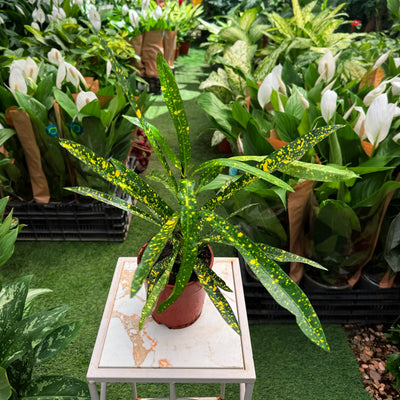 Gold Star Spotted Croton, 12 cm pot diameter
30.00 ₪לעמוד המוצר
Gold Star Spotted Croton, 12 cm pot diameter
30.00 ₪לעמוד המוצר
-
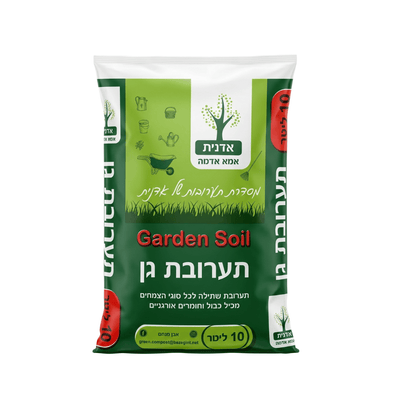 Migdal from the Northern Border 10 liter planting mix
14.00 ₪לעמוד המוצר
Migdal from the Northern Border 10 liter planting mix
14.00 ₪לעמוד המוצר
-
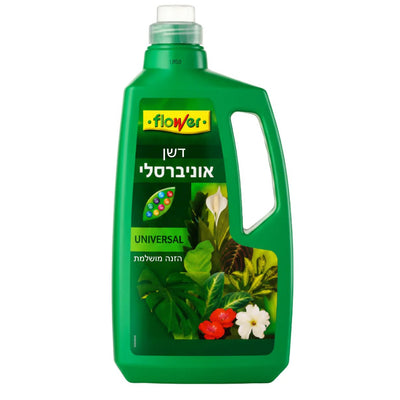 Universal Fertilizer 1.2 liters
45.00 ₪לעמוד המוצר
Universal Fertilizer 1.2 liters
45.00 ₪לעמוד המוצר
-
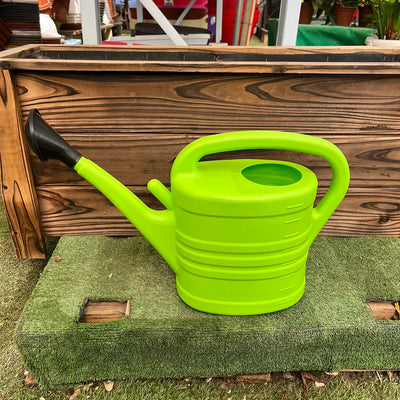 funnel
החל מ-18.00 ₪לעמוד המוצר
funnel
החל מ-18.00 ₪לעמוד המוצר


