Sansevieria Laurentii: Light, Watering, and Tailored Terracotta
 המוצר מהמדריך זמין באתר
Perennial Sansevieria for home and garden
42.00 ₪
המוצר מהמדריך זמין באתר
Perennial Sansevieria for home and garden
42.00 ₪
Sansevieria Laurentii thrives over time when the potting mix is allowed to dry, provided there is good drainage, and cold temperatures are avoided. This guide was written specifically for the Deco Garden Sansevieria in 12, 15, or 18 cm sizes, and includes a measurement table for terracotta to take the guesswork out of finding a fit.
The first week at home: Adapt first
- Place in a permanent spot: Start with indirect light, away from direct AC airflow and no noon sun through glass.
- Check before watering: Do not assume the plant is thirsty because of shipping; check the potting mix at several points and at depth.
- Leave in the nursery pot: Do not repot immediately if the drainage is fine and there are no signs of crowding.
- Do not fertilize in response to shipping: Give the plant time to stabilize before adding fertilizer or making other changes.
Light, Temperature, and Placement
RHS recommends bright light or light shade. Laurentii can adapt to low light, but growth may be slower there, and color contrast may fade. Strong noon sun without acclimatization can burn the leaves; if you want to expose it to gentle sun, do so gradually.
The comfortable range noted by RHS is approximately 15–24°C, and in winter, it is important to keep it above 10°C. Keep away from cold windows and AC drafts at home. Outdoors in Israel, grow only in a warm, sheltered spot with excellent drainage and gradual light acclimatization; local extreme weather changes the risk profile.
Watering: The potting mix dictates, not the date
The leaves and rhizomes store water. Before watering, check that the mix is well-dried even beneath the surface. When dry, water slowly until water exits the drainage hole, let the dripping finish, and empty the saucer or cachepot. In a cold or dark room, drying is slower, so do not use a fixed interval of days.
Excess water and root rot are the primary risks. Do not mist the leaves: the plant is adapted to normal to low household humidity, and droplets that remain between leaves are not a substitute for watering the soil.
Potting mix and Fertilizer
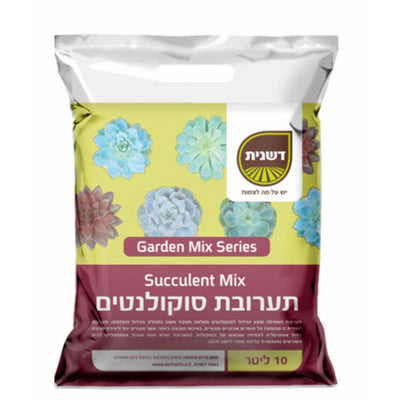
NC State and Penn State emphasize a loose, well-draining mix. When repotting, you can use a cactus and succulent potting mix, provided the drainage hole is open. There is no need to replace the mix the day the plant arrives if it is drying out and draining properly.
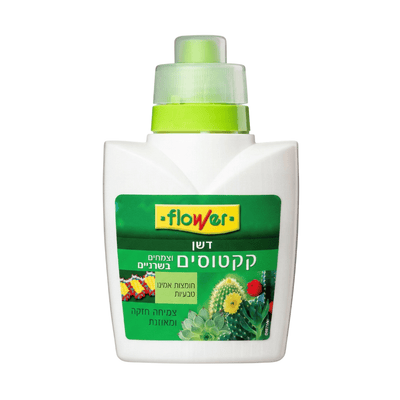
Fertilize moderately during active growth only and according to the label. Cactus fertilizer is a suitable option for measured use; fertilizer does not fix wet soil, cold, or lack of light.
When to repot, and which terracotta to check?
Sansevieria prefers a relatively snug pot. Signs to check for include roots emerging from drainage holes, a very dense root ball, a deformed container or cracked clay pot from pressure, instability, or a mix that no longer drains. Do not repot just because a certain amount of time has passed.
For repotting, start with a container whose internal diameter is about 2.5–5 cm larger than the root ball. The calculations in the table start from the nominal size of the nursery pot, so they are only a preliminary filter. The root ball may be smaller than the number on the pot.
On mobile: Slide the table sideways to see all columns.
| Nursery Pot | Internal Diameter Opening Range | Deco Garden Terracotta sizes to check | What you must measure |
|---|---|---|---|
| 12 cm | 14.5–17 cm | 15 or 17 cm are candidates only | Root ball, inner opening diameter, inner base diameter, and inner depth |
| 15 cm | 17.5–20 cm | No guaranteed size before measuring the vessels | All internal dimensions; do not rely on the external number |
| 18 cm | 20.5–23 cm | 23 cm is a candidate only | Check that the opening and base are wide enough and that there is suitable depth |
What terracotta does — and what it doesn't
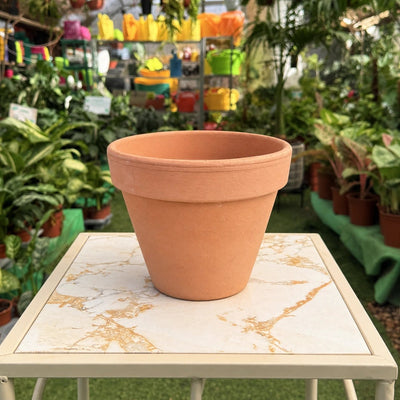
Unglazed clay is more porous than plastic, so the mix can dry out faster in it. This can help those who check humidity and water correctly, but it does not prevent rot. An oversized vessel, a blocked hole, or premature watering will still leave roots wet. Tall or heavy terracotta can add stability to upright leaves, but choose it only after measuring.
Common signs and what to check
- Soft base or unpleasant odor: Check immediately for excess water, drainage, and rot; do not add water.
- Dry brown spots on the side facing the window: Check for sudden exposure to strong sun.
- Wrinkled leaf and very dry mix: Water thoroughly once, drain, and monitor; do not compensate with frequent waterings.
- Slow growth: Check light, temperature, and season first. In low light or winter, slow pace is not necessarily a defect.
Precise shopping list
- Sansevieria Laurentii 12, 15, or 18 cm — choose the plant size.
- Cactus and succulent potting mix — only when actually repotting.
- Classic Terracotta clay vessel — no size lock until internal measurement.
- Cactus fertilizer — moderate use in the growing season and according to the label.
Frequently Asked Questions
How often do you water a Sansevieria Laurentii?
Do not work by a fixed number of days. Wait until the mix is well-dried to depth, water until drainage, and empty all excess.
Can it grow in low light?
It adapts to low light, but will usually grow slower. Bright to medium indirect light supports growth and clearer color.
Can you put it in direct sun?
Gentle sun can be suitable after gradual acclimatization. Do not move a plant from the nursery immediately into strong noon sun.
Which terracotta fits a 12, 15, or 18 cm pot?
There is no safe fit based on size name alone. Measure the root ball and the internal opening, base, and depth; the table above provides only an opening range.
When should it be moved to a larger pot?
Only after signs of crowding, roots emerging from drainage holes, a pot being pressed or cracked, instability, or a drainage problem.
Professional Sources
- Kew Plants of the World Online — Accepted name and synonym.
- Royal Horticultural Society — Light, watering, temperature, and humidity.
- RHS: Laurentii — Identification of leaves and yellow margins.
- NC State Extension — Drainage, drying between waterings, and root rot.
- Penn State Extension — Snug pot, crowding signs, and draining mix.
- University of Illinois Extension — Low humidity and watering after drying.
🛒 המוצרים מהמדריך
הצמחים והמוצרים שהמדריך מדבר עליהם — לחיצה על כרטיס מעבירה לעמוד המוצר.