🌿 Rubber Fig (Ficus elastica) | The Complete Guide to Growth and Care
 המוצר מהמדריך זמין באתר
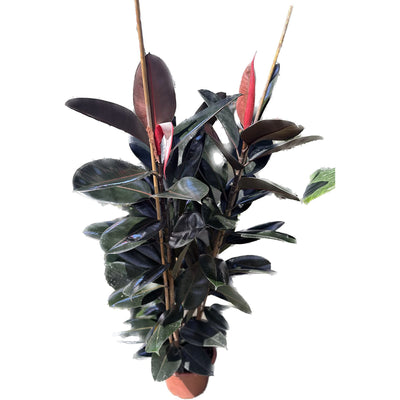
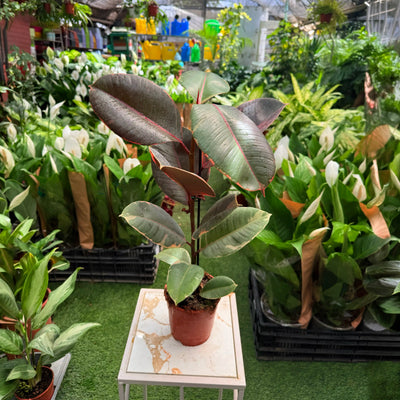
Rubber plant 10 liter
220.00 ₪
המוצר מהמדריך זמין באתר
Rubber plant 10 liter
220.00 ₪
📋 Quick Summary - Everything you need to know at a glance
Bright indirect light
6-8 hours a day
Moderate
When top 2-5 cm are dry
Easy to moderate
Forgiving, beginner-friendly
Foliage houseplant
Moraceae family
0.6-3m indoors
Up to 30m in the wild
🌱 Getting to know the plant
Names and Identification
- Hebrew Name: Ficus Gumi
- Scientific Name: Ficus elastica
- English: Rubber Plant / Rubber Fig
- Family: Moraceae
- Type: Evergreen houseplant, decorative foliage
Origin and Background
The Rubber Plant is native to Southeast Asia - from the Himalayan foothills to Malaysia, Sumatra, and Java. In the wild, it grows into a massive tree reaching dozens of meters in height, with aerial roots that descend from branches to form additional trunks. Its scientific name, elastica, refers to the milky sap (latex) that oozes from the leaves and stem, which was historically used to produce natural rubber. Indoors, it remains an impressive ornamental tree of a manageable height.
Unique Characteristics
- ✨ Thick, glossy leaves: Leathery, wax-like, large, and impressive.
- 🚀 Fast growth: Rapid growth rate under good conditions.
- 🎨 Variety of cultivars: Green, variegated, dark burgundy, and even pink.
- 💪 Hardy and forgiving: Tolerates a wide range of conditions.
- 🌳 Tree-like presence: Upright stature that fills a corner in the house.
⚠️ Don't get confused - Proper identification
The name "Rubber Plant" can sometimes be confusing. It is important to distinguish between three different plants:
- Rubber Plant (Ficus elastica) - The plant in this guide: Large, thick, glossy leaves.
- Weeping Fig (Ficus benjamina) - A "cousin" from the same family with small, drooping leaves.
- Do not rely on the English name alone.
💚 Why choose a Rubber Plant
Glossy leaves that always look well-kept
Forgiving and tolerates beginner mistakes
Reaches an impressive height in a short time
From classic green to burgundy and pink
Tolerates indirect medium light
Evergreen, does not shed seasonally
🎨 Varieties and Types
The Rubber Plant has a variety of beautiful cultivars. These are the most common and sought-after:
Robusta (Green)
The classic - large, broad, dark green leaves. The strongest and most resilient, perfect for beginners.Tineke / Variegata (Variegated)
Green leaves with cream-colored edges. Needs more light to maintain its color.Ruby (Pink)
New leaves in pink-reddish hues on a variegated background. Especially spectacular.Melany
A compact variety with relatively small dark leaves. Suitable for smaller spaces.Abidjan (Burgundy)
Leaves are nearly black-burgundy and glossy. Dramatic and elegant.Decora
Extra wide leaves with a light central vein. An impressive classic.🌤️ Detailed Growth Conditions
☀️ Light
- Bright indirect light is ideal - about 6-8 hours a day. An east or west-facing window is excellent.
- Opposite a south-facing window - move the plant about 1.5 meters away or filter the light with a thin curtain.
- Gentle morning sun is fine, but harsh direct afternoon sun can burn and scar the leaves.
- Too little light leads to small, pale leaves, large gaps between leaves, and slow growth.
- Variegated varieties (Tineke, Ruby) need more light to maintain their color.
💧 Watering
Moderate watering. The golden rule: water only when the top 2-5 cm of the soil are dry. Overwatering is the #1 cause of death for Rubber Plants.
About every 7-10 days, when the top layer dries out.
Reduce significantly - every 2-3 weeks, when the soil is dry deeper down.
How to tell? Stick a finger 3-5 cm into the soil - if dry, water; if moist, wait. Water deeply until water runs out the bottom, and empty the saucer after a few minutes so the roots don't sit in standing water.
🌡️ Temperature
- Ideal range: 16-30°C. The plant likes the steady warmth of a home.
- Do not let it drop below 13-15°C. Below 10°C causes irreversible damage.
- ⚠️ Sudden temperature changes and cold drafts (open window in winter, A/C) cause leaf drop.
- During summer, keep away from direct A/C drafts.
💦 Humidity
- Manages with standard household humidity, but prefers 40-60%.
- Sensitive to dry air - central heating in winter and A/C vents dry out the air.
- You can increase humidity with a pebble tray with water, grouping plants together, or a humidifier.
🌍 Soil
- Well-draining soil is critical - the most important factor to prevent root rot.
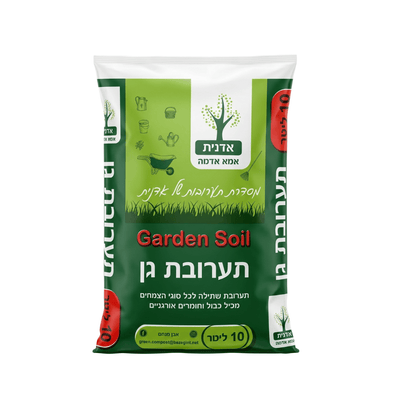
- Good mix: High-quality potting soil with perlite/vermiculite and a little coconut coir for aeration.
- Ideal pH: 6.0-7.0 (neutral to slightly acidic).
- A pot with drainage holes is a must. Replace soil and repot every 2-3 years.
🌿 Fertilization
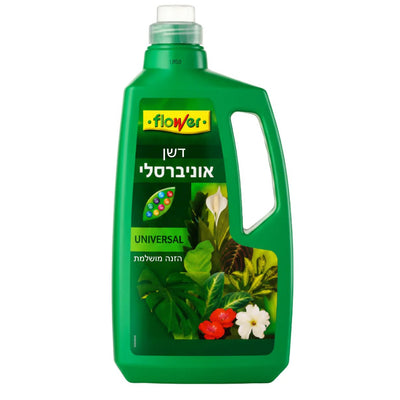
Fertilize every 2-4 weeks with a balanced liquid fertilizer at half the recommended dose. Rubber plants also respond well to nitrogen-rich fertilizers that encourage foliage.
Stop or greatly reduce fertilization. The plant barely grows, and unnecessary fertilizer causes salt buildup and tip burn.
💡 Tip: Always fertilize on moist, not dry, soil to avoid burning the roots.
✂️ Pruning and Maintenance
- Pruning for shape: Cutting the top encourages branching and a full, bushy plant. Without pruning, the plant grows tall, upright, and narrow.
- Leaf cleaning: Wipe the glossy leaves with a damp cloth every few weeks - removes dust, improves shine, and allows the plant to absorb more light.
- Rotate the plant: Rotate the pot occasionally so it grows evenly and does not lean toward the light.
- Support: A tall plant may need a stake to stay upright.
🌱 Propagation (Preparing cuttings)
Two main methods: Stem cuttings and air layering. The best time is spring to late summer.
Stem Cuttings
- Cut a 10-15 cm branch tip with 2-3 leaves.
- Rinse off the milky sap and let the cut dry for about an hour.
- Place in water or moist, draining potting medium; can be dipped in rooting hormone.
- Keep in a warm place with bright indirect light and high humidity.
- Roots usually appear within a few weeks. >
Air Layering
A successful method for tall plants: lightly score the stem, wrap in damp sphagnum moss and plastic, and wait. According to the RHS, rooting via air layering can take up to a year - patience pays off with a strong, established plant.
🔧 Common problems and solutions
🍂 Leaf drop
Cause: Overwatering, cold drafts, sudden location change, cold or low light.
Solution: Stabilize conditions, keep away from A/C or cold windows, and do not move the plant unnecessarily. Losing occasional lower leaves is natural.
💛 Yellowing leaves
Cause: Overwatering and poor drainage leading to root rot.
Solution: Reduce watering, ensure drainage holes and well-draining soil, and check that roots are healthy.
🟤 Brown and dry edges
Cause: Strong direct sun, dry air, or underwatering.
Solution: Move to filtered light, increase humidity, and ensure regular watering.
🌫️ Faded leaves and 'leggy' growth
Cause: Too little light.
Solution: Move closer to a bright window with indirect light. Variegated varieties especially need light.
🐛 Pests
Look out especially for: Scale (brown spots on stems and leaves), Mealybugs (white fluff), Spider mites (fine webs, common in dry air), as well as Aphids and Thrips. Treatment: Wiping with a damp cloth, rinsing, neem oil, or soap solution. Always check the undersides of the leaves.
❓ Frequently Asked Questions
In summer about every 7-10 days, and in winter every 2-3 weeks. The rule: water only when the top 2-5 cm of soil is dry. Better slightly underwatered than overwatered.
The most common cause is overwatering and poor drainage, which lead to root rot. Other causes for shedding: cold drafts, cold temperature, sudden change in location, or low light. Stabilize conditions and reduce watering.
Bright indirect light, about 6-8 hours a day. An east or west window is ideal. Prevent harsh direct afternoon sun that scars the leaves, but do not place it in a corner that is too dark - this leads to small leaves and slow growth.
The thick, glossy leaves accumulate dust, which blocks light and dulls the shine. A gentle wipe with a damp cloth every few weeks keeps them looking glossy and allows the plant to absorb light better.
It is primarily suited as an indoor plant. Outdoors, it can only be placed in sheltered shade in warm regions - not in direct exposure to the summer midday sun, and not in the cold or frost of winter in the mountains and valleys. In cold regions, it should be brought inside for the winter.
📊 Summary Table
| Category | Details |
|---|---|
| ☀️ Light | Bright indirect light, 6-8 hours; no direct midday sun |
| 💧 Watering | Moderate; when top 2-5 cm are dry (summer ~every 7-10 days, winter every 2-3 weeks) |
| 🌡️ Temperature | 16-30°C; not below 13-15°C; avoid cold drafts |
| 💦 Humidity | 40-60% preferred; tolerates normal household humidity |
| 🌍 Soil | Well-draining potting soil-based medium; pH 6.0-7.0 |
| 🌿 Fertilization | Spring-summer every 2-4 weeks at half dose; none in winter |
| 📏 Size | 0.6-3 m indoors (up to ~30 m in nature); fast growth |
| 📊 Difficulty Level | Easy to moderate; forgiving and suitable for beginners |
| ⭐ Special | Thick, shiny leaves; green, variegated, burgundy, and pink varieties |
🛒 Shop at Deco Garden
Everything is ready to start - the plant, the perfect pot, and the right watering:
🌿 Deco Garden - Love for Plants
Do you have a question about your Rubber Fig? Our team of experts is here for you. Order today and enjoy home delivery.
🌐 decogarden.co.il | 📧 info@decogarden.co.il
© 2026 Deco Garden - All rights reserved
The guide was written by the Deco Garden expert team
🛒 המוצרים מהמדריך
הצמחים והמוצרים שהמדריך מדבר עליהם — לחיצה על כרטיס מעבירה לעמוד המוצר.