The Comprehensive Guide to Caring for a Philodendron Imperial Red
 המוצר מהמדריך זמין באתר
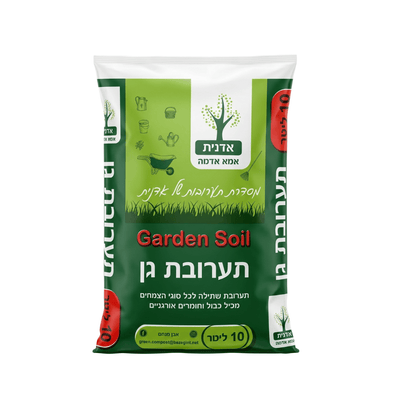
Migdal from the Northern Border 10 liter planting mix
14.00 ₪
המוצר מהמדריך זמין באתר
Migdal from the Northern Border 10 liter planting mix
14.00 ₪
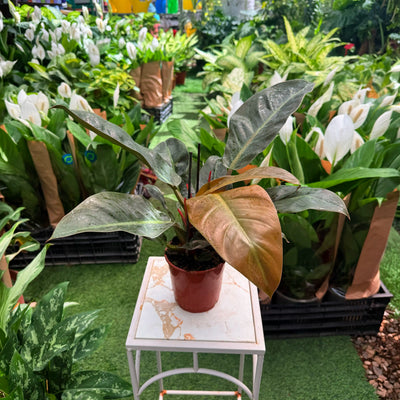
Philodendron 'Imperial Red' is an upright, dense hybrid cultivar that does not require a climbing pole. Its young leaves emerge in shades of brownish-burgundy and mature to dark green with a maroon hue, allowing the plant to display multiple color stages simultaneously.[1][2][3]
The plant patent record explicitly states that the parentage is unknown. Therefore, this guide uses the verified cultivar name and does not attribute unproven parent species to it. Care is based on the plant's patent registration and institutional guidelines for indoor philodendrons.[1][2][3]
Imperial Red Quick Care
| Light | Bright indirect light to maintain dense growth and leaf colors; avoid direct summer sun.[3][2] |
|---|---|
| Watering | Water after the top of the substrate has dried slightly, until full drainage occurs.[3][4] |
| Substrate | A rich yet aerated and well-draining mix, in a pot with drainage holes.[3][4] |
| Temperature | Consistent household warmth; keep away from heat sources and air conditioning drafts.[3][2] |
| Structure | Upright, self-supporting rosette growth; no moss pole required.[1][2] |
Light that Maintains Color and Compact Growth
Place near a bright window with filtered light. Prolonged lack of light causes petioles to elongate and results in a more open appearance, while direct summer sun can cause scorching. Positioned behind a sheer curtain or at an appropriate distance from the window provides a good balance.[2][3][4]
UF/IFAS production studies have found that philodendrons can tolerate low light, but higher light levels within the appropriate range better maintain leaf color and size. Direct sun is not required to achieve this.[2][3][4]
Water by Substrate, Not by Day of the Week
Insert a finger into the substrate to check if the top layer has dried slightly. If so, water slowly until water exits the drainage holes and empty any cachepot or saucer. If the substrate is still moist and cool, wait.[3][4][2]
Yellow leaves accompanied by consistently wet substrate indicate overwatering; drooping leaves in very dry substrate indicate dehydration. The same sign can arise from different causes, so check the substrate before taking action.[3][4][2]
Temperature and Humidity at Home
Imperial Red prefers a warm, stable environment. Keep above 15°C (59°F) and keep away from cold drafts, radiators, and direct air conditioning. Sharp temperature changes can cause lower leaves to yellow.[3][2][4]
Average household humidity is usually sufficient for a philodendron, provided the roots receive water on time and the plant is not in front of a drying air current. There is no need to mist the leaves daily.[3][2][4]
Substrate, Drainage, and Repotting
Use an organic, well-draining substrate with coarse particles that create air pockets. A pot with holes is a basic requirement; a layer of stones at the bottom is not a substitute for a drainage hole.[3][4]
Repot only when the roots fill the container or the substrate has lost its structure, moving to a pot only a few centimeters larger in diameter. A pot that is too large stays wet and increases the risk of rot.[3][4]
Fertilizing Without Excess Salts
During active growth, you can use a general houseplant fertilizer according to the label and at a conservative dosage. If light is weak or the plant is still acclimating, wait; fertilizer does not compensate for lack of light.[3][2]
UF/IFAS recommends avoiding fertilization immediately after a new placement to avoid adding stress. Burnt edges and white crust on the substrate may indicate salts; in such cases, flush with water and temporarily stop fertilizing.[3][2]
Cleaning, Pruning, and Rotating
Wipe dust from the leaves with a damp cloth to allow for light absorption, and check the undersides of the leaves at the same time. Remove only dead or damaged leaves with clean scissors.[3][1]
Rotate the pot a quarter turn occasionally if the plant leans toward the window. The rosette structure of Imperial Red is self-supporting, so vertical support is not part of routine care.[3][1]
What the Original Cultivar Registration Teaches Us
The plant patent described 'Imperial Red' as a rosette, compact plant with short internodes, featuring maroon-brown young leaves and maroon-green mature leaves. Observations were made on greenhouse plants about one year old and showed that the characteristics were maintained through tissue culture propagation.[1][2]
The same document notes that the cultivar was found among hundreds of random seedlings and that the parents were unknown. This is an important research detail: online trade names attributing specific parentage are not sufficient evidence, and therefore, this guide does not repeat them.[1][2]
Acclimation to a New Home
During the first few weeks, maintain a permanent location, check the substrate, and do not fertilize. One old leaf yellowing after a transition is not necessarily a sign of disease; look for trends in new growth and root health.[2][3]
If changing light, do so gradually. Making one change at a time allows you to determine whether the problem was lighting, water, or temperature.[2][3]
Troubleshooting Imperial Red
- Sign
- Spots, stickiness, or white clumps
- Possible cause
- Spider mites, mealybugs, or scale insects.
- Action
- Isolate, inspect under leaves and at petiole junctions, remove infestations, and treat with a labeled product if necessary.[3]
Frequently Asked Questions
How much light does a Philodendron 'Imperial Red' need?
Bright indirect light. It can tolerate less light, but better lighting within the safe range maintains color, size, and dense structure.[2][3]
When should I water 'Imperial Red'?
When the top of the substrate has dried slightly. Water until drainage occurs and empty any standing water.[3][4]
Does it need a moss pole?
No. The cultivar registration describes a rosette, self-supporting growth, unlike a climbing philodendron.[1][2]
Why are the new leaves red and then turn green?
This is a characteristic of the cultivar: young leaves emerge in maroon shades and mature to a dark maroon-green.[1][3]
Why are the leaves yellowing?
Overwatering, poor drainage, and cold are common reasons. Check the substrate and temperature before watering again.[3][2]
When should I repot?
When the roots fill the container or the substrate has broken down. Choose a pot that is only a few centimeters larger.[3]
Can I fertilize immediately after purchase?
It is better to wait for acclimation and active growth. UF/IFAS recommends not adding the stress of repotting and fertilizing together.[2]
Plant and Products Suitable for this Guide

Philodendron 'Imperial Red' 12cm Pot
The plant discussed in this guide, when in stock.
₪30.00
View product
Trailing Philodendron 'Micans' 12cm Pot
Another philodendron suitable for a bright indoor corner with indirect light.
₪30.00
View product
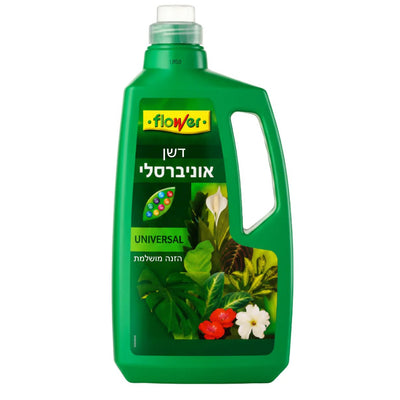
Universal Fertilizer 1.2 Liter
For measured fertilization during active growth only, according to product and guide instructions.
₪45.00
View productSources and Verification
- USPP6337P — Philodendron plant named Imperial Red
- Cultural Guidelines for Commercial Production of Interiorscape Philodendron
- How to grow philodendrons
- Philodendron
Updated:
🛒 המוצרים מהמדריך
הצמחים והמוצרים שהמדריך מדבר עליהם — לחיצה על כרטיס מעבירה לעמוד המוצר.