

🌼 Jasmine | The Complete Guide to Growing and Care
 המוצר מהמדריך זמין באתר
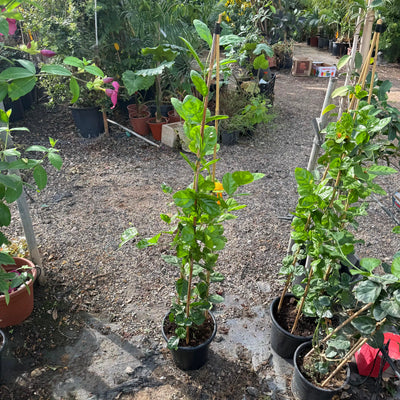
Arabian Jasmine (Sambac) Pot 24 cm (10 liters) (Perennial for the Garden)
115.00 ₪
Jasmine is one of the most beloved fragrant climbers in Israeli gardens: small white flowers that open towards evening, filling the entire yard with a sweet perfume. It is generous, fast-growing, and climbs easily on a pergola or trellis. In this guide, you will find everything you need for proper care — light, watering, pruning after flowering, the varieties grown by Deco Garden, and an important warning about "fake jasmines" that are similar in name but are entirely different plants.
📋 Quick Summary - Everything you need to know at a glance
Full sun to partial shade
6 hours of sun for full bloom
Regular during establishment
Once or twice a week in summer
Easy
Generous and rewarding climber
Fragrant perennial climber
Oleaceae family
2.5-9 m
Depends on variety and pruning
⚠️ Note: The data here refers to True Jasmine (Jasminum).
🌱 Plant Introduction
Names and Identification
- Hebrew name: Yasmin
- Scientific name: Jasminum (genus)
- English: Jasmine
- Family: Oleaceae
- Type: Perennial climbing shrub, fragrant
Origin and Background
The Jasmine genus includes about 200 species originating mainly from Asia, the Middle East, and Africa. These are twining climbers or shrubs with small, usually white or light-pink flowers, famous worldwide for their sweet and intense perfume — especially towards evening. In Israel, Jasmine is a classic for gardens, pergolas, and entrances, and is also a base for perfumes and jasmine tea.
Unique Characteristics
- 🌸 Intense, sweet scent — one vine can perfume an entire garden or room
- 🌙 Blooms towards evening — the perfume strengthens at twilight and night
- 🧗 Twining climber — climbs on trellises, pergolas, or wires on its own
- ⚡ Fast growth — covers a fence or gate in one or two seasons
- 🌿 Evergreen in most varieties under Israeli climate conditions
- 🐝 Attracts pollinators and offers repeat blooming over a long season
⚠️ Important: "Fake Jasmines" — other plants with similar names
Several plants are sold or mistakenly called "Jasmine" even though they do not belong to the Jasminum genus.
☠️ Carolina Jasmine (Gelsemium)
A climber with yellow flowers. This is not a true jasmine.
🌟 Star Jasmine (Trachelospermum)
"Star jasmine" — a popular climber with white star-shaped flowers and a pleasant scent.
🌃 Night-blooming Jasmine (Cestrum nocturnum)
A shrub with a strong nighttime scent, from the Solanaceae family.
💡 The rule: Do not rely on the common name alone — verify the scientific name.
💚 Why choose Jasmine for your garden?
Scents the entire yard, especially on summer evenings
Green and flowering coverage on pergolas or grates
Loves sun and is resistant to summer heat
Beautiful results by the first season
Plant once and enjoy for years
🌼 Jasmine varieties grown by Deco Garden
At Deco Garden you will find the leading fragrant climbers — each with its own character:
Common Jasmine
Jasminum officinale / grandiflorum
The "classic" garden jasmine — a vigorous climber with white star-shaped flowers and a sweet scent from spring to autumn. Relatively cold-resistant and excellent for open gardens, pergolas, and fences.
Arabian Jasmine / Sambac
Jasminum sambac
Evergreen with round white flowers and an exceptionally rich scent, blooming in summer and intermittently throughout the year. Loves heat and is sensitive to cold — in colder places, it is better in a portable pot. This is the jasmine used for the famous jasmine tea.
Maid of Orleans Jasmine
Jasminum sambac 'Maid of Orleans'
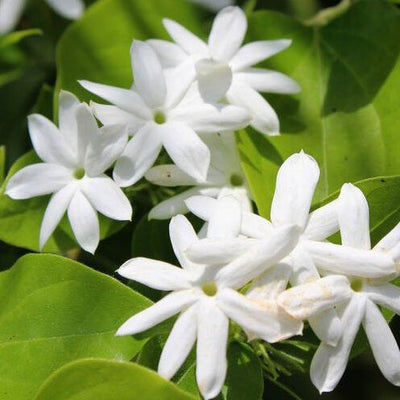
A beloved Sambac variety with white flowers and an intense, sweet perfume, among the most fragrant varieties. Blooms over a long season and is excellent for a balcony, a large pot, or next to a seating area in the garden.
🌤️ Detailed growing conditions
☀️ Light
- Full sun to partial shade. For rich flowering, aim for at least 6 hours of sun per day.
- The more sun, the more flowers and the stronger the scent.
- In the hot Israeli summer, light shading during the hottest noon hours protects the foliage, especially for potted Arabian (Sambac) Jasmine.
💧 Watering
Jasmine likes moderate moisture and well-drained soil — not completely dry, and not waterlogged. In the first year, until established, regular watering is important; after establishment, it is more drought-resistant.
Once or twice a week, when the top layer of soil (about 2-3 cm) dries out. Pots dry out quickly — check often.
Reduce significantly. Rain is usually enough in the garden; in pots, water only when the soil dries out to prevent root rot.
How to know? Poke a finger into the soil. Dry 2-3 cm down = time to water. Wilted or yellow leaves with wet soil = overwatering and risk of rot.
🌡️ Temperature and cold resistance
- Common Jasmine (J. officinale): Cold-resistant (down to hardiness zone 7, about -15°C) — suitable for open gardens almost everywhere in Israel, including cooler mountainous areas.
- Arabian / Sambac Jasmine (J. sambac): Sensitive to cold, needs a minimum of about 5°C. In cold areas (Galilee, mountains, frost-prone valleys), it is best to grow in a portable pot that can be brought inside in winter, or protect it on cold nights.
- Severe cold causes leaf yellowing, shedding, and damage to flowering — keep an eye on the forecast in mountainous regions.
💦 Humidity
In the Israeli garden, natural humidity is usually sufficient. Sambac Jasmine, which likes more humid air, can be sprayed with a little water during the peak dryness and heatwaves of summer — this also helps deter spider mites.
🌍 Soil and medium
- Fertile and well-drained soil enriched with organic matter (compost) — though the plant can also tolerate average soil.
- Drainage is critical: heavy soil that remains wet endangers the roots.
- In pots — high-quality potting mix, a pot with a diameter of 40 cm or more with good drainage holes, and a drainage layer at the bottom.
🌿 Fertilization
🌸 Spring-Summer (Growth and flowering season)
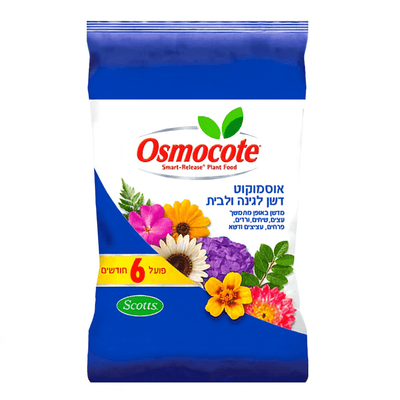
Fertilize during the growing season. A potassium-rich liquid fertilizer (e.g., tomato fertilizer) encourages rich flowering — apply once every two to three weeks with watering. For potted Arabian Jasmine, a low-nitrogen fertilizer once a month is fine.
🍂 Autumn-Winter (Dormancy)
Stop fertilization almost completely during the cold months, when the plant slows its growth. Resume fertilization with the spring awakening.
💡 In open gardens, an annual mulch around the base is usually sufficient to nourish the soil over time.
✂️ Pruning and maintenance
The golden rule: prune immediately after flowering. This gives the new growth time to mature and bloom again in the next season.
⏰ When to prune
For summer varieties (Common/Sambac) — immediately after the flush of flowers, at the end of summer or early autumn. In Israel, it is also customary to shape at the end of winter / beginning of spring before new growth.
🌿 How to prune
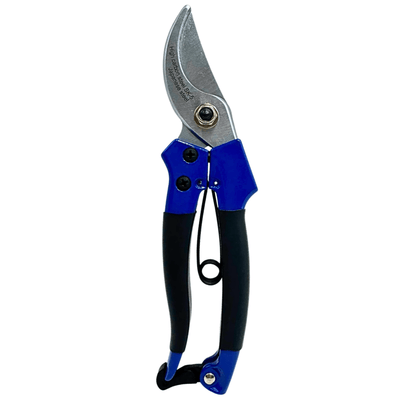
Shorten branches that have finished flowering back to a lower, stronger side branch, thin out dense, damaged, or weak branches, and guide the growth along the trellis or pergola.
🧗 Support and guidance
Jasmine is a twining climber — attach young branches to a trellis, wires, or pergola and twine them gently. Good support from the start = a tidy, flowering plant.
🌱 Jasmine propagation
The most convenient way to propagate jasmine is through semi-hardwood cuttings in summer:
- Cut a 10-15 cm long cutting from a healthy branch of the current year, just below a leaf node.
- Remove the lower leaves and leave 2-3 leaves at the tip.
- Optionally dip the base in rooting hormone to accelerate root growth.
- Insert into moist, well-drained medium (e.g., perlite + peat), in a bright place without direct sun.
- Keep moist and cover with a bag/dome to create humidity — roots usually appear within a few weeks.
💡 Another particularly simple method: Layering — pull a flexible branch down to the ground, cover a part of it with soil, and wait for it to root before detaching from the mother plant.
🔧 Common problems and solutions
🍂 Yellowing leaves
Cause: Usually overwatering and waterlogged soil, sometimes iron deficiency or cold.
Solution: Improve drainage, reduce watering, and feed with chelated iron if necessary.
🌸 Few flowers or no blooms
Cause: Not enough sun, excess nitrogen, or pruning at the wrong time (removing buds).
Solution: More sun, potassium-rich fertilizer, and prune only after flowering.
🌿 Wild and tangled growth
Cause: Fast growth without guidance and support.
Solution: Shaping pruning after flowering and ongoing guidance to the trellis/pergola.
💧 Brown / wilted leaf tips
Cause: Extreme dryness, heatwaves, or neglected watering in potted plants.
Solution: More regular watering in summer, light afternoon shading, and misting for the Arabian jasmine (Jasminum sambac).
🐛 Common Pests
Garden jasmine is generally quite hardy; most pests appear primarily on potted plants, indoors, or in greenhouses:
On soft shoots and buds — wash off with a jet of water or insecticidal soap.
Bumps on stems and leaves — remove manually or with horticultural oil.
White "fluff" in leaf axils — insecticidal soap/oil and spot cleaning.
Common on indoor plants — yellow sticky traps and insecticidal soap.
In hot, dry air — spray with water, increase humidity, and treat early.
❓ FAQ
In summer, usually once or twice a week, when the top layer of soil (2-3 cm) dries out. During the first year, water more frequently until rooted; reduce significantly in winter.
Three main reasons: too little sun (needs about 6 hours), excess nitrogen fertilizer which encourages leaves at the expense of flowers, or pruning at the wrong time, which removed the buds. Prune only after blooming.
Immediately after the plant finishes blooming (for summer varieties — late summer/early autumn). This allows the new growth to mature and bloom next season. In Israel, it is also common to shape them at the end of winter.
Absolutely. Use a pot with a diameter of 40 cm or more with good drainage, provide a trellis or wires for climbing, and ensure regular watering in summer. Arabian jasmine is particularly suitable for balconies due to its scent and manageable size.
Jasmine flowers release most of their fragrance toward evening and night to attract nocturnal pollinators. Therefore, it is best to plant jasmine near a seating area or window to enjoy the scent during the twilight hours.
📊 Summary Table
| Category | Details |
|---|---|
| ☀️ Light | Full sun to partial shade; 6 hours of sun for full bloom |
| 💧 Watering | Regular during establishment; once or twice a week in summer; low in winter |
| 🌡️ Temperature | Common — cold hardy; Sambac — sensitive, min approx 5°C |
| 💦 Humidity | Moderate; misting for Sambac during peak dryness |
| 🌍 Soil | Fertile, well-draining, enriched with organic matter |
| 🌿 Fertilization | Spring-Summer: High-potassium fertilizer; Winter: None |
| 📏 Size | Sambac 2.5-4m; Common up to 6-9m (controlled by pruning) |
| ✂️ Pruning | Immediately after blooming |
| 📊 Difficulty | Easy — a generous and fast climber |
| 🌟 Special | Intense fragrance that intensifies at night; climbs pergolas and trellises |
🛒 Shop at Deco Garden
Bring the fragrance of jasmine to your garden — high-quality seedlings in 24 cm pots (10 liters), perennials for the garden:
🌿 Deco Garden - Love for Plants
Do you have a question about growing jasmine or choosing the right climber for your garden? The Deco Garden team is here to help — with nationwide home delivery.
© 2026 Deco Garden - All rights reserved
This guide was written by the Deco Garden expert team
🛒 המוצרים מהמדריך
הצמחים והמוצרים שהמדריך מדבר עליהם — לחיצה על כרטיס מעבירה לעמוד המוצר.
-
 Arabian Jasmine (Sambac) Pot 24 cm (10 liters) (Perennial for the Garden)
115.00 ₪לעמוד המוצר
-
 Jasmine Light (Orleans) 10 liters
115.00 ₪אזל כרגעלעמוד המוצר
-
 Potting mix, planting soil, fertilizer-enriched
החל מ-22.50 ₪לעמוד המוצר
-
 Osmocote fertilizer for garden and home, active for 6 months
החל מ-65.00 ₪לעמוד המוצר
-
 B-4282 manual bypass pruner
49.99 ₪לעמוד המוצר

