

How to train ivy and climbing plants on a wall without damaging the plant
 המוצר מהמדריך זמין באתר
Trailing ivy
25.00 ₪
A Practical Guide by Deco Garden
A good trellis doesn't make a plant climb on its own. First, identify how the plant attaches itself, then choose the right support, distance from the wall, and ties that won't strangle the stem. This is how you achieve neat coverage that is also easy to maintain.
First, check how the plant attaches
Climbing plants have different methods of attachment. The support must be suited to the method, the weight of the mature plant, and the surface it is being installed on.
Twining stems
The stem twines around a pole, wire, trellis, or net. Honeysuckle and Wisteria are examples. Provide continuous anchor points and guide young growth as needed.
Tendrils or petioles
These slender parts seek narrow support. Wires, netting, and thin lattices are better suited than wide, smooth surfaces. Grapevines, peas, and clematis use these methods.
Aerial roots or adhesive pads
True ivy and similar climbers can adhere to a surface. A sound, rough wall allows for attachment, but a net set away from the wall provides more control and reduces direct contact with the siding.
Measurements to keep in mind
- From wall to support: The RHS recommends keeping supports about 5 cm away from the wall or fence to allow for free growth. On wood or plaster, professional sources from the University of Illinois recommend a larger gap of about 10–15 cm to improve ventilation and allow for maintenance.
- Between support wires: In a wire system, a spacing of about 30–45 cm is a standard starting point. Adjust based on leaf size, internode length, and plant weight.
- From wall to plant: When planting in front of a solid wall, usually leave about 30–45 cm for the plant's base. This gives the roots space and helps the plant receive rainfall in areas located outside the wall's "rain shadow."
Before drilling or attaching
Check the wall material, locate electrical and water lines, and determine the expected weight of the plant when wet and mature. Use anchors and fasteners appropriate for the surface. For wood siding, delicate plaster, or old walls, consult an installer; plastic netting is not a substitute for a sturdy frame.
Installation and training — step by step
- Plan the coverage: Measure width and height, leave access for windows, gutters, shutters, and maintenance points, and choose a support suited to the mature weight.
- Set up the frame: Stretch the netting between posts or on fasteners spaced away from the wall. Stretch it evenly, without distorting the mesh and without relying on the plant branches as anchors.
- Spread the branches: Arrange several main stems in a fan shape. Do not pull stiff stems at a sharp angle and do not forcefully detach existing growth.
- Tie softly: For the stem, use soft twine or wide plant ties in a loose figure-eight shape between the stem and the support. Metal wire, even if coated, is better suited for securing the net to the frame rather than for a tight loop around a stem.
- Re-check: Every few weeks during the growing season, check that the ties are not constricting, guide new growth, and prune branches advancing toward windows, gutters, or under siding.
A proper support kit
The TRELLINET netting in our store is made of extruded polypropylene, is UV-treated, and features 20 × 20 cm openings according to the manufacturer. It is particularly suitable for guiding beans, peas, cucumbers, and young climbers that grasp their support. For true ivy, use it as a frame and guide the stems with soft ties.
Frequently asked questions
Ready to measure the wall?
Measure the width and height, check the surface type, and choose the net width. If the plant is already large and heavy, plan a suitable frame first.
Choose support netting🛒 המוצרים מהמדריך
הצמחים והמוצרים שהמדריך מדבר עליהם — לחיצה על כרטיס מעבירה לעמוד המוצר.
-
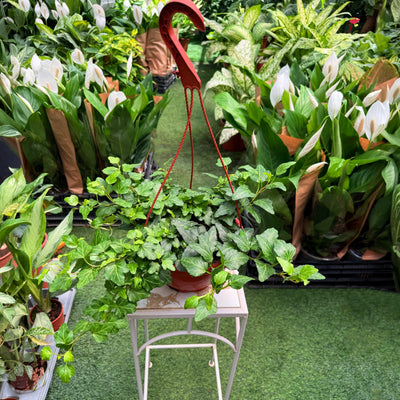 Trailing ivy
החל מ-25.00 ₪לעמוד המוצר
-
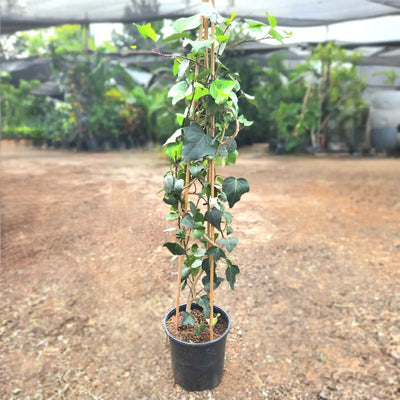 Woodland Ivy 10 liters
115.00 ₪לעמוד המוצר
-
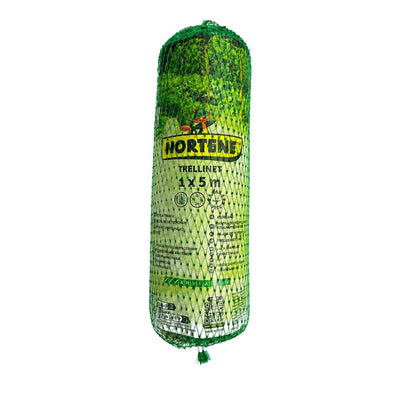 Support netting for climbing plants 5 meters
החל מ-39.00 ₪אזל כרגעלעמוד המוצר
-
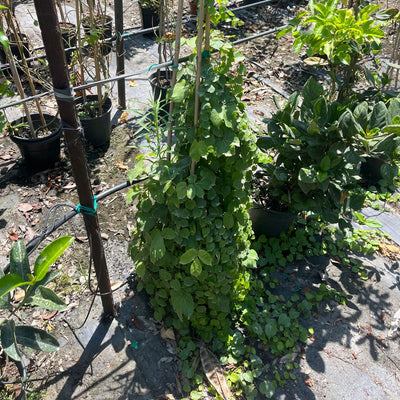 Triangular vine, pot diameter 24 cm (10 liters) (perennial for the garden)
115.00 ₪לעמוד המוצר
-
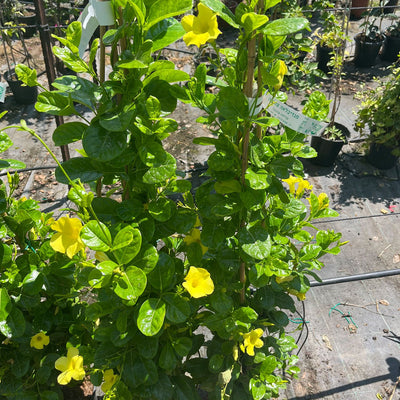 Mandevilla 10 liters
115.00 ₪אזל כרגעלעמוד המוצר
-
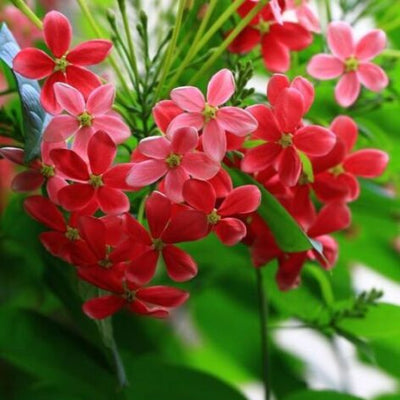 Indian alder pot 24 cm (10 liters) (perennial for the garden)
135.00 ₪לעמוד המוצר
-
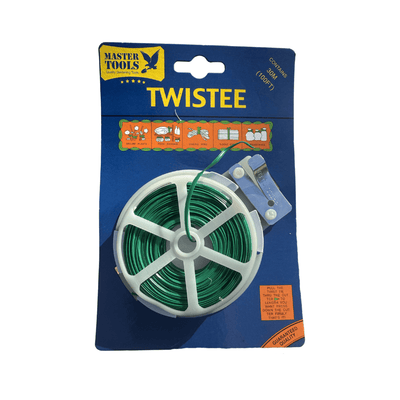 Green iron tying wire - 30 meters
14.90 ₪לעמוד המוצר
-
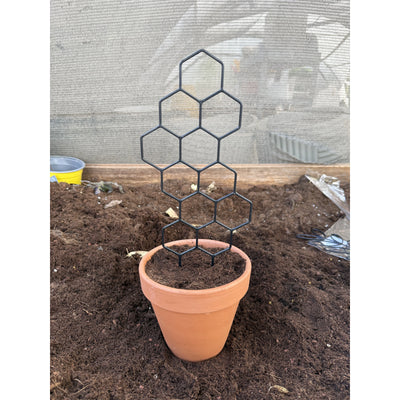 Plastic trellis for climbers 30×13 cm – honeycomb or flower
14.00 ₪לעמוד המוצר
