Pilea peperomioides – The Complete Care Guide
 המוצר מהמדריך זמין באתר
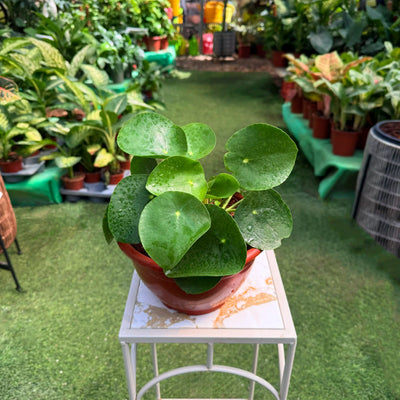
Peperomia polybotrya bowl 20 cm diameter
75.00 ₪
המוצר מהמדריך זמין באתר
Peperomia polybotrya bowl 20 cm diameter
75.00 ₪
Deco Garden | Growing Guides
If you're looking for the "Pancake Plant" or "UFO Plant" – this is it. This guide will explain everything you need to know!
Who is the Pilea, really?
Pilea peperomioides – its scientific name comes from its resemblance to a peperomia (another charming houseplant), but botanically it belongs to the nettle family (Urticaceae). It originates from southwest China, Yunnan province, where it grows in the shade of mountains.
In the 1960s, a Norwegian missionary named Agnar Espegren brought it from China to Europe, and from there it gradually spread across the world – mainly through sharing "pups" among neighbors and friends. Until the 2010s, it was barely available for purchase; today it is a global star!
Want to bring a Pilea home? We sell healthy and lush Pilea peperomioides:
🛒 To Pilea peperomioides in the shop ←Why is everyone crazy about it?
The Pilea is not just a pretty plant – it is also an experience:
- ⭕ Coin-shaped leaves – A unique leaf shape not found in any other plant. Nature's "pancake"!
- 🪙 A symbol of luck and wealth – According to Chinese belief, round leaves like coins bring abundance and wealth to the home.
- 🍼 Keeps on giving! – Every few months, small pups pop up from the soil. In no time, you'll have Pileas for the whole house.
- 📸 Photogenic – One of the most photographed plants on Instagram. Every photo turns out stunning!
Growing conditions – what does the Pilea need?
| Parameter | Requirement | Explanation |
|---|---|---|
| ☀️ Lighting | Bright indirect light | Window with a curtain, no direct sun |
| 💧 Watering | 100-150 ml / 5-7 days | When the soil dries out on top |
| 🌡️ Temperature | 15-30°C | Normal room temperature |
| 💦 Humidity | Moderate | Occasional misting is beneficial | 🌱 Soil | Light and well-draining | Potting mix + perlite + drainage |
| 🪴 Repotting | Every 1-2 years | When roots come out of the drainage hole |
☀️ Lighting – where to place?
The Pilea loves lots of indirect light. Next to an east-facing window (soft morning sun) or a north-facing window is perfect. A south-facing window requires a curtain. Direct sun scorches the tender leaves and leaves yellow-brown burns that do not go away.
💧 Watering – how much and when?
About 100-150 ml (a small cup) every 5-7 days in the summer, and every 10-14 days in the winter. The best way to know when to water? The Pilea will tell you:
- 🟢 Upright and shiny leaves – everything is fine!
- 🟡 Droopy and sagging leaves – it's thirsty! Water now. Within hours you will see them perk up.
- 🔴 Yellow leaves – too much water! Let the soil dry out more.
🌱 Soil and pot
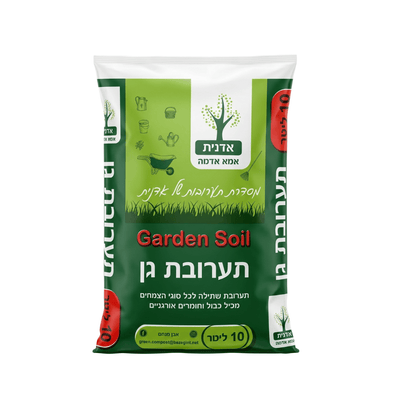
The Pilea likes light and airy soil that drains quickly. Standard potting soil with added perlite (30%) is perfect. A pot with drainage holes is a must! Without drainage – standing water leads to rotten roots.
Quality pots with drainage holes: Various sizes and colors, for every style
🪴 To pots and planters ←The most fun part – the "pups"!
One of the things people love most about the Pilea is that it propagates itself! Every few months, small plantlets ("pups") pop up right from the soil or the base of the stem. Once the pup reaches a height of 5-7 cm, it's time to separate it:
- Insert a sharp tool (a clean knife or pruning shears) into the soil.
- Cut the root connecting the pup to the mother plant.
- Plant the pup in a small pot with moist soil.
- Keep in partial shade for a week or two until it takes root.
- Congratulations – you have a new Pilea! 🎉
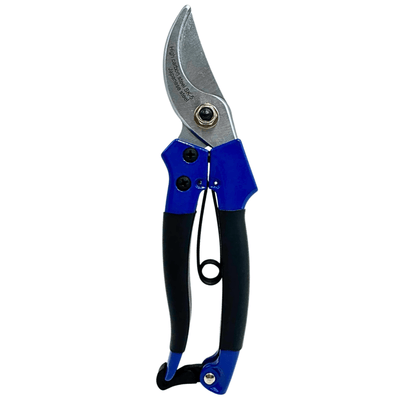
Japanese pruning shears for trimming and separating pups: Clean and precise cuts for roots
✂️ To hand shears ←Common problems and how to solve them
🟡 Yellow leaves
Reason: Almost always too much water. Sometimes direct sun or a phosphorus deficiency.
Solution: Let the soil dry out more. Ensure proper drainage. Remove yellow leaves from the base.
📐 Crooked stems
Reason: The plant is growing towards the light.
Solution: Rotate a quarter turn every week. Simple and effective!
🔴 Brown spots on leaves
Reason: Direct sun (burns) or water that is too cold.
Solution: Move out of the sun. Water with room-temperature water.
🍂 Falling leaves
Reason: Change in environment (new location), drafts from an air conditioner, or cold.
Solution: Let it acclimate. Keep away from air conditioners. It will recover!
🕷️ Pests
The Pilea is less sensitive to pests than most houseplants. If mites or aphids appear, wipe the leaves with a damp cloth and a little diluted liquid soap.
Annual growth calendar
| Season | Watering | Fertilizing | What to do |
|---|---|---|---|
| 🌸 Spring | Every 5-6 days | ✅ Every month | Repot if necessary, separate pups |
| ☀️ Summer | Every 4-5 days | ✅ Every 3 weeks | Mist leaves, keep away from AC |
| 🍂 Autumn | Every 7-9 days | Reduce | Reduce fertilization, prepare for winter |
| ❄️ Winter | Every 10-14 days | 🚫 Stop | Less water, keep away from heaters |
Where is the best place for a Pilea?
- 📚 Shelf next to a window – The classic choice. Indirect light + height = perfect.
- 🪑 Coffee table – A compact table plant that doesn't obstruct anything.
- 💼 Desk – Barely requires any care. Relaxing and sparks creativity.
- 🛏️ Bedroom – Next to a window.
- 🚿 Bright bathroom – High humidity = paradise for a Pilea.
Frequently Asked Questions
Products you will need
Pilea peperomioides – the plant itself: Healthy, lush, ready for your home
🛒 To Pilea peperomioides ←Pots with drainage holes: Essential for the Pilea! Various sizes and colors
🪴 To pots and planters ←Japanese B-4282 Pruners: For clean cutting of pups, cuttings, and trimming
✂️ To Japanese pruners ←More easy-to-grow plants: Not sure what to choose? See our collection of plants that are hard to kill!
🌿 To plants that are hard to kill ←In summary
The Pilea peperomioides is one of the most rewarding plants there is – easy to grow, produces plenty of "pups," and looks amazing in any home. If you are looking for your first plant, a gift for a friend, or a minimalist addition to your living room – the Pilea is the right choice!
The simple rule: Indirect light + not too much water + weekly rotation = a happy Pilea that will live for many years. 🪙🌿
🛒 Ready? Bring a Pilea home!
🪙 To Pilea peperomioides – Deco Garden ←🛒 המוצרים מהמדריך
הצמחים והמוצרים שהמדריך מדבר עליהם — לחיצה על כרטיס מעבירה לעמוד המוצר.