

🌿 Sansevieria (Snake Plant) | The Complete Guide to Growing and Care
 המוצר מהמדריך זמין באתר
Perennial Sansevieria for home and garden
42.00 ₪
📋 Quick Summary - Everything you need to know at a glance
Adapts to all conditions
From shade to bright indirect light
Very sparse
Summer: every 2-3 weeks
Very easy!
Perfect for beginners
Leaf succulent
Fleshy, water-storing
30-90 cm in a pot
Leaves up to 1.2 m in nature
🌱 Getting to know the plant
Names and Identification
- Hebrew name: Sansevieria, Mother-in-Law's Tongue
- Scientific name: Dracaena trifasciata (formerly Sansevieria trifasciata)
- English: Snake Plant / Mother-in-Law's Tongue
- Family: Asparagaceae
- Type: Perennial, evergreen leaf succulent
Origin and Background
The Sansevieria originates from the tropical regions of West Africa, where it grows in well-drained, rocky soil under arid conditions. From there, it inherited the incredible hardiness that has made it one of the most popular houseplants in the world: fleshy, upright, and pointed sword-shaped leaves, dark green with light gray horizontal stripes. It is technically a succulent, meaning it stores water in its leaves and underground rhizomes - the trait that allows it to survive for weeks without water.
Unique Features
- 💪 Almost indestructible - survives neglect, low light, and infrequent watering.
- 🏜️ High drought resistance - stores water in its fleshy leaves.
- 🌙 Breathes at night - undergoes CAM photosynthesis and releases oxygen even in the dark, making it especially suitable for the bedroom.
- 🌫️ Tolerates dry air - does not need misting or high humidity, a real advantage in the Israeli summer.
- 🐢 Slow to moderate growth - stays neat and beautiful for years.
⚠️ A moment of confusion - Good to know
Scientific name change: Until recently, the plant was called Sansevieria trifasciata. Following genetic research, it was reclassified into the genus Dracaena and is now called Dracaena trifasciata. Both names refer to the same plant - in Israeli nurseries, it is still commonly called "Sansevieria".
Names: The various common names refer to the same plant (named after the sharp tip of the leaf).
Cylindrica: The variety with round leaves (Cylindrica) has been reclassified separately as Dracaena angolensis, but its care is almost identical.
💚 Why choose a Sansevieria?
The ideal plant for those without a "green thumb".
You can go on vacation without worrying about watering.
Survives even far from a window.
Releases oxygen even at night.
Upright leaves that fit any design.
Perfectly suited for the Israeli climate.
🪴 Varieties and types recognized at Duku Garden
All varieties share the same care principles - little water, good drainage, and patience. The difference is mainly in shape and color:
🌿 Standard Sansevieria
The classic: upright sword leaves in dark green with gray horizontal stripes, sometimes with yellow edges. Reaches 30-90 cm. The most resilient and recognizable variety.
✨ Starlight
A variegated variety with light, silvery foliage. Since it is variegated, it's best to give it slightly more light to maintain the colors, and propagate by division (not leaf cutting) so the color isn't lost.
🐦 Bird's Nest (Hahnii)
A dwarf variety that grows in a low, wide rosette shape, only 15-20 cm high. Perfect for a desk, shelf, or windowsill.
🌕 Moonshine
Wide leaves in a light, soft silvery-green hue. A striking decorative variety; it also appreciates a bit more light to keep its light color.
🌵 Cylindrica
Round, rigid spear-shaped leaves, sometimes braided. Can reach a significant height (up to about 2 m). Now classified as Dracaena angolensis, but care is identical.
🌤️ Detailed Growth Conditions
☀️ Light
- The most flexible: adapts from partial shade to bright indirect light, and even 2-6 hours of direct sun a day.
- Bright indirect light near a window = best growth and strongest color.
- Survives in low light (north-facing window, hallway) - but growth will be very slow.
- Variegated varieties (Starlight, Moonshine, yellow edges) need more light to maintain their colors.
- In Israel: Avoid intense direct afternoon sun through glass in the summer - it may scorch the leaves.
💧 Watering - The most important part
The only rule to remember: overwatering is the #1 cause of Sansevieria death. It is better to underwater than overwater.
Every 2-3 weeks, and only when the soil is completely dry.
Very little - once every month or two only. The plant is almost dormant.
🌡️ Temperature
- Ideal range: 15-24°C - exactly standard room temperature.
- ⚠️ Frost warning: Must not drop below 10°C. The plant is sensitive to cold, and freezing will damage the leaves.
- In Israel: Can be grown outdoors on a shaded balcony in coastal and plains areas. In mountainous and valley regions where nights get cold in winter - it's better to bring it indoors or to a protected area.
💦 Humidity
Great news: the Sansevieria is completely indifferent to humidity. It handles dry air excellently, which is why it survives the dry Israeli summer and heatwaves without issue. No need to mist it - misting may even be harmful.
🌍 Soil
- Most important: Fast-draining mix. A cactus and succulent mix is the perfect choice.
- You can add perlite or coarse sand for better drainage.
- Preferred pH is neutral to alkaline (roughly 6.0-8.0).
- A pot with drainage holes is mandatory - without them, the roots will rot.
🌾 Fertilization
The Sansevieria is a light feeder. It is better to fertilize too little than too much.
Once a month during the growing season (roughly April-September), with liquid houseplant or cactus fertilizer, diluted to half the dose.
Do not fertilize at all. The plant is resting and doesn't need nutrients.
✂️ Ongoing Maintenance
- 🧽 Cleaning leaves: Occasionally wipe wide leaves with a damp cloth - this removes dust and restores their shine.
- ✂️ Removing damaged leaves: Cut any dried, broken, or yellowed leaf from the base with a clean knife.
- 🪴 Repotting: Only when roots have really filled the pot (roughly every 2-4 years). The Sansevieria actually likes to be a bit "cramped".
- 🔄 Rotating: Rotate the pot every few weeks so the leaves grow straight.
🌱 Propagation (How to make more plants)
Two simple methods:
1. Division (Recommended method)
- Remove the plant from the pot and shake off excess soil.
- Gently separate the rhizome into sections, with each section having its own leaves and roots.
- Plant each section in a separate pot with a well-draining mix.
- Wait about a week before the first watering to allow wounds to callus.
2. Leaf cutting
- Cut a healthy leaf and divide it into segments about 5-8 cm long (important to remember which side was the bottom).
- Let the segments callus for a day or two, then insert them bottom-side down into soil or water.
- Patience - roots develop slowly, over the course of weeks.
🔧 Common problems and solutions
🦠 Leaves yellowing and soft at the base
Cause: Overwatering and root rot - the most common problem.
Solution: Stop watering, remove from the pot, cut off rotted roots (brown and soft), and repot in dry, well-draining mix.
🍂 Leaf tips brown and dry
Cause: Underwatering over time, extreme dry air, or salt/chlorine buildup from water.
Solution: Water more regularly (when the soil is dry), and occasionally use standing or filtered water.
〰️ Leaves wrinkled and folding
Cause: Thirst - the plant is utilizing the water reserves in its leaves.
Solution: Thorough watering. Within a few days, the leaves will plump up and straighten out.
📉 Leaves falling / spreading to the sides
Cause: Too little light over time, or overwatering which weakens the base.
Solution: Move to a brighter spot and ensure measured watering.
🎨 Fading color and loss of hue
Cause: Insufficient light - especially in variegated varieties.
Solution: Move to bright indirect light to restore colors.
🌡️ Soft spots after a cold winter
Cause: Cold damage from exposure below 10°C.
Solution: Keep away from cold windows and air conditioners, and move to a warm, protected place.
🐛 Pests
- 🐜 Mealybugs: White cottony masses between leaves. Clean with a cotton swab dipped in alcohol or water+soap.
- 🕷️ Spider mites: Appears in very dry air; telltale sign is fine webbing. Wash the leaves and slightly increase humidity.
- 🐞 Vine weevils: Larvae attack roots; mainly discovered during repotting.
❓ Frequently Asked Questions
In the summer, about once every 2-3 weeks, and only when the soil is completely dry. In the winter, reduce significantly - only once every month to two months. The rule: when in doubt, do not water.
The most common cause is overwatering and root rot. You must stop watering, check the roots, cut away any rotten ones, and replant in a dry, well-draining soil mix in a pot with drainage holes.
Yes, very much so. Thanks to its CAM photosynthesis mechanism, it releases oxygen even at night; it is quiet, durable, and requires almost no maintenance - which makes it an excellent plant for the bedroom.
Yes, on a shaded balcony and in areas without frost (coastal and plains). It tolerates heat and dry air perfectly, but it is sensitive to cold: below 10°C, it must be brought indoors. In mountain areas and cold valleys, it is better to grow it indoors.
Not necessarily - it is one of the most tolerant plants for low light. However, in bright, indirect light, it will grow faster and maintain a more vibrant color. Variegated varieties (Starlight, Moonshine) need more light to maintain their hue.
In two ways: rhizome division (recommended, keeps the variety true) or leaf cutting in water or soil. Note - variegated varieties propagated by leaf cutting will revert to solid green, so they should be propagated by division only.
📊 Summary Table
| Category | Details |
|---|---|
| ☀️ Light | Adapts to all conditions; bright indirect light = best; tolerates low light |
| 💧 Watering | Summer: once every 2-3 weeks; Winter: once every 1-2 months; only when soil is dry |
| 🌡️ Temperature | Ideal 15-24°C; must not be below 10°C (sensitive to frost) |
| 💦 Humidity | Tolerates dry air; no misting needed |
| 🌍 Soil | Draining mix for cacti/succulents; drainage holes are mandatory |
| 🌾 Fertilizing | Once a month in spring-summer (diluted); no fertilization in winter |
| 📏 Size | 30-90 cm in a pot; leaves up to ~1.2m in nature; bird's nest is dwarf (15-20 cm) |
| 📊 Difficulty Level | Very easy - perfect for beginners |
| ⭐ Special | Releases oxygen at night; included in NASA's air purification study |
🛒 Shop at Deco Garden
Ready to adopt a Sansevieria of your own? Here are our varieties and complementary products:
🌿 Deco Garden - A Love for Plants
The Sansevieria proves that you can bring greenery and life home even without a "green thumb." Do you have a question about the plant? We are here for you - the Deco Garden team will be happy to help you choose the perfect variety and care for it properly.
📞 Feel free to contact us | 🌱 Nationwide home delivery
© 2026 Deco Garden - All rights reserved
The guide was written by the expert team at Deco Garden
🛒 המוצרים מהמדריך
הצמחים והמוצרים שהמדריך מדבר עליהם — לחיצה על כרטיס מעבירה לעמוד המוצר.
-
 Perennial Sansevieria for home and garden
החל מ-42.00 ₪לעמוד המוצר
-
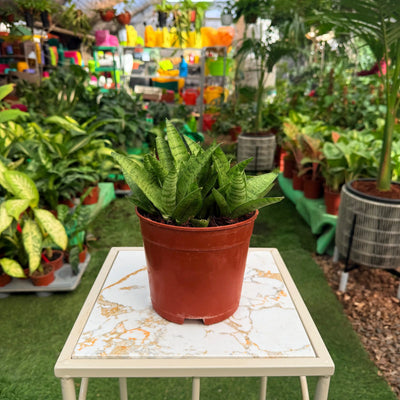 Sansevieria Starlight, 15 cm pot diameter
45.00 ₪לעמוד המוצר
-
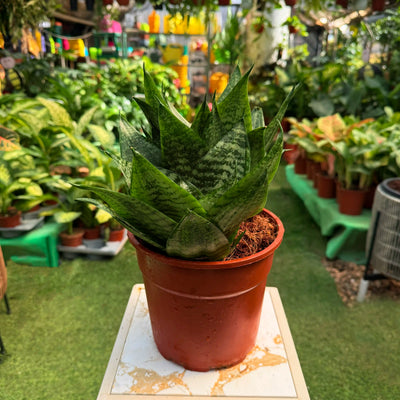 Sansevieria Bird's Nest, 18 cm pot diameter
75.00 ₪לעמוד המוצר
-
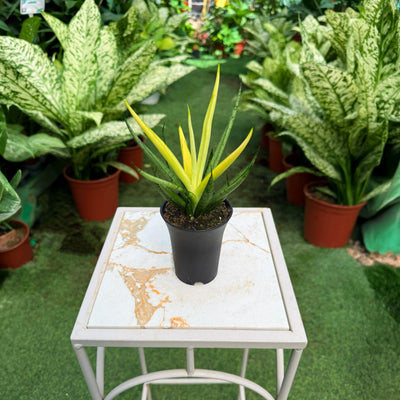 Sansevieria 'Fernwood Lemon' – 8 cm pot diameter
110.00 ₪לעמוד המוצר
-
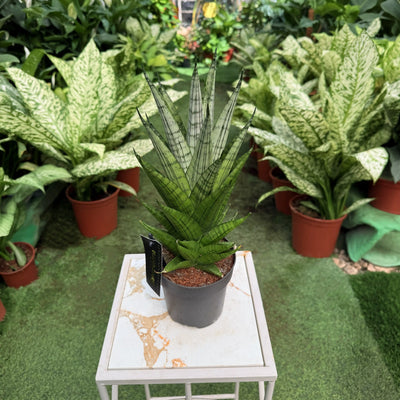 Sansevieria Mini Queen – 12 cm pot diameter
150.00 ₪לעמוד המוצר
-
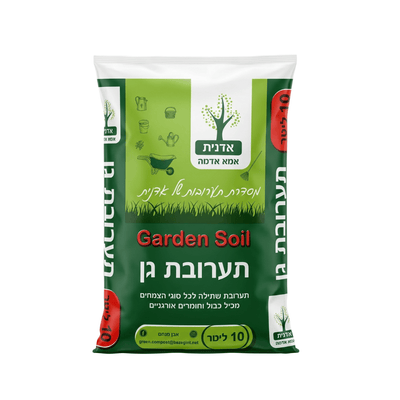 Migdal from the Northern Border 10 liter planting mix
14.00 ₪לעמוד המוצר
-
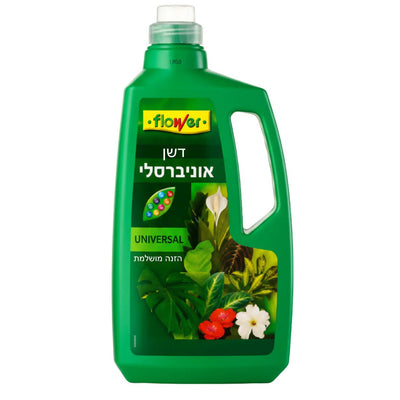 Universal Fertilizer 1.2 liters
45.00 ₪לעמוד המוצר
-
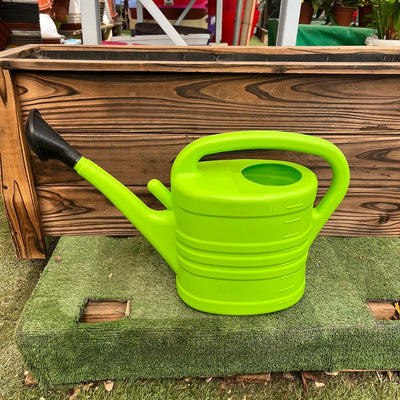 funnel
החל מ-18.00 ₪לעמוד המוצר

