🌵 Schlumbergera (Christmas Cactus) | The Complete Guide to Growing and Care
 המוצר מהמדריך זמין באתר
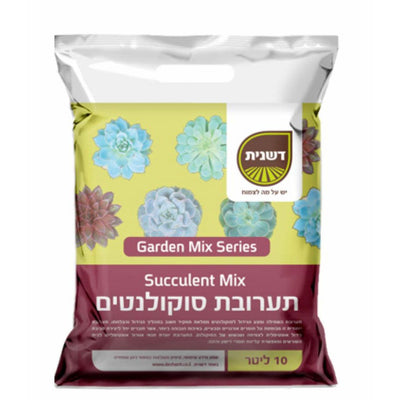
Soil for succulents and cacti - Succulent potting mix
13.00 ₪
📋 Quick Summary - Everything you need to know at a glance
Bright indirect light
No direct sun - this is not a desert cactus
Moderate and regular
When the top of the soil is dry
Easy-Moderate
Repeated blooming requires some attention
Tropical epiphytic cactus
Grows on trees in the forest, not in the desert
Approx. 30-60 cm in a pot
Grows wide and hangs downwards
🌱 Getting to know the plant
Names and Identification
- Common name: Zygocactus (also called Schlumbergera)
- Scientific name: Schlumbergera (common hybrids: Schlumbergera × buckleyi, Schlumbergera truncata)
- English: Christmas Cactus / Thanksgiving Cactus / Holiday Cactus
- Family: Cactaceae - the cactus family
- Type: Epiphytic cactus (grows in nature on trees, not in the ground)
Origin and Background
It originates from the tropical mountain forests of southeastern Brazil, where it grows as an epiphyte - on tree trunks and in rock crevices, under the forest canopy, rather than in open soil like familiar desert cacti. The popular "Christmas Zygocactus" hybrid (Schlumbergera × buckleyi) was created around 1850 at the Rollisson nursery in England, from a cross between two Brazilian species.
Unique Characteristics
- 🌵 Flat, segmented stems (cladodes) instead of regular leaves - each flat "leaf" is actually a stem segment
- 🌺 Spectacular blooming in mid-winter, when most other plants are dormant - tubular flowers in shades of red, pink, orange, purple, and white
- 🌙 "Short-day plant" - blooming is triggered by the lengthening of nights in autumn, not just by the cold
- 💧 Needs more water than a regular cactus - this is the most important difference to remember
- 🌿 Very easy to propagate - a single cutting with 2-3 segments is enough for a new plant
- 💚 Can live for many years and be passed down from generation to generation as a houseplant
🤔 Christmas, Thanksgiving, or Easter - and why it is not a desert cactus at all
In Israel, all these plants are sold simply as "Zygocactus," but in fact, they are several closely related species with real differences:
- 🎄 Christmas Cactus (Schlumbergera × buckleyi) - stem edges are rounded and smooth, typically blooms around December.
- 🦃 Thanksgiving Cactus (Schlumbergera truncata, also called "Crab Cactus") - stem edges are jagged and sharp like little claws, blooms as early as late November for about five weeks, and sometimes blooms again in February.
- 🐰 Easter Cactus (Hatiora / Rhipsalidopsis gaertneri) - this is a completely different botanical genus, not Schlumbergera. It blooms in the spring (March-May), the stems are rounded with small bristles at the tip, and it is considered more sensitive and demanding.
The most important difference: This is not a thorny desert cactus that loves scorching sun and can survive a month without water. It is a tropical epiphytic cactus - it wants indirect light, more water than a standard cactus, and moderate humidity.
💚 Why choose a Zygocactus
Colorful show in mid-winter
One cutting = a new plant
Can be passed down for generations
Hanging basket or on a shelf
Fits into shady corners of the house
🌸 Varieties and Types
S. × buckleyi - rounded edges, blooms in December
S. truncata - jagged edges, blooms in late November
Hatiora gaertneri - different genus, blooms in spring
Red, pink, orange, purple, and white
🌤️ Detailed Growth Conditions
☀️ Light
- Bright indirect light throughout the year - it is still a cactus that likes light, but not scorching direct sun.
- Avoid direct sun especially in the Israeli summer - it "bleaches" and even burns the stems.
- An east-facing window is usually ideal; near a south/west window, move it a few meters away from the glass.
- In winter, when the sun is weaker, you can provide slightly more direct light.
💧 Watering
The main difference from a desert cactus: this is a tropical forest cactus, and it wants a watering regime closer to a standard houseplant than a drought-resistant cactus.
Regular watering when the top of the soil dries out - about every 1-2 weeks. Keep consistent moisture, not soggy.
Reduce watering slightly and let the medium dry more between waterings - this is part of the trigger for blooming. However, once buds appear, return to regular watering so the buds do not drop.
How to know when to water: Insert a finger 2-3 cm into the soil - if it's dry, it's time to water. Limp or wrinkled stems usually signal thirst, but they can also indicate root rot from overwatering - so always check the actual soil moisture before watering again.
🌡️ Temperature
During the growing season (spring-summer) it is comfortable at a normal room temperature, about 21-27°C. To create flower buds in autumn, it needs cooler nights, about 13-18°C, for about 6-8 weeks from mid-September.
⚠️ Frost warning: The plant is not frost-hardy and below about 13°C it enters a risk zone. In coastal and central areas, you can leave it outside in a shaded and protected corner all year round, but in mountain regions with winter frost (Jerusalem, Golan Heights, Upper Galilee) it is better to keep it in a portable pot that you can bring inside before freezing nights.
💦 Humidity
- As a tropical epiphyte, it enjoys higher air humidity than a desert cactus, but normal household humidity is usually sufficient.
- You can help with a tray of pebbles and water, light misting occasionally, or placing it near other plants.
- Avoid placing it right next to an air conditioner or heater - dry air and sudden hot/cold drafts can also cause bud drop.
🌍 Soil
- Well-draining medium but richer in organic matter than a classic desert-cactus mix - for example, one part garden soil, two parts compost/peat, and one part perlite or coarse sand.
- Slightly acidic to neutral is preferred.
- A standard succulent and cactus mix drains well, but it is worth mixing in some compost or garden soil to retain moisture better - this is not a cactus that wants a completely dry medium.
- A pot with drainage holes is mandatory. There is no need to change the medium every year - every few years is sufficient, as the organic matter decomposes over time and loses drainage capability.
🌾 Fertilization
Balanced and diluted liquid fertilizer, once a month, from about March/April to September.
Stop fertilizing. Stopping fertilization, along with cooler nights and prolonged darkness, is part of the process that triggers the plant to bloom.
✂️ Pruning and Maintenance
- After flowering ends, you can lightly pinch the tips of the stems - this encourages branching for a fuller, bushier plant.
- Remove wrinkled, damaged stems or withered flowers to maintain a clean appearance.
- Using a clean, sterilized cutting tool reduces the risk of transmitting diseases.
🌱 Propagation - How to trigger repeated blooming and new cuttings
- Choose a mature and healthy stem segment with 2-3 joints (segments).
- Cut it gently right at the connection point between the segments.
- Let the cut end "callus" - leave it to air-dry, in the shade, for 2-3 days before planting. This greatly reduces the risk of rot.
- Plant the dry end at a shallow depth in a draining medium (perlite, or a perlite-compost mix).
- Water moderately and keep the medium lightly moist but not wet, in an indirectly lit spot, away from direct sun.
- Roots usually develop within 2-3 weeks. Afterward, you can move it to a permanent pot with standard potting mix.
💡 The best rooting season is spring-summer.
🔧 Common Problems and Solutions
🌸 Bud Drop
Cause: Sudden change in conditions - moving the pot, cold or hot drafts, sharp temperature change, irregular watering, or heat above 32°C.
Solution: Once buds appear - do not move the pot, do not rotate it, and maintain stable conditions.
🥀 Limp or Wrinkled Stems
Cause: Usually lack of water, but sometimes excess water that caused root rot.
Solution: Check soil moisture with your finger before deciding - if wet, it may be rot rather than thirst.
🦠 Root Rot
Cause: Overwatering and poor drainage.
Solution: Remove from the pot, trim away rotten and soft parts, and replant in a draining medium in a pot with drainage holes.
🌞 Bleached or Burnt Stems
Cause: Too much direct sun, especially in summer.
Solution: Move to a spot with bright indirect light, further away from the window.
❌ The plant doesn't bloom at all
Cause: Did not receive the required period of dark and cool nights in autumn - even street lighting or a lamp at night can disrupt the cycle.
Solution: From mid-September, for 6-8 weeks, provide totally dark nights without any artificial lighting, and cooler night temperatures.
🐛 Pests
Most common pests: mealybugs (white woolly pest), scale insects, red spider mites, and aphids. When grown outdoors, slugs and snails might join in and chew on the stems - it's worth keeping the pot off the ground. In all cases, treatment with insecticidal soap or neem oil according to the manufacturer's instructions is effective.
🇮🇱 Growing in Israel - Specific Tips
- Coast and Center: Can be left outside all year in a shaded corner protected from direct wind and scorching sun - for example, a covered balcony or pergola.
- Mountain regions (Jerusalem, Upper Galilee, Golan Heights): On freezing winter nights, it is advisable to bring it inside, as the plant is not frost-hardy.
- Heatwaves (Khamsin) in summer: Keep away from direct sun and hot, dry wind, and slightly increase watering frequency - but always check soil moisture first.
- Israeli autumn and blooming: The shortening and cooling nights of September-October in Israel naturally support the bud-formation process - but external lighting (balcony light, street light) that is on at night can confuse the plant and prevent blooming. Israeli nurseries specifically recommend avoiding artificial lighting after sunset during this period.
❓ Frequently Asked Questions
The most common reason: it did not receive a sufficient period of darkness and cold in the autumn. From mid-September for about 6-8 weeks, it needs totally dark nights (without any artificial lighting) and relatively cool night temperatures to create flower buds.
Bud drop happens mainly due to a sudden change in conditions—moving the pot, an air draft, a sharp temperature change, or irregular watering. Once buds appear, the most important thing is total stability: do not move the pot, do not rotate it, and maintain consistent watering.
Unlike a desert cactus, this is an epiphytic tropical cactus that needs more water. During the growing season (spring-summer), water when the top part of the soil dries out, about every 1-2 weeks. In autumn-winter, reduce watering slightly (this helps trigger blooming), but do not let the plant dry out completely.
Yes, in warm areas like the coast and the center, in a shaded corner protected from direct sun and wind. In mountainous areas with winter frost (Jerusalem, Upper Galilee), it is better to use a portable pot that can be brought inside when frost is forecast, as the plant is not frost-resistant.
The easiest way: cut off a stem segment with 2-3 joints, leave it to dry and callus for about 2-3 days, and then plant it in a well-draining, slightly moist medium. Roots will develop within about 2-3 weeks.
📊 Summary Table
| Category | Details |
|---|---|
| ☀️ Light | Bright indirect light, no direct sun |
| 💧 Watering | Moderate - every 1-2 weeks in summer, less in autumn-winter |
| 🌡️ Temperature | 21-27°C during the growing season; 13-18°C nights for blooming; not frost-resistant |
| 💦 Humidity | Enjoys relatively high humidity; standard household humidity is sufficient |
| 🌍 Soil | Draining but rich in organic matter, not a dry desert mix |
| 🌾 Fertilization | Diluted liquid once a month in spring-summer; stop in autumn-winter |
| 📏 Size | About 30-60 cm in a pot; grows wide and trailing |
| 📊 Difficulty Level | Easy-moderate; repeat blooming requires attention to darkness and cold in the autumn |
| ✨ Special | Epiphytic tropical cactus that blooms in winter - needs dark, cool nights in autumn to bloom |
🛒 Shop at Deco Garden
🌿 Deco Garden - A Love for Plants
Do you have a question about your Zygocactus, or any other houseplant? The Deco Garden team is here for you - from the right choice to daily care.
© 2026 Deco Garden - All rights reserved
The guide was written by the expert team at Deco Garden
🛒 המוצרים מהמדריך
הצמחים והמוצרים שהמדריך מדבר עליהם — לחיצה על כרטיס מעבירה לעמוד המוצר.