

🌸 Geranium (Pelargonium) | The Complete Guide to Growing and Care
 המוצר מהמדריך זמין באתר
Geranium pot 12 cm (perennial for the garden)
10.50 ₪
The Geranium (or by its correct scientific name — Pelargonium) is one of the most beloved and resilient flowering plants for the Israeli balcony and garden. It blooms profusely almost all year round in a variety of colors, tolerates our sun and heat well, and requires very little water.
📋 Quick Summary - Everything you need to know at a glance
Full to partial sun
At least 5-6 hours a day
Moderate
Only when soil is dry to the touch
Easy
Suitable for beginners
Flowering plant
Perennial, frost-sensitive
30-90 cm
In pots and planters
🌱 Getting to know the plant
Names and Identification
- Hebrew name: Geranium / Pelargonium
- Scientific name: Pelargonium
- English: Geranium / Pelargonium
- Family: Geraniaceae
- Type: Perennial flowering plant, frost-sensitive
Origin and Background
The geranium we grow on our balconies originated in South Africa. There, in a hot and dry climate with a short rainy season, plants evolved that know how to store water in their succulent stems and survive periods of drought. It is precisely because of this origin that the geranium feels so at home in the Israeli climate — it loves the sun, tolerates heat and drought, and dislikes "wet feet."
Unique Characteristics
- 🌸 Blooms almost all year — flower clusters in white, pink, red, purple, and orange
- 💪 Drought-tolerant — succulent stems that store water
- ☀️ Sun-lover — blooms best in full sun
- 🍃 Leaves with a "zone" — upright varieties have a dark horseshoe-shaped ring on the leaf
- 👃 Aromatic leaves — fragrant varieties have a rose, lemon, or mint scent when touched
- ✂️ Easy to propagate — roots easily from stem cuttings
⚠️ Naming Confusion: Geranium or Pelargonium?
It’s confusing, but important: the flowering plant everyone calls a "Geranium" is almost always actually a Pelargonium — a plant of South African origin, sensitive to frost. The name "Geranium" was attached to it back in the 17th century, before botanists separated the two genera in 1789, and the nickname simply stuck.
In contrast, the "true" Geranium (the genus Geranium, also known in English as Cranesbill) is a cold-hardy perennial suitable for gardens in colder countries. How do you tell them apart? The simplest way is by the flower: the Pelargonium flower has bilateral symmetry — the two upper petals are larger and usually have dark veins, while the three lower ones are smaller. The true Geranium has a flower that is perfectly symmetrical around its center.
💡 In short: This guide covers the Pelargonium — the geranium of balconies and window boxes that we know and love.
💚 Why choose a Geranium?
Color on the balcony almost year-round
Thrives in exposed southern facing spots
Forget to water once, and it still thrives
Balcony, window, fence, or garden
One cutting = a new plant for free
And the fragrant varieties deter mosquitoes
🎨 Main Varieties and Types
The Pelargonium genus includes hundreds of varieties. These are the four types you will encounter in Israel:
Upright Pelargonium (Zonal)
P. × hortorum — The classic and most common. Upright, with a dark "ring" on the leaf and dense flower clusters. Works great in pots.
Trailing Pelargonium (Ivy-leaved)
P. peltatum — Smooth ivy-like leaves and trailing branches. Perfect for window boxes and hanging baskets that cascade down.
Regal Pelargonium (Martha Washington)
P. × domesticum — Large, showy flowers with wavy edges. Prefers partial shade and slightly cooler weather.
Scented-leaved Pelargonium
Aromatic leaves that release a rose, lemon, mint, or apple scent when touched. Grown primarily for their fragrant foliage.
🌤️ Detailed Growing Conditions
☀️ Light
- Geraniums bloom best in full sun — aim for at least 5-6 hours of direct sun a day.
- A southern or eastern aspect is ideal for the Israeli balcony.
- In the peak of summer, during heatwaves, a bit of afternoon shade protects the plant from burning and drying out too quickly.
- The Regal variety prefers partial shade and slightly more temperate weather.
- Too little sun = few flowers and elongated, thin stems.
💧 Watering
The golden rule: the Geranium is not a thirsty plant. Water moderately, and only when the soil begins to dry out. Excess water is the #1 reason for geranium death — it causes root rot.
Roughly every 3-5 days, depending on dryness, and do not leave water in the saucer.
Very little — every 10-14 days, only when the soil is completely dry deep down.
How do you know when to water? Stick a finger into the soil up to the first knuckle (about 2-3 cm). Dry? Go ahead and water. Still damp? Wait. Water the soil directly — not the leaves or flowers, to prevent foliage diseases.
🌡️ Temperature and Frost
The Geranium loves mild weather, about 15-25°C, and feels great during most months of the year in Israel.
🥶 Frost Warning: The Geranium is sensitive to cold and frost and can be damaged when temperatures drop below about 5°C. In the coastal plains, it usually survives the winter easily. However, in the mountains and cold valleys (Jerusalem, Upper Galilee, Golan, interior valleys) — on frost nights, move pots to a sheltered spot, close to a wall or under a roof, or cover them.
🌍 Soil and Drainage
- Drainage is everything. Well-drained soil prevents root rot — the great enemy of the geranium.
- Recommended medium: high-quality potting mix for garden plants, with the addition of a little perlite or sand for drainage.
- The ideal pH is neutral to slightly alkaline.
- Ensure the pot has drainage holes, and do not leave standing water in the saucer.
🧪 Fertilizing
A geranium that blooms a lot "spends" a lot of energy — regular fertilizing is the secret to rich, long-lasting blooming.
🌸 Spring–Summer (Blooming season)
Fertilize once every two weeks. Use a balanced fertilizer at the start of the season, and when blooming begins, switch to a fertilizer rich in potassium (such as tomato fertilizer) to encourage flowers.
🍂 Autumn–Winter (Rest)
Greatly reduce or stop fertilizing. The plant is in a slow cycle and does not need extra food until the warmth returns.
✂️ Pruning and Maintenance — The secret to abundant blooming
🌸 Deadheading
Pick off every wilted flower cluster, along with its stem. This prevents the plant from wasting energy on seeds — and encourages it to put out more and more new flowers throughout the season.
🌿 Pinching
In early spring, pinch (or trim) the tips of the branches. This stimulates branching, turning the plant from a long "stick" into a full, round, and dense bush.
🍂 Ongoing cleanup
Remove yellow or dry leaves regularly — this keeps it looking well-groomed and reduces disease.
🌿 Propagation — A new plant for free
The Geranium is one of the easiest plants to propagate. The simplest and most reliable way is stem cuttings (preferably from spring to autumn):
- Cut an 8-10 cm cutting from the tip of a healthy branch, just below a leaf node.
- Remove the lower leaves, leaving 2-3 at the tip.
- You can let the cutting air-dry for a few hours (this helps prevent rot).
- Insert into a well-drained, slightly moist medium (potting mix with perlite).
- Place in a bright spot without direct strong sun, and water sparingly.
- Within 2-4 weeks roots will form — then you can move it to a permanent pot.
💡 Tip: Do not overwater at the rooting stage — a cutting that is too wet will rot instead of striking roots.
🔧 Common problems and solutions
🍂 Yellowing leaves
Cause: In most cases — overwatering or poor drainage.
Solution: Reduce watering, ensure drainage holes, and don't leave water in the saucer.
🦠 Stem and root rot
Cause: Constantly wet soil — the great enemy of the geranium.
Solution: Let the medium dry out, cut away rotted parts, and repot in well-drained soil.
🌸 Few or no flowers
Cause: Not enough sun, lack of fertilizer, or wilted flowers not removed.
Solution: More sun, potassium-rich fertilizer, and deadhead regularly.
🌫️ Gray mold on flowers
Cause: Humidity and poor ventilation, especially when leaves are kept wet.
Solution: Water only the soil, thin out dense growth, and remove infected parts.
🐛 Common Pests
- Spider mites: Common in heat and dryness; they make leaves mottled, brown, and dry. Increase humidity and treat if necessary.
- Aphids: Gather on buds and soft tips. Washing with a stream of water or insecticidal soap helps.
- Budworm (Tobacco Budworm): Bites into buds and flowers and punctures them. Pick off manually or treat.
- Whitefly: Common especially in sheltered/indoor growth; flies up in a white cloud when the plant is touched.
👃 Bonus: Scented Geranium
Beyond beauty, the scented Pelargonium varieties have aromatic leaves that release a wonderful fragrance upon every touch — rose, lemon, mint, apple, or pine. They are loved on the balcony specifically near seating areas, to enjoy the scent, and many people plant them in the hope of repelling mosquitoes.
❓ FAQ
Only when the soil is dry to the touch. In the summer, about once every 3-5 days, and in the winter, very little — once every 10-14 days. It is better to water too little than too much: overwatering is the most common cause of geranium death.
Three things: plenty of sun (5-6 hours a day), regular deadheading (removal of wilted flowers), and potassium-rich fertilizer every two weeks during the blooming season. Pinching the tips of the branches in the spring also helps the plant become fuller and bloom more.
The most common cause is overwatering or poor drainage. Check that the soil has time to dry out between waterings, that the pot has drainage holes, and that there is no standing water in the saucer.
In the coastal plain and coastal area — usually yes, easily. In cold areas with frost (Jerusalem, Upper Galilee, the Golan, inland valleys), it is sensitive: on cold nights, move the pots to a sheltered place or cover them, because the plant is damaged below approximately 5°C.
The "geranium" for balconies is actually a pelargonium — a frost-sensitive South African plant. The "true" geranium (the genus Geranium) is a cold-hardy perennial for gardens in cold countries. You can easily tell them apart by the flower: a pelargonium has a flower with unilateral symmetry (two upper petals are larger).
📊 Summary Table
| Category | Details |
|---|---|
| ☀️ Light | Full to partial sun, 5-6 hours a day; afternoon shade in peak summer |
| 💧 Watering | Moderate, only when the soil is dry; summer every 3-5 days, winter every 10-14 days |
| 🌡️ Temperature | Likes 15-25°C; frost-sensitive, damaged below 5°C |
| 💦 Humidity | Dry air suits it; water the soil and not the leaves |
| 🌍 Soil | Well-drained, neutral to slightly alkaline pH |
| 🧪 Fertilization | Every two weeks in spring-summer, potassium-rich fertilizer; stop in winter |
| 📏 Size | About 30-90 cm in a pot or planter |
| 📊 Difficulty Level | Easy — also suitable for beginners |
| ✨ Special | Blooms almost all year round; fragrant varieties; very easy to propagate from cuttings |
🛒 Shop at Deco Garden
Looking for a blooming geranium for your balcony or garden? Here are our recommendations:
🌿 Deco Garden - A Love for Plants
Geranium is the perfect choice for a colorful Israeli balcony — lots of sun, little water, and plenty of blooms. Do you have a question about your plant? The Deco Garden team is here for you.
© 2026 Deco Garden - All rights reserved
This guide was written by the team of experts at Deco Garden
🛒 המוצרים מהמדריך
הצמחים והמוצרים שהמדריך מדבר עליהם — לחיצה על כרטיס מעבירה לעמוד המוצר.
-
 Geranium pot 12 cm (perennial for the garden)
10.50 ₪לעמוד המוצר
-
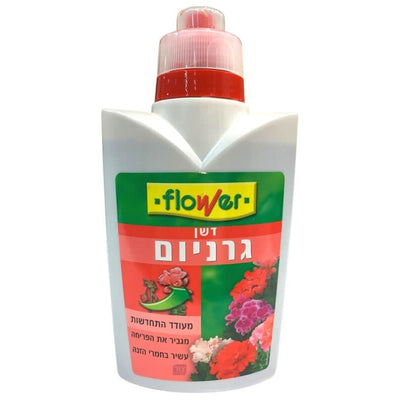 Geranium fertilizer 500 ml
28.00 ₪לעמוד המוצר
-
 Potting mix, planting soil, fertilizer-enriched
החל מ-22.50 ₪לעמוד המוצר
-
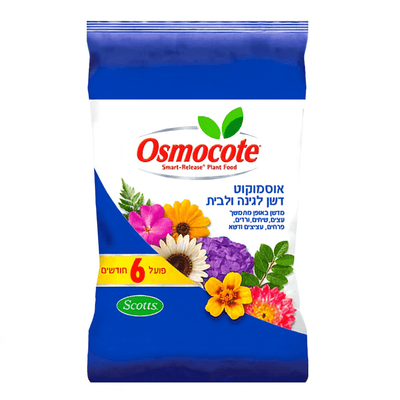 Osmocote fertilizer for garden and home, active for 6 months
החל מ-65.00 ₪לעמוד המוצר
-
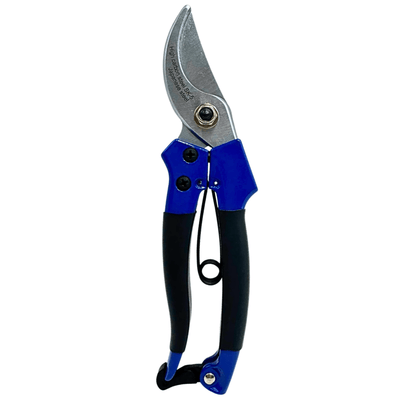 B-4282 manual bypass pruner
49.99 ₪לעמוד המוצר


