Gazania: A Guide to Growing, Watering, and Flowering in the Sun
 המוצר מהמדריך זמין באתר
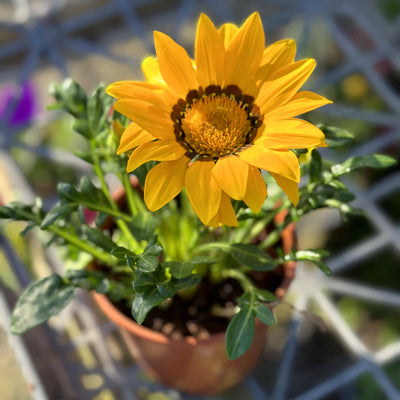
Gazania, pot diameter 12 cm (perennial for the garden)
12.00 ₪
Gazania is a low-growing plant with daisy-like flowers that open in sunlight and close in darkness or cloudy weather. It is suitable for flower beds, rock gardens, and containers in a sunny location, provided the soil is well-drained and watering is adjusted for the season and the container.
Identification: What is fixed and what changes?
Professional sources describe Gazania rigens as a low-growing, spreading plant native to South Africa, with green to gray leaves and flowers in yellow, orange, and other shades in commercial varieties. The flowers close at night and sometimes remain closed on a cloudy day — this is a natural response to light.
The Deco Garden product is sold under the name Gazania, but the supplier label does not specify a registered variety. Therefore, the flower color, center pattern, and plant size on the day of delivery vary according to stock. Do not choose based on a photo of a single color only.
Light and Placement
RHS, NC State, and UF/IFAS recommend full sun and well-drained soil. Gazania flowers respond to light, so in deep shade, you will get fewer open flowers. On an Israeli balcony, it is worth considering heat accumulation around walls, wind, and the drying rate of the container — two locations with the same number of sunlight hours do not necessarily behave the same way.
- Transition from the nursery: Gradually expose the plant to the location's conditions rather than moving it suddenly to a hot and dry environment.
- In the ground: Choose an open area that receives sun and does not store water around the roots.
- In a container: Ensure the container is stable, has drainage holes, and that you can check the actual moisture.
Water and Drainage
Gazania tolerates dryness once established, but a small pot and a new seedling still need monitoring. Water according to the soil condition, not based on a promise of "almost no water." Let the top layer dry out, check a bit deeper, and then water thoroughly until it drains.
- Check if the substrate is still moist deep down.
- If it is moist, wait instead of giving small sips.
- If it has dried out appropriately, water until water comes out of the holes.
- Empty any standing water from the cover pot or saucer.
- After a heatwave, strong wind, or transfer to a new container, check again; do not automatically copy the previous interval.
Wet substrate over time increases the risk of root and stem rot. On the other hand, "tolerance to dryness" is not a license to leave a small seedling without checking.
Growing in a pot or planter
Choose a container with drainage holes and well-aerated potting mix. Depth and diameter are determined by the root ball, the variety's form, and available space — there is no single depth that fits every Gazania and every planter. Keep the plant base at the same height it grew in the nursery pot and do not bury the center of the plant.
In a container, the substrate dries faster than in the ground but may also stay wet at the bottom if there is no free exit for water. Therefore, lift, touch, and check before watering. If moving to a larger container, do so moderately and do not surround a small root ball with a large volume of damp substrate.
To the 12 cm Gazania potFlowering and Maintenance
Remove finished blooms if you want a tidy appearance and to reduce seed formation. Flowers may close in the evening or on a gray day and reopen in the light; do not add water or fertilizer just because the flowers are closed.
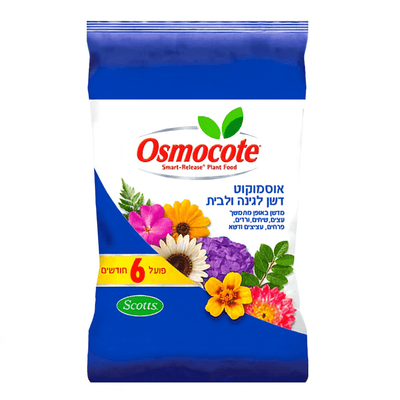
There is no need for a rigid fertilization schedule. If the plant is growing in a container and is in active growth, use a fertilizer suitable for flowering plants and follow the label instructions. A Gazania grown in fertile soil or receiving excess fertilizer may develop foliage at the expense of blooms.
Common signs and what to check
- Flowers closed on a cloudy day: A natural light response; check again on a bright day.
- Few flowers over time: Check sunlight hours, overcrowding, excess fertilization, and drainage.
- Soft base or blackening: Check for prolonged dampness, blocked holes, and heavy substrate.
- Wilting in a hot container: Check moisture in depth. If the substrate is dry, water thoroughly; if it is wet, do not add water before investigating.
- Aphids: Check under the leaves and around the flower buds, and isolate an affected plant.
Frequently Asked Questions
Are Gazania and Kalanchoe the same plant?
No. Gazania is Gazania, a plant from the Asteraceae family. Kalanchoe is Kalanchoe, a succulent plant from a different family.
Why did the Gazania flowers close?
Gazania flowers close naturally at night and in low light conditions. If they remain closed even on bright days, check if the location is receiving enough sun.
How often should I water?
There is no fixed number of days. Check the moisture in depth, the container size, and the weather, and water after the substrate has dried to the appropriate degree.
Is Gazania a perennial?
Botanically, it can be a perennial in a suitable climate, but cold, humidity, variety, and location conditions have an effect. In many regions, it is grown as an annual.
Professional Sources
🛒 המוצרים מהמדריך
הצמחים והמוצרים שהמדריך מדבר עליהם — לחיצה על כרטיס מעבירה לעמוד המוצר.