🌸 Bougainvillea | The Complete Guide to Growing and Care
 המוצר מהמדריך זמין באתר
Bougainvillea 24 cm pot (10 liters) (perennial for the garden)
115.00 ₪
המוצר מהמדריך זמין באתר
Bougainvillea 24 cm pot (10 liters) (perennial for the garden)
115.00 ₪
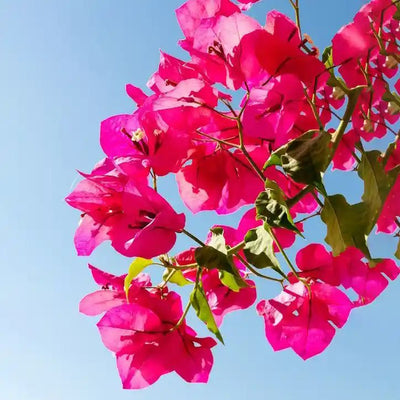
The bougainvillea is the queen of the Mediterranean garden: a perennial climber that covers pergolas, fences, and walls in a vibrant cascade of pink, purple, red, orange, and white. It loves the strong Israeli sun, hardly needs watering once established, and actually blooms more when treated with a bit of "stinginess." In this guide, you will find exactly how to grow it, how to make it bloom like crazy, and how to watch out for its thorns.
📋 Quick Summary - Everything you need to know at a glance
Full sun
6+ hours a day - a must for flowering
Minimal
Highly drought tolerant
Easy
Suitable for beginners
Perennial climbing shrub
For gardens, pergolas, and fences
Up to 8-10 m as a climber
Controlled by pruning and support
🌱 Getting to know the plant
Names and Identification
- Hebrew name: Bougainvillea
- Scientific name: Bougainvillea (a genus including about 14 species)
- English name: Bougainvillea / Paper flower
- Family: Nyctaginaceae
- Type: Thorny, evergreen, perennial climbing shrub
Origin and Background
The bougainvillea originates from the forests and warm regions of South America (mainly Brazil). It is named after the French explorer Louis Antoine de Bougainville, who first documented it during his voyage around the world in the 18th century. In Israel, it is one of the most popular flowering climbers and is identified with the classic Mediterranean landscape - pergolas, walls, and fences flooded with color.
Unique Characteristics
- 🌸 The "flowers" are actually bracts: The stunning colorful leaves are not petals but bracts (specialized leaves), at the center of which is the actual flower - small, tubular, and cream-white in color.
- ☀️ A true sun lover: The more sun, the more blooms. It will barely bloom in a shaded spot.
- 🏜️ Highly drought tolerant: Once established, it hardly needs watering and blooms more beautifully when the soil dries out between waterings.
- 🌵 Sharp thorns: Along the branches are 2.5-5 cm long thorns. Beauty, but also protection - it is important to prune with gloves.
- 🎨 Huge variety of colors: Pink, magenta, purple, red, orange, white, and bicolored varieties.
💚 Why choose Bougainvillea?
Bursts from spring to autumn, and sometimes even in winter in the plains and coastal areas.
Perfect for the Israeli garden - once established, it hardly requires watering.
Climbs on pergolas, fences, and walls, creating a private wall of color.
Thrives in the Israeli summer and heatwaves that dry out other plants.
Can be grown as a climber, shrub, hedge, or even as a small tree in a pot.
The rich blooming invites butterflies and bees.
🎨 Common varieties and colors
Bougainvillea is a genus with about 14 species, and in most gardens in Israel, hybrids and selected varieties are grown. The main difference between the varieties is the color of the bracts - the care is almost identical for all of them:
🟣 Purple / Magenta
The most classic and common - strong, thorny, and blooms abundantly (based primarily on B. spectabilis and B. glabra).🔴 Red
Bracts in an intense, dramatic shade of red, standing out beautifully against green foliage.💗 Pink
From delicate (light pink) to intense hot pink. Particularly loved for fences and pergolas.🟠 Orange
Warm, sunny shade; there are varieties that change hue slightly during flowering.⚪ White
Elegant and calm, blends beautifully with any other color in the garden.🎭 Bicolor / Variegated
Cultivated varieties with bicolored bracts or variegated foliage (white-green).💡 Tip: When choosing a sapling, the blooms in the pot show exactly the color you will get in the garden.
🌤️ Detailed growing conditions
☀️ Light - the most important factor
- Full sun, at least 6 hours a day. This is the number 1 condition for blooming.
- The more direct sun, the richer, denser, and more colorful the bloom will be.
- In shade or partial shade, the plant will grow long, "bald" branches with very few bracts.
- In Israel - place it in a south/west direction, in the corner most exposed to sun in the garden.
💧 Watering - less is more
The bougainvillea is highly drought tolerant. Over-watering is the most common mistake - it reduces blooming, causes the plant to produce leaves instead of bracts, and can cause root rot. In fact, a mild "stress" of dryness encourages blooming.
Moderate watering - let the soil dry out between waterings. A young potted plant needs more than one established in the ground.
Very little water. A plant established in the ground hardly needs watering beyond rainfall.
How do you know when to water? Check the soil to a depth of a few cm - if it's dry, you can water. If it's still moist, wait. Deep and infrequent watering is better than a little bit of water every day.
🌡️ Temperature and frost sensitivity
The bougainvillea is a warm-weather plant - it thrives in hardiness zones 9-11, just like most parts of Israel. It loves heat, and even gets through the heaviest heatwaves with ease.
🌍 Soil and drainage
- Good drainage is critical. The bougainvillea tolerates almost any soil type - as long as water does not stand in the roots.
- Prefers light to medium, well-drained soil with a pH of 5.5-7.0 (slightly acidic to neutral).
- In very alkaline (chalky) soil, yellowing leaves might appear due to chlorosis (iron deficiency) - this can be balanced with proper fertilization.
- In a pot - use well-drained potting mix and ensure drainage holes are open.
🌿 Fertilization - the secret to maximum blooming
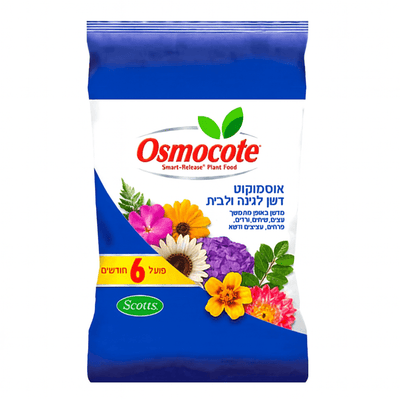
Golden rule: Less nitrogen (N), more potassium and phosphorus (K, P). Excess nitrogen causes the plant to invest in green foliage at the expense of the colorful bracts. For this reason, it is not advisable to over-fertilize - a "spoiled" plant blooms less.
Blooming fertilizer rich in potassium/phosphorus and low in nitrogen, once every few weeks. In moderate doses - better to give a little than too much.
Reduce or stop fertilization. The plant slows down growth and does not need a boost.
💡 If the plant is full of green leaves but hardly blooming - that is a classic sign of excess nitrogen and/or excess water.
✂️ Pruning and maintenance
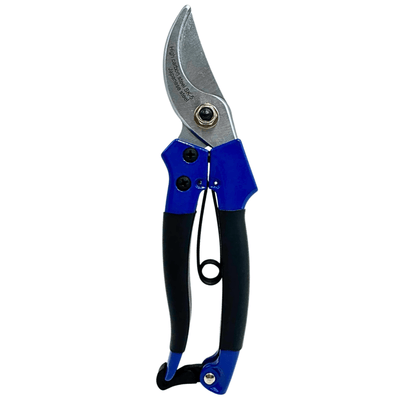
Correct pruning is what turns a bougainvillea from "wild" to impressive, and it encourages more blooms. Bougainvillea tolerates pruning very well.
- When to perform main pruning: At the end of winter / beginning of spring, just before the start of new growth.
- What to remove: Dead, weak, or damaged branches, and branches that are too long - shortening encourages branching and density.
- After a bloom cycle: You can shorten the branches that have bloomed to encourage another bloom cycle later in the season.
- Pinching of young growth tips encourages branching and many new blooming points.
- Guidance and support: The bougainvillea is not a "true" climber (it has no tendrils) - it is advisable to tie and guide the branches to the pergola/fence.
🌱 Propagation - how to prepare new saplings
The common way to propagate bougainvillea is by stem cuttings (semi-hardwood cuttings) from the current year's growth, mainly in summer:
- Cut a 15-20 cm long cutting from a healthy branch of the current year's growth.
- Remove the lower leaves and leave a few leaves at the top end.
- Stick the cutting into a drained and airy potting mix (for example, a sand/peat mixture).
- Maintain light moisture (not wet) and a warm and bright place, without strong direct sun at first.
- Rooting takes a few weeks; when new growth appears - that is a sign of successful rooting.
💡 Bougainvillea cuttings are considered a bit "stubborn" to root - a larger amount of cuttings increases the chance of success.
🔧 Common problems and solutions
🌿 Lots of leaves but no blooms
Cause: Too little sun, excess water, or excess nitrogen.
Solution: Move to full sun, reduce watering, and switch to a low-nitrogen/high-potassium fertilizer.
💧 Yellowing and falling leaves
Cause: Usually over-watering / poor drainage; sometimes chlorosis in alkaline soil.
Solution: Reduce water and improve drainage; in alkaline soil, add fertilizer with iron.
❄️ Leaf drop in winter
Cause: Cold / frost - the plant enters partial dormancy and sheds leaves.
Solution: Natural phenomenon; protect from frost and the plant will sprout again in the spring.
🥀 Root rot
Cause: Soil that stays wet all the time.
Solution: Ensure excellent drainage, do not water soil that is still moist, and in pots, ensure open drainage holes.
🐛 Pests and diseases
Gather on soft growth. Wash off with a stream of water or use horticultural oil/soap.
White/brown lumps on branches. Treat with horticultural oil or a suitable agent.
A greenish caterpillar that eats the leaves at the edges. Hand-pick or use a biological agent.
Mainly in high humidity. Improve ventilation and avoid wetting the leaves.
🏡 Garden Uses and Safety
Where to plant in the garden
- 🌿 Pergolas: Creates a colorful roof of blooms and light shade.
- 🧱 Fences and walls: Covers a large area and provides privacy.
- 🚪 Arches and gates: A dramatic frame for the house entrance.
- 🪴 Large pot: In cold areas - to bring indoors during winter.
Safety - what's important to know
- Place away from narrow passages and play paths.
❓ Frequently Asked Questions
The three most common reasons: too little sun (needs 6+ direct hours), too much water, or too much nitrogen in the fertilizer. Strong sun, little watering, and low-nitrogen fertilizer - that is the formula for blooming.
Rarely. A plant established in the ground hardly needs water beyond rainfall. In summer - moderate and infrequent watering, only when the soil has dried out. Excess water is more harmful than a deficiency.
In the coastal plain, the central region, and warmer areas - yes, easily. In cold areas (Jerusalem, the mountains, the Upper Galilee, the Golan) frost may damage it, but it usually recovers in the spring. There, a protected spot or growing in a pot is preferred.
Main pruning in late winter / early spring, before new growth. You can also lightly trim after every blooming wave to encourage another one. Always wear gloves because of the thorns.
Not exactly. The spectacular colorful leaves are bracts (specialized leaves), and the real flower is the small white one in their center. That is the secret to its intense and long-lasting color.
📊 Summary Table
| Category | Details |
|---|---|
| ☀️ Light | Full sun, 6+ hours a day - a must for blooming |
| 💧 Watering | Minimal; very drought-tolerant; excess water reduces blooming |
| 🌡️ Temperature | Zones 9-11; loves heat; sensitive to frost |
| 🌍 Soil | Well-drained, pH 5.5-7.0; tolerates almost any non-wet soil |
| 🌿 Fertilization | Low nitrogen, rich in potassium/phosphorus; spring-summer only |
| ✂️ Pruning | Late winter/early spring + shortening after a blooming wave |
| 📏 Size | Climber up to 8-10 m; controlled by pruning and support |
| 📊 Difficulty | Easy - also suitable for beginners |
| ⭐ Special | The "flowers" are colorful bracts; blooms more when watered less |
🛒 Buy at Deco Garden
Everything you need to get started with bougainvillea in your garden:
🌿 Deco Garden - Love for Plants
Bougainvillea is proof that spectacular color doesn't require hard work - a little sun, a little water, and an entire garden fills with life. Have a question about growing your bougainvillea? The Deco Garden team is here for you.
© 2026 Deco Garden - All rights reserved
The guide was written by the Deco Garden expert team
🛒 המוצרים מהמדריך
הצמחים והמוצרים שהמדריך מדבר עליהם — לחיצה על כרטיס מעבירה לעמוד המוצר.