🌿 Oregano | The complete guide to growing and care
 המוצר מהמדריך זמין באתר
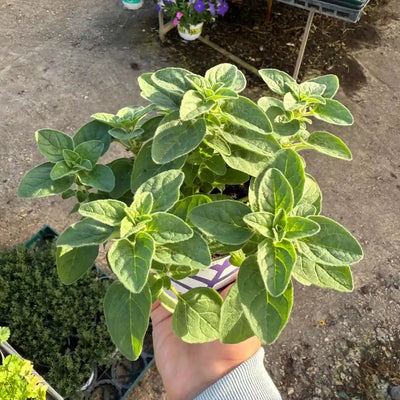
Oregano pot 12 cm (perennial for the garden)
11.50 ₪
📋 Quick Summary - Everything you need to know at a glance
Full sun
6-8 hours a day
Sparse, drought-tolerant
Only when the soil is dry
Very easy
Suitable for beginners
Perennial herb
Mediterranean, aromatic
30-60 cm
Spreading habit
🌱 About the plant
Names and Identification
- Hebrew name: Oregano (Ezov Matzui)
- Scientific name: Origanum vulgare
- English: Oregano / Wild Marjoram
- Family: Lamiaceae
- Type: Perennial, Mediterranean herb
Origin and Background
Oregano originated in the Mediterranean and Western Asia and has been cultivated as a spice for thousands of years. The Greek name means "mountain joy" (oros = mountain, ganos = joy). It is a hardy wild plant that grows on warm, dry, rocky slopes — exactly the conditions we have in Israel, which is why it thrives here almost effortlessly.
Unique Characteristics
- 💪 Drought-tolerant and easy to grow — forgiving of neglect
- 🌸 Blooms in white or pink — attracts bees and butterflies
- 🍕 Highly aromatic — the base spice of Italian and Greek cuisine
- 🌿 Perennial — grows back year after year
- 🪨 Spreading and covering — excellent for rock gardens and as a fragrant ground cover
⚠️ Note - Don't be confused
Three close relatives of the same genus (Origanum) that are easy to confuse:
- Oregano (Origanum vulgare) — The subject of this guide. The classic sharp-hot taste of pizza and tomato sauce.
- Marjoram (Origanum majorana) — A more delicate and sweeter relative, less cold-resistant. Not the same flavor.
- Za'atar / Syrian Oregano (Origanum syriacum) — A separate species, native to our region, with velvety grey foliage and a rich flavor profile of oregano-thyme-marjoram. This is the main component of the Za'atar spice blend. Important: Wild Za'atar is a protected species in Israel — do not pick it from the wild.
They are all in the same family and have overlapping flavors, but they are different plants — in this guide, we focus on Common Oregano (Origanum vulgare).
💚 Why choose Oregano?
Thrives in heat and heatwaves
Drought-tolerant, needs little
A spice harvested as needed
Its flowers attract bees
Returns year after year
Pot, planter, or garden
🍃 Varieties and Types
In the Origanum genus, there are several common varieties and relatives found in gardens and kitchens:
Greek Oregano
Origanum vulgare hirtum — The strong, classic taste, most recommended for cooking.Golden Oregano
'Aureum' — Golden-green foliage, very beautiful and decorative, also edible.Italian Oregano
O. × majoricum — A more delicate hybrid of oregano and marjoram, balanced flavor.Za'atar / Syrian Oregano
Origanum syriacum — A local relative, the ingredient in the Za'atar blend (see clarification box above).🌤️ Detailed Growing Conditions
☀️ Light
- Full sun — at least 6-8 hours of direct sunlight a day.
- The more sun, the more aromatic and flavor-intense the leaves.
- Tolerates partial shade, but the plant will stretch and the flavor will weaken. On a balcony — choose the sunniest spot.
💧 Watering
Oregano is drought-tolerant. The biggest danger is overwatering, not underwatering — excessive water causes root rot. Water only when the soil dries out.
In soil: About every 5-7 days. In a pot: Check more frequently, as it dries out faster.
Very little. In the garden, rain is usually sufficient. In a pot — only when the soil is completely dry.
👉 How to tell? Insert a finger into the soil about 2-3 cm deep. Dry = water. Still moist = wait. It is always better to water too little than too much.
🌡️ Temperature
- Ideal range: 18-25°C, but tolerates Israeli summer heat well, even above 35°C.
- A relatively hardy plant — mature and established plants withstand light cold and even short frosts (down to about -5°C).
- ⚠️ Frost warning: In cold regions (Northern mountains, Upper Galilee, Golan Heights), protect the plant in winter — cover or move potted plants to a sheltered spot during cold nights.
🌍 Soil
- Most important: Excellent drainage. Heavy, waterlogged soil = root rot.
- Light and airy soil, even poor soil — oregano doesn't like overly rich soil.
- Prefers neutral to slightly alkaline pH (about 6.0-8.0).
- In a pot: Quality medium with added coarse sand, perlite, or tuff to improve drainage. A pot with drainage holes is a must.
🌱 Fertilizing
🌸 Spring-Summer
Light fertilization once every 2-3 weeks with a balanced fertilizer, or slow-release fertilizer at the start of the season. In poor soil, it is not strictly necessary.
🍂 Autumn-Winter
Stop fertilizing. The plant enters dormancy and does not require fertilizer.
💡 Tip: Do not over-fertilize. Excess nitrogen increases plant size but dilutes aromatic oils — meaning less flavor. A slightly "hungry" oregano is a tastier oregano.
✂️ Pruning, Harvesting, and Maintenance
- 🌿 Harvest before flowering: The strongest taste in the leaves is just before the plant blooms (usually at the height of summer). This is the best time to harvest.
- ✂️ Regular pruning: Frequent trimming keeps the plant compact and encourages new, dense growth. Do not remove more than a third of the plant in one pruning.
- 🌸 Removing spent flowers: Prune dried flower stems to encourage a new wave of leaves and maintain a neat appearance.
- 🌅 Best time of day for harvest: In the morning, after the dew has evaporated — that's when the concentration of aromatic oils is at its peak.
- ❄️ Winter pruning: Trimming the plant at the end of the season refreshes it for renewed spring growth.
🌿 Plant Propagation
- Cuttings (Fastest and recommended): Cut a 10-15 cm stem, remove the lower leaves, and plant in moist medium. Roots within 2-3 weeks.
- Division: In spring, remove a mature plant and divide it into several sections, each with its own roots. Plant each section separately.
- Seeding: Sow in spring at a temperature of about 20°C. Germination takes 1-3 weeks (slower than other methods).
- Layering: A low-lying stem touching the soil tends to root on its own — you can encourage this and then sever it later.
👍 Best way: Propagation via cuttings or division produces a clone of the parent and is significantly faster than seeding.
🔧 Common Problems and Solutions
🍂 Yellowing leaves
Cause: Almost always overwatering or poor drainage.
Solution: Reduce watering, ensure drainage, let the soil dry out between waterings.
🦠 Root rot
Cause: Soil waterlogged for too long.
Solution: Plant in well-draining medium, use a pot with drainage holes, and stop overwatering.
😐 Weak flavor
Cause: Too little sun or excess fertilizer/water.
Solution: More sun, less fertilizer, and harvest before flowering.
🌫️ Mint Rust
Cause: Fungal disease in humid, crowded conditions.
Solution: Remove infected leaves, thin out for good air circulation, avoid wetting foliage.
🐛 Pests
- Aphids: Cling to soft stems. Wash with a jet of water or spray with a mild soap solution.
- Mint moth larvae: Chew on leaves. Hand-pick or spray with a biological treatment.
- Leafhoppers and Spider mites: Appear mainly in heat and dust — water rinsing and increasing humidity around the plant help.
🍕 Culinary Uses and Safety
🍳 Culinary Uses
- The soul of pizza and tomato sauces — Italian and Greek kitchens.
- Suitable for meat, chicken, fish, and roasted vegetables.
- Greek salad, seasoned olive oil, and infused vinegars.
- Dries perfectly — in fact, the flavor intensifies when dried, and it keeps for months in an airtight container.
❓ Frequently Asked Questions
Only when the soil dries out. In summer in the ground — about every 5-7 days; in a pot, more frequently. In winter, hardly at all. It is always better to underwater than overwater — excess water is the primary danger.
The most common cause is overwatering or poor drainage. Let the soil dry between waterings, ensure the pot has drainage, and the yellowing should stop.
Just before flowering, usually at the height of summer, and in the morning hours after the dew has evaporated. That is when the concentration of aromatic oils in the leaves is highest.
Absolutely. Oregano is excellent for pots and window boxes. It needs a sunny spot, well-draining soil, and a pot with drainage holes. Just remember that it dries out faster in a pot than in the ground.
These are two different species from the same family. Oregano is Origanum vulgare, while za'atar (Syrian oregano, Origanum syriacum) is a local species with a richer flavor, and it is the main ingredient in the za'atar spice blend. Wild za'atar is a protected species in Israel.
📊 Summary Table
| Category | Details |
|---|---|
| ☀️ Light | Full sun, 6-8 hours a day |
| 💧 Watering | Minimal — only when the soil is dry; drought-tolerant |
| 🌡️ Temperature | 18-25°C ideal; tolerates high heat; hardy down to about -5°C |
| 💦 Humidity | Dry air is preferred; high humidity invites disease |
| 🌍 Soil | Light and well-draining, pH 6.0-8.0 |
| 🌱 Fertilizing | Light, every 2-3 weeks in spring-summer; not in winter |
| 📏 Size | 30-60 cm tall, spreads outward |
| 📊 Difficulty Level | Very easy — suitable for beginners |
| ⭐ Special | Classic Mediterranean herb; harvest before flowering for best flavor |
🛒 Shop at Deco Garden
🌿 Deco Garden - A Love for Plants
Oregano is one of the easiest and most rewarding herbs to grow in Israel — sun, a little water, and good drainage, and you've got Mediterranean aroma and flavor straight from your balcony. Have a question about the plant? We are here for you.
© 2026 Deco Garden - All rights reserved
This guide was written by the Deco Garden expert team
🛒 המוצרים מהמדריך
הצמחים והמוצרים שהמדריך מדבר עליהם — לחיצה על כרטיס מעבירה לעמוד המוצר.