Kalanchoe: Watering, light, reblooming, and pot selection
 המוצר מהמדריך זמין באתר
Perennial flower for home and garden
12.00 ₪
המוצר מהמדריך זמין באתר
Perennial flower for home and garden
12.00 ₪
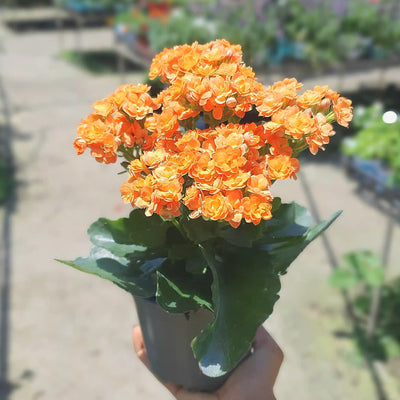
A flowering Kalanchoe is a succulent, so its care differs from that of a thirsty seasonal flower. The key is good light, well-draining substrate, checking for moisture before watering, and understanding that reblooming requires controlled lighting conditions. This guide is suitable for the flowering Kalanchoe sold at Deco Garden in 8 cm and 12 cm nursery pots.
Light and placement: Bright, but avoid extreme sun
Professional horticultural sources agree that flowering Kalanchoe needs a bright spot. Indoors, a well-lit window with filtered light or gentle morning sun is suitable. Do not move a plant raised in a nursery or protected space to intense Israeli midday sun in a single day; increase exposure gradually and monitor the leaves.
Outdoors, choose a balcony or corner protected from extreme heat, prolonged rain, and frost. Kalanchoe is a perennial under the right conditions but is not frost-resistant. This definition does not mean every corner in the garden is suitable.
- Long, pale growth: May indicate too little light.
- Light or brown spots after moving: May indicate exposure that is too harsh.
- Existing blooms fading: Can be the natural end of the cycle, not necessarily a care error.
Watering and drainage: Check the pot, not the calendar
The succulent leaves store water, while wet soil over time can damage the roots and the base of the plant. Allow most of the substrate to dry, but do not wait until the plant is persistently wilting. When the time comes, water thoroughly until water flows out of the drainage hole, then empty the saucer or decorative cover.
- Lift the pot slightly to feel if it has become lighter.
- Check using a finger or a wooden skewer past the top layer.
- If the substrate is still damp deeper down, wait and check again later.
- If most of the substrate is dry, water slowly and evenly.
- Let the excess drain out and return the pot to its spot only after the dripping has stopped.
The frequency of checking varies between summer and winter, between plastic and terracotta, and between a sunny window and a cool room. Therefore, there is no single number of days that fits every home.
Substrate and fertilization
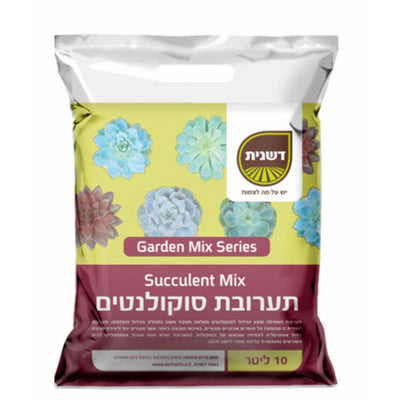
For planting in a container, use an airy, fast-draining mix suitable for cacti and succulents. An open drainage hole is more important than a layer of stones at the bottom. A layer of gravel does not fix a closed container and does not replace a suitable substrate.
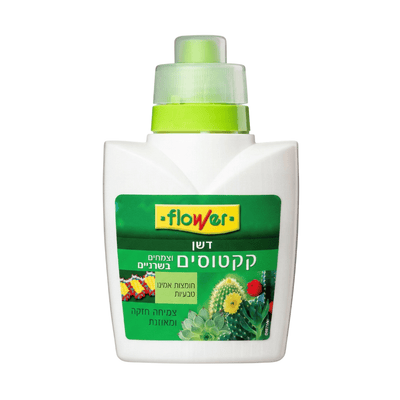
Fertilize only during active growth and at the dosage on the product label. Stop and investigate the cause if the plant is weak, the roots are wet, or the lighting is inadequate; fertilizer does not fix overwatering or lack of light. Different sources suggest varying frequencies and formulas, so the fertilizer label and the plant's response determine the schedule.
How to try and encourage reblooming
Flowering Kalanchoe is a short-day plant: bud formation is primarily triggered by a long, continuous night, not just by adding fertilizer. Iowa State and Illinois Extension describe a home process of 14 hours of continuous darkness per day for about six weeks, alongside good light during daylight hours. Virginia Tech notes a range of 14–18 hours of darkness for four to six weeks.
- After blooming: Remove finished flower clusters without damaging healthy leaves.
- Build a healthy plant: Continue proper light, watering, and drainage until active growth is visible.
- Create a continuous night: For about six weeks, provide 14 hours of darkness without room lights, screens, or streetlights shining on the plant.
- Return to light during the day: Darkness is not permanent storage in a cupboard. The plant still needs bright daylight hours.
- Monitor patiently: When buds appear, return to a normal light routine and continue watering according to the substrate.
Which terracotta fits an 8 cm or 12 cm Kalanchoe?
The Deco Garden Kalanchoe arrives in a nursery pot marked 8 cm or 12 cm in diameter. This number does not indicate the diameter of the root ball, nor does it prove that the nursery pot will fit inside another vessel marked with the same number.
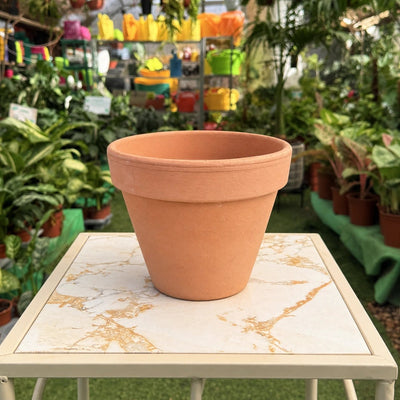
The classic terracotta pot is sold in sizes 7, 9, 11, 13, 15, 17, and 23 cm. Each number is a nominal external measurement, not the size of the planting space. Internal diameter, base diameter, and internal depth data have not yet been measured in the warehouse, so the checkout does not lock a size.
Calculation table for direct planting only
A common starting point is a container whose internal width is about 2.5–5 cm larger than the root ball. The table converts this calculation rule to the external measurements appearing in the store; before ordering, measure the inside of the vessel and the depth of the roots.
On mobile: Swipe the table sideways to see all columns.
| Terracotta size in store | Root ball range for initial calculation | What to check before choosing |
|---|---|---|
| 7 cm | 2–4.5 cm | Tiny vessel; check depth and roots |
| 9 cm | 4–6.5 cm | Internal diameter and depth |
| 11 cm | 6–8.5 cm | May be a candidate after measuring a small plant |
| 13 cm | 8–10.5 cm | Do not assume an 8 cm nursery pot equals an 8 cm root ball |
| 15 cm | 10–12.5 cm | May be a candidate after measuring a 12 cm plant |
| 17 cm | 12–14.5 cm | Check that no large volume of substrate is left without roots |
| 23 cm | 18–20.5 cm | Not an automatic step up; check stability and depth |
For use as a decorative cover: The 2.5–5 cm rule does not apply. Measure the top diameter, bottom diameter, and height of the nursery pot and compare them to the internal diameter and depth of the cover pot.
Common signs and what to check
- Soft base or transparent leaves: Immediately check for wet soil, drainage hole, and standing water.
- Long plant and large gaps between leaves: Check if the light is too weak and gradually move to a brighter place.
- Dry flowers and healthy leaves: The blooming cycle may have ended. Remove the dry clusters and continue normal care.
- No new blooms: First check light and general health; then, if desired, try the long-night process.
- White woolly spots: Isolate from other plants and check for mealybugs before treating.
Three complementary products, with a clear reason
Substrate for succulents
For repotting into a container with a drainage hole. The 1-liter variant is suitable for a small transfer; the actual amount depends on depth and root ball.
Choose substrateTerracotta pot
For direct planting after measuring the root ball and the inside of the vessel. No automatic size was chosen because internal dimensions are not verified.
Choose terracottaSucculent fertilizer
A measured addition during active growth only. Use according to the label and do not add to compensate for weak light or wet soil.
Fertilizer detailsFrequently asked questions
How often should Kalanchoe be watered?
There is no fixed number of days. Check the substrate past the top layer, water after it has mostly dried, and empty all excess.
Can Kalanchoe be placed in direct sun?
It can be exposed to gentle sun gradually. Do not move a plant from the nursery immediately to strong midday sun; indoors, a bright, filtered spot is preferable.
Why is the Kalanchoe not blooming again?
New buds depend on long, continuous nights, good daylight, temperature, and plant health. Even after a six-week regimen, the result is not guaranteed for every variety.
Which terracotta fits an 8 cm or 12 cm pot?
It cannot be determined by the nursery pot number alone. Measure the root ball and the internal diameter and depth of the terracotta; for direct planting, start with an internal vessel about 2.5–5 cm wider than the root ball.
Professional sources
- Royal Horticultural Society — Kalanchoe blossfeldiana
- Iowa State University Extension — Care and Reblooming
- University of Illinois Extension — Light, substrate, and long nights
- NC State Extension — Flowering Kalanchoe in containers
- Virginia Cooperative Extension — Flowering potted plants
- UF/IFAS Extension — Growing Kalanchoe in containers and landscapes
🛒 המוצרים מהמדריך
הצמחים והמוצרים שהמדריך מדבר עליהם — לחיצה על כרטיס מעבירה לעמוד המוצר.