

How much soil do you need for a pot or planter? Calculating liters and bags
 המוצר מהמדריך זמין באתר
Migdal from the Northern Border 10 liter planting mix
16.00 ₪
Deco Garden Practical Calculation Guide
To know how much potting mix to buy, measure the inner space up to the intended soil line — then subtract the volume occupied by the root ball. Here you will find formulas for a rectangular planter, a straight round pot, and a tapered round pot, with examples for choosing 10, 30, 50, and 80-liter bags.
Measure the inside of the pot, not the outer dimensions
Wall thickness, a raised base, and a wide rim reduce the planting volume. Measure the inner space in centimeters. Measure the depth from the bottom of the planting space up to the intended soil line, not to the top edge.
Leave a watering gap between the surface of the medium and the rim of the pot so that water does not immediately spill out. If you have already measured to the intended soil line, the gap has already been subtracted and should not be subtracted again.
Soil volume calculator by pot shape
Unit conversion: 1 liter = 1,000 cm³. All measurements in the formulas are internal measurements in centimeters.
| Pot shape | What to measure inside | Formula for liters |
|---|---|---|
| Rectangular planter | Length, width, and depth to soil line | Length × width × depth ÷ 1,000 |
| Straight round pot | Inner diameter and depth | π × (diameter ÷ 2)² × depth ÷ 1,000 |
| Tapered round pot | Top diameter, bottom diameter, and depth | (π × depth ÷ 12) × (Dtop² + Dtop × Dbottom + Dbottom²) ÷ 1,000 |
For the result, use π ≈ 3.1416. An irregular decorative pot, rounded walls, or a double base can change the volume. Therefore, the result is a useful estimate, not a laboratory measurement.
Final calculation for plant transfer
New mix volume ≈ total volume to soil line − root ball volume. Leave a watering gap at the top, and do not compress the mix to fit more in.
Three examples: from dimensions to number of liters
Rectangular planter
Inside dimensions: 80 × 25 × 23 cm.
80 × 25 × 23 ÷ 1,000 = 46 liters total.
If the root ball takes up about 10 liters, you need about 36 liters of new mix.
Tapered round pot
Top diameter 40, bottom diameter 30, and depth 35 cm.
The calculated volume is about 33.9 liters.
If the root ball takes up 12 liters, you need about 21.9 liters of new mix.
Straight round pot
Inner diameter 30 and depth 25 cm.
The calculated volume is about 17.7 liters.
If the root ball takes up 6 liters, you need about 11.7 liters of new mix.
How to choose between 10, 30, 50, and 80-liter bags
Combine volumes until you reach the estimated new mix amount. It is advisable to leave a small reserve for topping up after the medium settles, but there is no need to fill to the rim or pack it forcibly. An unopened bag should be stored according to the packaging instructions in a dry and shaded place.
10 liters
For small top-ups or several small containers, according to the calculation.
10-liter bag30 liters
For a medium volume or as part of a bag combination.
30-liter bag50 liters
For a large planter or several transfers together, according to the measurement.
50-liter bag80 liters
For a larger project or multiple containers, according to the sum.
80-liter bagCorrect volume does not replace correct mix selection
Ready-made mixes are not identical, and the needs of plants also differ. Many cacti and succulents require a more drained and airy medium; many epiphytic orchids grow in a coarse mixture based on bark rather than standard potting soil. Follow the species requirements and the mix label.
Planting and transferring: six steps
- Check drainage: Use a container with open drainage holes, or plant in a drained grow pot inserted into a decorative cover pot.
- Choose a moderate size increase: When transferring a houseplant, a container slightly larger than the root ball reduces excess medium that stays wet for a long time.
- Moisten slightly if needed: Very dry peat-based mix can repel water at first. Add a little water and mix until uniformly moist, not soaked.
- Maintain plant height: Place the root ball so that the base of the stem or root crown remains at a similar height to what it was before.
- Fill around the ball: Add mix in small portions and stabilize gently. Do not create a gravel layer at the bottom and do not pack tightly.
- Water and drain: Water according to the plant's requirements, allow excess to escape, and empty standing water from the cover pot or saucer.
Frequently asked questions
Mix based on calculation
Choose a bag or a combination of bags according to the new volume you calculated.
To all potting mixesFilling around the roots
A small hand trowel helps to transfer the mix around the root ball in controlled amounts.
To hand trowelClean work
Gloves are useful while removing the plant, filling the substrate, and cleaning the workspace.
To gardening gloves🛒 המוצרים מהמדריך
הצמחים והמוצרים שהמדריך מדבר עליהם — לחיצה על כרטיס מעבירה לעמוד המוצר.
-
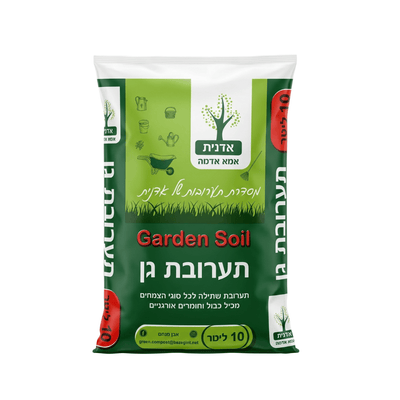 Migdal from the Northern Border 10 liter planting mix
16.00 ₪לעמוד המוצר
-
 30 liter planting mix from Migdal from the Northern Border
30.00 ₪לעמוד המוצר
-
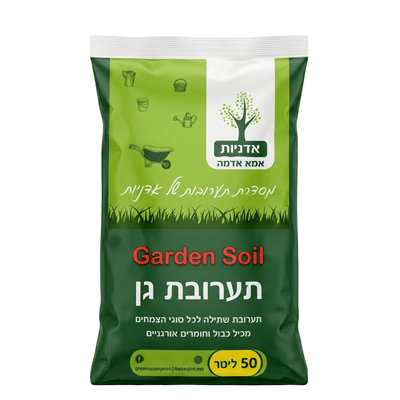 50 liter planting mix from Migdal from the Northern Border
50.00 ₪לעמוד המוצר
-
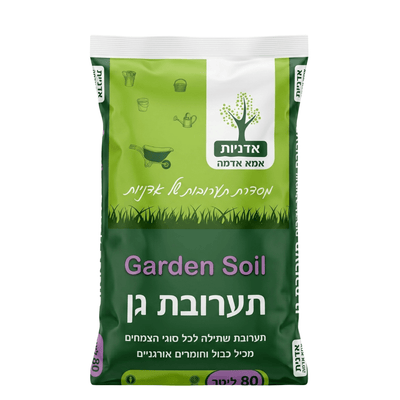 80 liter planting mix from Migdal from the Northern Border
75.00 ₪לעמוד המוצר
-
 Potting mix, planting soil, fertilizer-enriched
החל מ-25.00 ₪לעמוד המוצר
-
 Soil mixture for planting in a garden mix pot
החל מ-1,025.00 ₪לעמוד המוצר
-
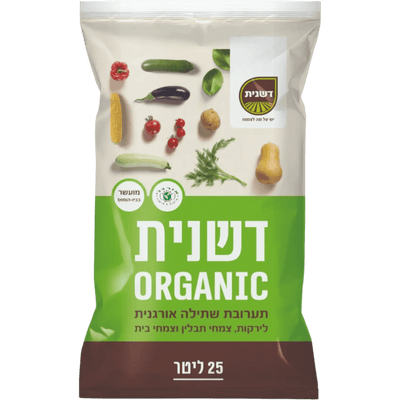 Organic Planting Mix 25 Liter - DASHANIT ORGANIC
50.00 ₪לעמוד המוצר
-
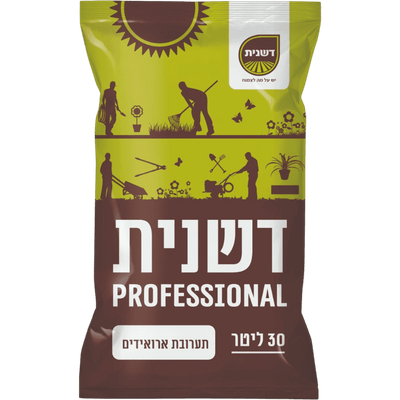 Aroid Mix 30 Liters Soil-based
80.00 ₪לעמוד המוצר


