How to choose a terracotta pot for a plant: dimensions, drainage, and fit
 המוצר מהמדריך זמין באתר
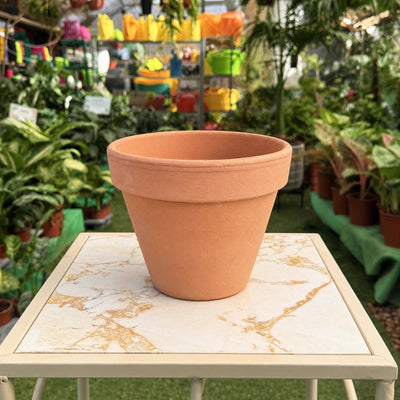
Classic terracotta clay jug
5.00 ₪
A good terracotta pot is not just a beautiful choice. The material, size, and drainage hole affect the drying rate of the potting mix and the amount of water that remains around the roots. This guide will help you choose the right size without guessing.
Why does terracotta behave differently than plastic?
Unglazed terracotta is a porous material. Some moisture evaporates through the sides of the vessel, which is why the potting mix tends to dry out faster than in a plastic pot or glazed container. This can be very suitable for cacti, succulents, and other plants that prefer good drainage and drying out between waterings. On the other hand, a plant that likes consistent moisture will require more frequent checks and watering.
First, choose: direct planting or decorative cover?
Direct planting in terracotta
- Gently remove the plant or measure the nursery pot.
- Measure the widest diameter of the root ball.
- Look for a container that is about 2.5–5 cm wider, with a depth that matches the root system.
- Ensure the drainage hole is open and use a potting mix suitable for the plant.
There is no need to add a layer of gravel at the bottom. It does not improve drainage and may leave a wet zone higher up inside the potting mix.
Terracotta as a cover for a nursery pot
Here, outer diameter is not enough. Measure three things on the nursery pot: the top diameter, the bottom diameter, and the height. Compare them to the inner diameter and inner height of the terracotta vessel, leaving a little room so it is easy to remove the pot and drain excess water.
Important: The size number on a terracotta vessel does not guarantee that a nursery pot with the same number will fit inside it. The rim, shape, and wall thickness vary from vessel to vessel.
Which size is suitable?
| Condition | What to measure | How to choose |
|---|---|---|
| Young seedling or small succulent | Root ball | Only one size up, usually an increase of 2.5–5 cm |
| Plant that needs repotting | Current pot and roots | A slightly wider vessel, not a leap to a giant pot |
| Tall or heavy plant | Root ball, height, and plant weight | A stable vessel with a sufficient base and depth |
| Cover for a nursery pot | Opening, base, and height | According to actual internal dimensions plus a small margin |
All sizes of the classic terracotta pot
Who is terracotta especially suitable for?
- Cacti and succulents: The porosity can assist in drying, but you still need a drainage hole and a fast-draining potting mix.
- Rosemary, thyme, and sage: They love sun and good drainage. A mature plant needs a deep and stable vessel; very small pots dry out quickly.
- Houseplants that like partial drying: A good option if you check the potting mix and do not water on a fixed schedule.
For ferns and plants that love uniform moisture, terracotta can work, but it is less forgiving and requires more frequent monitoring.
Potting mix, drainage, and watering
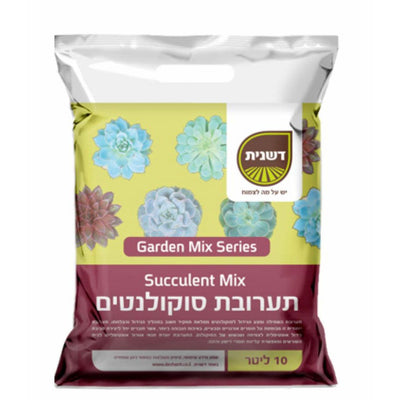
A drainage hole is not a substitute for a suitable potting mix. For cacti and succulents, you can incorporate a dedicated succulent mix. After watering, let the water drain out and empty the saucer or the cover vessel. Do not leave the base of the pot sitting in water.
A new, dry terracotta pot may absorb some moisture from the mix. In the first few days, it is worth checking the actual moisture, but do not flood it "just in case." For fleshy plants, it is better to check the potting mix and the plant's condition before watering again.
What is the white coating that sometimes appears?
A white deposit on the side is usually an accumulation of minerals from irrigation water or fertilizer. This is not necessarily mold and does not mean the pot is defective. You can clean it gently when the vessel is empty, reduce excess fertilizer, and flush the potting mix with water according to the plant's needs.
Common mistakes
- Choosing a pot much larger than the root ball.
- Assuming outer diameter equals inner diameter.
- Blocking the drainage hole or leaving water in the saucer.
- Using the same watering schedule in winter and summer.
- Moving a moisture-loving plant to terracotta without adjusting the check frequency.
Short shopping list
- Classic terracotta clay pot in a size that fits the root ball.
- Dedicated succulent potting mix when that is the plant type.
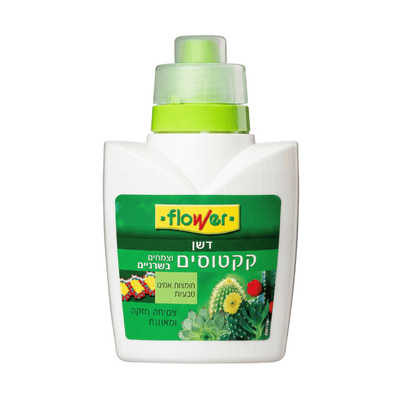
- Fertilizer for cacti and succulents according to the label instructions and during the growing season.
Not sure? Send us the diameter and height of the nursery pot. We can help you choose without promising a fit based on a number alone.
Professional resources
🛒 המוצרים מהמדריך
הצמחים והמוצרים שהמדריך מדבר עליהם — לחיצה על כרטיס מעבירה לעמוד המוצר.