🎨 Caladium | The Complete Guide to Growing and Care
 המוצר מהמדריך זמין באתר
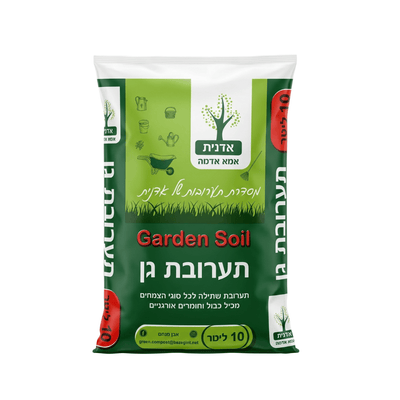
Migdal from the Northern Border 10 liter planting mix
14.00 ₪
📋 Quick Summary - Everything you need to know at a glance
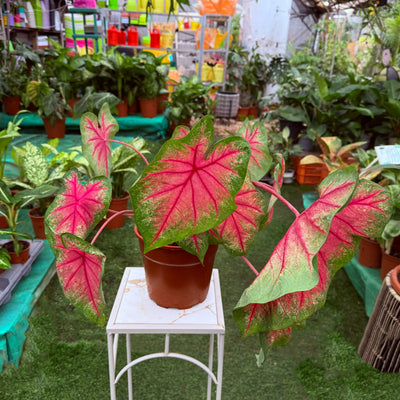
The Caladium is one of the most spectacular plants for the warm season: giant heart-shaped leaves in a variety of colors - pink, red, white, and green.
Bright indirect light / partial shade
No harsh direct sun
Consistent moisture during the growing season
Water when the top layer dries
Moderate
Requires heat and humidity
Tuberous foliage plant
Deciduous - enters winter dormancy
30-60 cm in a pot
Up to 75 cm in large varieties
🌱 Meet the Plant
Names and Identification
- Hebrew name: Caladium (also known as "Angel Wings")
- Scientific name: Caladium bicolor (synonym: Caladium × hortulanum)
- English: Caladium, Angel Wings, Elephant Ear, Heart of Jesus
- Family: Araceae
- Type: Perennial tuberous foliage plant, winter-deciduous
Origin and Background
The Caladium originates from the tropical regions of Central and Northern South America, from warm and humid rainforests. It grows there in the shade of trees, which is why it loves filtered light and high humidity. It does not produce its stunning colors in flowers, but in the leaves themselves - its bloom is negligible and greenish, and it almost never blooms in a pot.
Unique Characteristics
- 🎨 Colorful heart leaves: Combinations of pink, red, white, pearl-pink, and green - every leaf is like a painting.
- 💗 Prominent veins: Many varieties have striking red or pink veins against a contrasting background.
- 🌡️ Heat-loving: A definitive summer plant - it gives its best performance in the warm Israeli season.
- 🛌 Winter dormancy: In autumn, the leaves wither and the tuber rests - then it returns and grows in the spring.
- 🪴 Versatile: Suitable both for an indoor pot with indirect light and for a shaded garden in the summer.
⚠️ Don't be confused - Caladium vs. other "Elephant Ears"
The term "Elephant Ear" is used for several different plants in the Araceae family, and it's easy to get confused:
- Caladium: Thin, extremely colorful heart-shaped leaves; enters full dormancy in winter and the tuber rests dry.
- Alocasia: Pointy, "ribbed," and more durable leaves, usually dark green; does not die back completely.
- Colocasia (Taro): Giant leaves that droop downwards, mostly green.
💡 How to identify a Caladium: If the leaf is thin, heart-shaped, and has intense coloring of pink/red/white - it's a Caladium.
💚 Why choose a Caladium?
🌈 Varieties and Types
Caladiums have two main leaf groups, containing a huge variety of colors:
Fancy-leaf
The large, familiar heart-shaped leaves, 30-75 cm. Most colorful, prefer partial shade and filtered light.
Strap-leaf
Narrow and long leaves, a low and bushy plant (up to 30 cm). Tolerates more shade and also a bit more sun.
White-Green
Like 'Candidum' / 'White Christmas' - glowing white leaf with green veins.
Red
Like 'Red Flash' / 'Florida Cardinal' - intense red center with green margins.
Pink
Like 'Pink Beauty' / 'Rose Glow' - speckled pearl-pink on a green background.
Sun-tolerant
New varieties like 'Garden White' / 'Firecracker Red' tolerate a few hours of direct sun.
* Stock varies by season. In summer, we bring a variety of colors - it's worth checking what is currently available in the store.
🌤️ Detailed Growing Conditions
☀️ Light
- Bright indirect light or partial shade - this is ideal. Indoors: near a bright window, without the harsh afternoon sun hitting the leaves.
- Outdoors: a shaded corner or filtered shade. Hot, direct sun burns the leaves and fades the color.
- Strap-leaf varieties tolerate more shade; new varieties ("sun-tolerant") tolerate a few hours of soft morning sun.
💧 Watering
During the growing season (spring-summer), the Caladium loves consistently moist soil - but not soggy or wet. Good drainage is a must, because the tuber rots easily in standing water.
Water as soon as the top layer of the substrate (2-3 cm) dries out. Maintain constant humidity.
As the leaves wither - gradually reduce and stop almost completely. The tuber rests dry until spring.
How do you know when to water? Stick a finger 2-3 cm into the substrate. Dry at the tip - water. Still moist - wait. Wilted and droopy leaves in summer = thirst or root rot, so always check the substrate before adding water.
🌡️ Temperature
- Loves heat: the ideal range for growth is about 20-25°C. The hotter and more humid, the better it likes it.
- Sensitive to cold: below 15°C, growth stops and the leaves start to fade.
- 🥶 Frost warning: The Caladium is not frost-resistant at all. Any temperature around 0°C will kill the foliage. In mountainous and valley areas in Israel - bring it inside or remove the tuber for storage before winter.
- Plant outdoors only when the weather has stabilized on heat (soil above ~20°C) - in Israel usually from mid-spring.
💦 Humidity
- A tropical plant that loves high humidity (around 60-75%). The dry air of an Israeli summer and air-conditioned rooms is challenging for it.
- Increasing humidity: place on a tray of pebbles with a little water, group plants together, or keep away from direct air conditioning and fans.
- Air that is too dry manifests as brown, dried edges on the leaf tips.
🌍 Soil and Substrate
- Substrate rich in organic matter, airy, and well-draining. A good mixture: peat/coco coir + perlite + a little compost.
- Prefers slight acidity, pH around 5.5-6.5.
- A pot with drainage holes is required - the tuber is very sensitive to rot in soggy substrate.
🧪 Fertilization
🌱 Spring-Summer (Growth)
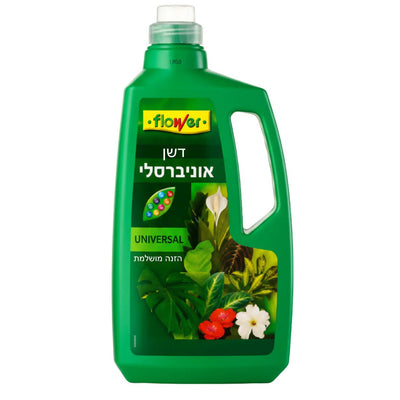
Fertilize regularly during the growing season - balanced liquid fertilizer every two weeks, or slow-release fertilizer at the beginning of the season. Regular fertilization = more leaves and more intense color.
🍂 Autumn-Winter (Dormancy)
Stop fertilizing completely when growth stops and leaves begin to wither. The tuber is resting - it does not need food during dormancy.
🛌 Winter Dormancy and Tuber Storage - Important Point!
⭐ The most important thing to understand: When the leaves turn yellow, wither, and disappear completely in autumn - the plant is not dead! This is the Caladium's natural dormancy. The tuber simply rests underground (for about 8-10 weeks), and in the spring, it sprouts fresh, colorful foliage again. Do not throw away the pot.
What to do in Israel as winter approaches?
- Reduce watering as soon as the leaves begin to fade, until it stops almost completely.
- Option A - Leave in the pot: In warm and protected areas, you can leave the dry tuber in the pot, in a place protected from cold and rain, and resume watering in the spring.
- Option B - Store the tuber: Remove the tuber from the soil, clean it gently, and dry it for a week or two in a ventilated, shaded place.
- Storage: Keep the tuber dry in a box with dry peat/vermiculite, with the tubers not touching each other, in a dry place that isn't cold (about 16-18°C).
- Spring: When it warms up (soil above ~20°C), replant with the "eyes" (buds) facing up, start watering - and the show returns.
🚫 Do not refrigerate! Storing the tuber in the cold of the refrigerator causes it to rot. Keep it dry at a comfortable room temperature.
🌿 Propagation
The simple way to propagate a Caladium is by dividing the tuber, at the end of dormancy and before planting in spring:
- Remove the resting tuber and locate the "eyes" on it - the small buds from which foliage grows.
- Cut it with a clean, sharp knife into parts, so that each part has at least one healthy "eye."
- Let the cuts dry for a day or two to prevent rot.
- Plant each part in a draining substrate, with the eye facing up, and water moderately until growth appears.
- Keep warm and humid - growth starts when the soil is warm enough.
🔧 Common Problems and Solutions
🍂 Leaves turn yellow and wither in autumn
Reason: In most cases - natural winter dormancy, not a problem! Solution: Reduce watering and let the tuber rest. If this happens in mid-summer - check for root rot from overwatering.
🟤 Brown and dried edges
Reason: Air is too dry or harsh direct sun. Solution: Increase humidity (pebble tray, move away from air conditioner) and move to indirect light.
🥀 Droopy leaves / Soft and moldy tuber
Reason: Overwatering and poor drainage causing tuber rot. Solution: Reduce watering immediately, ensure drainage holes; if the tuber is soft and moldy - remove and replace substrate.
🌫️ Color fades and leaves are pale
Reason: Direct sun causing bleaching, or alternatively, too little light. Solution: Aim for bright indirect light - that's where the colors are most intense.
🐛 Pests
Caladium is usually healthy and resistant, but it's worth keeping an eye out for:
- Spider mites: appear when the air is very dry - fine webs and light spots on the leaves. Solution: increase humidity and wash the leaves.
- Aphids and Thrips: cling to soft growth. Solution: wash with water or vegetable oil/soap.
- Slugs and snails (in the garden): gnaw holes in the delicate leaves. Solution: collect in the evening or use a trap.
❓ FAQ
Probably not. In the fall, the Caladium enters a natural dormancy: the leaves wither and the tuber rests underground. Reduce watering, keep the tuber dry, and it will sprout again in the spring.
During the growing season (spring-summer) - water as soon as the top layer (2-3 cm) dries out, and maintain consistent moisture. In the winter, during dormancy - stop almost completely.
Usually, this is due to air that is too dry or strong direct sun. Increase the humidity around the plant and move it to bright indirect light without direct midday sun.
Absolutely - it is an excellent summer plant for a shaded corner during the hot season. It is sensitive to cold and frost, so towards winter, bring it indoors or store the tuber dry.
Bright indirect light or partial shade. Strong direct sun burns and fades the leaves; too much darkness dulls the color. "Sun-tolerant" varieties can handle a few hours of soft sun.
📊 Summary Table
| Category | Details |
|---|---|
| ☀️ Light | Bright indirect light / partial shade; no strong direct sun |
| 💧 Watering | Consistent moisture in summer; almost no water during winter dormancy |
| 🌡️ Temperature | Ideal 20-25°C; sensitive to cold below 15°C; not frost-resistant |
| 💦 Humidity | High (60-75%); loves humid air |
| 🌍 Soil | Rich, well-aerated, and well-draining medium; pH 5.5-6.5 |
| 🧪 Fertilizing | Once every two weeks in summer; stop during dormancy |
| 📏 Size | 30-60 cm in a pot (up to 75 cm in large varieties) |
| 📊 Difficulty | Moderate - requires heat and humidity |
| ✨ Special | Winter dormancy - leaves wither and the tuber returns in spring |
🛒 Shop Deco Garden
Want a Caladium of your own? Here is what you should start with:
🌿 Deco Garden - A Love for Plants
Do you have a question about your Caladium or any other plant? We are here for you. The Deco Garden team will be happy to help you choose, grow, and care for them - so your home and garden can bloom in every season.
© 2026 Deco Garden - All rights reserved
The guide was written by the Deco Garden expert team
🛒 המוצרים מהמדריך
הצמחים והמוצרים שהמדריך מדבר עליהם — לחיצה על כרטיס מעבירה לעמוד המוצר.