🌟 Pentas | The Complete Guide to Growing and Care
 המוצר מהמדריך זמין באתר
Potting mix, planting soil, fertilizer-enriched
22.50 ₪
📋 Quick Summary - Everything you need to know at a glance
Full sun (recommended) to partial shade
At least 6 hours of sun daily
Moderate and regular
Decreases in winter, increases in summer
Easy
Suitable for beginners
Flowering shrub, herbaceous subshrub
Rubiaceae family (coffee family)
Approx. 30-60 cm
Height and width in pot/bed
🌱 Getting to know the plant
Names and Identification
- Hebrew Name: Pentas
- Scientific Name: Pentas lanceolata
- English: Egyptian Star Cluster, Star Flower
- Family: Rubiaceae - The coffee family
- Type: Flowering subshrub, perennial in warm regions
Origin and Background
Pentas is native to the Arabian Peninsula and East Africa (from Yemen to the east of the continent), where it grows as a wild subshrub reaching up to 1-2 meters. The plant is very popular in ornamental gardening thanks to its abundant and continuous flowering throughout the warm season.
Unique Characteristics
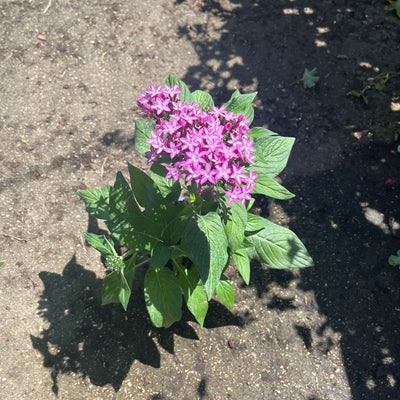
- 🌸 Tiny star-shaped flowers grouped into round clusters (corymbs) about 10 cm in diameter, in shades of red, pink, white, and lilac-purple
- 🦋 Butterfly magnet - one of the most highly recommended plants for butterfly gardens
- ☀️ Heat-lover - continues to bloom at the height of the Israeli summer, when many other plants are already weakened by the heat
- ✂️ Blooms continuously when deadheaded (faded flowers are removed)
- 🪴 Versatile - excellent for pots, garden beds, butterfly gardens, and group planting
💚 Why choose Pentas for your garden
One of the few plants that keep blooming in heavy heat
Attracts butterflies and pollinators to the garden
Clusters of stars in red, pink, white, and purple
Also suitable for beginner gardeners
Pot, bed, border, or group planting
🎨 Varieties and Shades
Pentas comes in a variety of shades - it is worth choosing according to your favorite color or combining several together for a multi-colored bed:
The most striking shade, a favorite of pollinators
One of the most popular varieties in ornamental gardens
Adds a cool and soothing tone to the garden bed
Looks great at twilight and in a night garden
🌤️ Detailed Growth Conditions
☀️ Light
- Full sun (6 hours or more per day) - provides the richest bloom
- Tolerates partial shade, but when light is limited, the bloom weakens and the plant tends to "stretch" and thin out
- In the scorching Israeli summer, light afternoon shade is also sufficient, especially in pots
💧 Watering
Pentas loves consistent soil moisture but does not tolerate wet, soggy soil - good drainage is critical to prevent root rot.
About 2-3 waterings per week (more in small pots and heavy heat), water deeply
Reduce significantly, let the soil dry out partially between waterings
How do you know when to water? Check the top 2-3 cm of soil - if they are dry, it is time to water. A mature, established plant in the ground develops some tolerance to drought, but rich blooming requires regular watering.
🌡️ Temperature
Ideal range: about 18-32°C. Pentas loves heat and thrives in it - this is exactly what makes it the star of the Israeli summer, while many other flowering plants "break" from the heat.
⚠️ Frost warning: The plant is sensitive to cold and is not frost-resistant - damage can appear below about 7°C. In mountainous areas and valleys in Israel with a cold winter and frost (e.g., Jerusalem, Golan Heights, Jordan Valley), it may be damaged in winter and act as an annual plant, while in coastal and plain areas with a mild winter, it can exist as a perennial.
🌍 Soil
- Fertile soil, rich in organic matter and well-drained
- Adapts to different soil types - clay, loamy, and sandy - as long as the drainage is good
- Preferred pH range: around 6-7 (slightly acidic to neutral), but also tolerates alkaline soil
- In a pot: quality potting mix + compost + perlite for improved drainage
🌿 Fertilizing
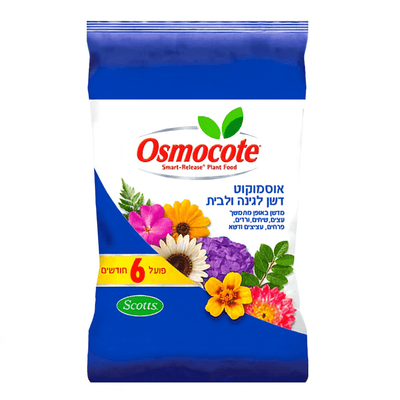
Balanced fertilization roughly every 3-6 weeks. If the plant develops a lot of foliage and few flowers - you can reduce nitrogen and add a fertilizer that encourages flowering.
Reduce significantly or stop fertilizing entirely - the plant is in a slower growth phase.
✂️ Pruning and Maintenance
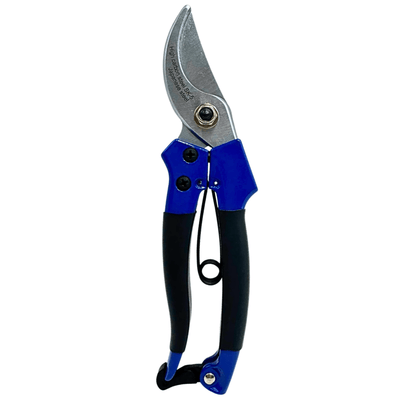
- Deadheading: The most important action for continuous flowering - remove clusters of flowers that have faded to encourage the plant to produce more.
- Pinching young stems: Encourages branching and a bushier, more abundant plant, instead of tall and thin.
- Hard pruning at the end of the season: You can prune about a third of the plant's volume toward the end of summer/autumn to renew growth.
🌱 Propagation
Two main ways to propagate Pentas:
Cuttings (the fastest and most common way)
- Cut a soft stem cutting (not woody), about 10 cm long, preferably in spring-summer
- Remove the lower leaves and leave only the top leaves
- Plant in a drained and slightly moist rooting mix
- Maintain consistent moisture and avoid strong direct sun until rooted
- After roots have developed (a few weeks), transplant to a permanent pot
Propagation by seeds
You can sow seeds in a warm and moist environment; germination and establishment are slower than propagation by cuttings.
🔧 Common Problems and Solutions
🍂 Yellowing leaves
Cause: Usually overwatering or poor drainage.
Solution: Check that the pot is well-drained, reduce watering frequency, and let the soil dry out partially between waterings.
🌱 Long stems and few flowers
Cause: Insufficient light, or excess nitrogen in fertilizer.
Solution: Move to stronger sunlight, pinch to encourage branching, and switch to a bloom-promoting fertilizer.
❄️ Cold/Frost damage
Cause: Exposure to temperatures below approx. 7°C.
Solution: In cold areas, grow in a portable pot and bring indoors in winter, or prune damaged parts in spring and wait for new growth.
🦠 Orange/brown leaves at the base
Cause: Usually root rot due to soil that is too wet for too long.
Solution: Improve drainage, avoid overwatering, consider changing the soil.
🐛 Pests
The most common pests on Pentas are aphids, spider mites, whiteflies, and mealybugs. In gardens, you may also encounter slugs. Home treatment: spraying with insecticidal soap, neem oil, and yellow sticky traps; manual removal helps with mild infestations.
❓ Frequently Asked Questions
In summer, about 2-3 times a week (more in small pots and in extreme heat), and significantly less in winter. Simple rule: check the top 2-3 cm of the soil - if they are dry, water.
The most common reasons are lack of sunlight (the plant needs at least 6 hours of sun), lack of deadheading, or excess nitrogen in fertilizer, which encourages foliage at the expense of blooming.
In warm areas without frost (like most coastal and plain areas in Israel), Pentas can exist as a perennial for several years. In colder areas with significant winter and frost (mountains, valleys), it is sensitive to cold and may effectively act as an annual plant.
Yes, very much - this is one of its prominent advantages. Pentas loves heat and continues to bloom at the height of summer, when many other flowering plants are weakened by the heat.
Primarily butterflies, which are attracted to the star-shaped flower and the concentration of the clusters. In Israel, in the absence of hummingbirds, you can also see Hawk-moths hovering and visiting the flowers in a similar way.
📊 Summary Table
| Category | Details |
|---|---|
| ☀️ Light | Full sun (6+ hours), tolerates partial shade |
| 💧 Watering | Moderate and regular, 2-3 times a week in summer, limited in winter |
| 🌡️ Temperature | 18-32°C, sensitive to frost below 7°C |
| 🌍 Soil | Fertile, well-drained, pH ~6-7 |
| 🌿 Fertilizing | Balanced every 3-6 weeks in spring-summer, limited in winter |
| 📏 Size | ~30-60 cm high and wide |
| 📊 Difficulty | Easy, suitable for beginners |
| ✨ Special | Blooms at the height of the Israeli summer heat, butterfly magnet |
🛒 Buy at Deko Garden
🌿 Deco Garden - A Love for Plants
Looking for more plants to brighten up your garden this summer? Contact us and we will be happy to help you choose the right plants for your garden or balcony.
© 2026 Deco Garden - All rights reserved
This guide was written by the Deco Garden expert team
🛒 המוצרים מהמדריך
הצמחים והמוצרים שהמדריך מדבר עליהם — לחיצה על כרטיס מעבירה לעמוד המוצר.