

🌳 Polyscias (Aralia) | The Complete Guide to Growing and Care
 המוצר מהמדריך זמין באתר
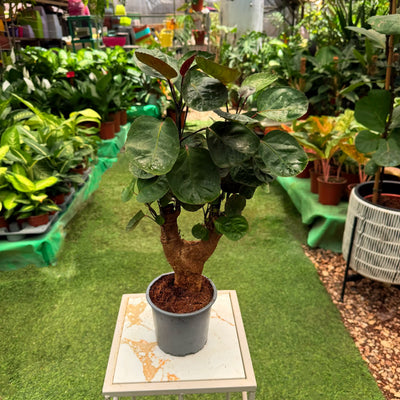
Polyscias Fabian bonsai look, 12 cm pot
135.00 ₪
📋 Quick Summary - Everything you need to know at a glance
Bright indirect light
No harsh direct sun
Moderate
When the top 2-3 cm of soil is dry to the touch
Medium
Sensitive to overwatering, forgiving in other conditions
Evergreen shrub/ornamental tree
Araliaceae family, grown as an ornamental bonsai
About 30-100 cm in a pot
Slow growing, reaches several meters in nature
🌱 Introduction to the plant
Names and Identification
- Hebrew Name: Polyscias (Aralia); the variety we grow is called Polyscias Fabian
- Scientific Name: Polyscias scutellaria 'Fabian' (broad genus: Polyscias)
- English: Polyscias, Fabian Aralia, Ming Aralia
- Family: Araliaceae
- Type: Evergreen shrub/ornamental tree, a relative of Schefflera and Ivy
Origin and Background
The Polyscias genus originates from tropical regions - the Pacific Islands, Southeast Asia, and Northeastern Australia - and grows in nature as a shrub or small tree. The 'Fabian' variety (Polyscias scutellaria 'Fabian') has developed as a popular ornamental variety due to its thickened woody trunk that resembles a bonsai trunk and dark, shiny round leaves. Another well-known relative from the same genus is Polyscias fruticosa, known as "Ming Aralia," with split, lacy leaves.
Unique Characteristics
- 🌳 Twisted woody trunk that looks like a bonsai - though it is not a classic bonsai species, just a pruning style
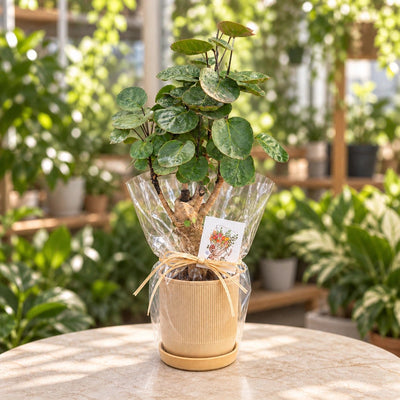
- 🍃 Round and shiny leaves, dark green with a purplish tint on the underside (in the Fabian variety)
- 🐢 Slow growth rate - an advantage for compact indoor growing, without the need for frequent repotting
- 😳 "Famous" for dramatic leaf drop from stress - we will explain later why this is not a disaster
- 🏡 Popular as an indoor tree and not just a regular foliage plant
⚠️ Don't get confused!
The names "Polyscias" and "Aralia" are confusing - here is who is who:
- Polyscias Fabian (Polyscias scutellaria 'Fabian') - the variety Deco Garden grows: dark round leaves, thick trunk in bonsai style.
- Polyscias fruticosa / "Ming Aralia" (Polyscias fruticosa) - a close relative from the same genus, with split, lacy leaves, not round.
- Botanical "Aralia" (Aralia genus) - a completely different genus, also from the Araliaceae family, including for example Aralia spinosa.
- Japanese Fatsia (Fatsia japonica), sometimes called "Japanese Aralia" - a separate plant with large, pinnate leaves.
This guide refers to the Polyscias genus in general, and specifically to the Fabian variety sold by Deco Garden.
💚 Why choose a Polyscias?
🌿 Varieties and types in the Polyscias genus
The Polyscias genus includes several common species and varieties in ornamental cultivation. The variety grown by Deco Garden is "Fabian".
Polyscias scutellaria 'Fabian' - the variety sold by Deco Garden. Dark and shiny round leaves, thick trunk in bonsai style. Slow and compact, excellent for home and office.
Polyscias fruticosa - the most famous relative. Split and lacy leaves that resemble a delicate fern, can grow taller.
Polyscias fruticosa 'Elegans' - a dwarf variety of Ming Aralia with small parsley-like leaves, especially compact.
Polyscias scutellaria 'Balfourii' - another variety from the same species as the Fabian, with round leaves variegated with white.
🌤️ Detailed growing conditions
☀️ Light
- Best: Bright indirect light, near a bright window without strong direct sun
- Light morning sun from the east side is okay; avoid strong afternoon sun that causes leaf burns
- Too little light = stretching trunk, sparse leaves, and leaf drop
- Moving the pot to a new place? Expect a short adjustment period with leaf drop (see below)
💧 Watering
The golden rule: it is better to water too little than too much. Polyscias is sensitive to overwatering and may develop root rot if the soil stays wet for a long time.
How to know when to water: Before watering, check that the top layer of soil (about 2-3 cm) is dry to the touch - stick a finger in the soil, and if it's dry, it's time to water.
More regular watering as the soil dries - without leaving standing water in the bottom of the pot
Significantly reduce watering frequency - the soil dries more slowly in the cold
🌡️ Temperature
A tropical plant that loves heat - a comfortable range is about 18-27°C. Below 13-15°C growth stops and the plant may suffer; prolonged cold or frost may kill it. It is important to keep it away from AC vents, air coolers, and doors/windows with drafts - sharp temperature changes are one of the most common causes of leaf drop.
⚠️ Frost warning: In Israel, in the winter in mountains and valleys there can be frost. Polyscias is a tropical houseplant and is not suitable for growing outdoors in winter in cold areas - it should be grown as a houseplant throughout the year, or brought inside when temperatures drop.
💦 Humidity
Polyscias loves medium-high air humidity. Air that is too dry (e.g., near an AC or heater) causes brown leaf edges and accelerates leaf drop. You can help with light misting on the leaves, a tray of pebbles with water under the pot, or a humidifier in the area.
🌍 Soil
- Well-draining mix - high-quality potting soil with added perlite or coarse sand
- Slightly acidic to neutral pH is suitable
- A pot with drainage holes at the bottom is a must - prevents standing water near the roots
🌿 Fertilization
Fertilize once a month with diluted liquid fertilizer for houseplants, during the active growth season
Skip fertilization or significantly reduce - the plant is at rest and grows very slowly
✂️ Pruning and maintenance
Polyscias responds well to pruning, and that is exactly why it is so popular for styling in a bonsai/ornamental tree style - regular pruning of new branches keeps a compact shape and the thick trunk. You can prune long or uneven branches to encourage more branching growth. It is recommended to prune during the active growth season (spring-summer) and clean dead or yellow leaves regularly.
🌱 Propagation
- Take a stem/branch cutting about 10-15 cm long, preferably in spring or early summer
- Remove the lower leaves and leave only a few leaves at the top end
- You can dip the tip of the cutting in rooting powder (not mandatory, but helps)
- Plant in a moist mixture of perlite and light soil, or root in water
- Keep in a warm and humid environment with bright indirect light until roots develop - this can take a few weeks
You can also propagate Polyscias from seeds, but stem cutting propagation is the most common and reliable way for home growing.
🔧 Common problems and solutions
🍂 Sudden leaf drop
Cause: Typical shock/stress response for Polyscias - it is "famous" for this. Typical factors: moving to a new place, cold drafts, AC, temperature or lighting change.
Solution: Do not panic and especially do not react with extra watering - this only makes the situation worse. Leave the plant in a stable place with bright indirect light and comfortable temperature, continue to water only when the soil dries, and give it time. In most cases it recovers and grows new leaves within a few weeks.
🦠 Root rot
Symptom: Yellow and soft leaves, soil always wet, unpleasant smell from the pot.
Cause: Overwatering and poor drainage.
Solution: Remove the plant from the pot, check roots (brown/soft - cut off), replant in a new well-draining mixture and reduce watering.
🍁 Brown leaf edges
Cause: Humidity too low, usually from proximity to an AC or heater.
Solution: Move away from sources of dry/hot air, add environmental humidity (misting, pebble tray).
🪴 Stretching trunk, sparse leaves
Cause: Insufficient light.
Solution: Gradually move to a brighter place with indirect light - moving too suddenly can cause leaf drop again, so gradual transition is preferred.
🐛 Pests
The most common pests on Polyscias are aphids, mealybugs, scale insects, and thrips, and in dry conditions also spider mites. It is recommended to check the back of the leaves and the trunk joints regularly, and treat early with insecticidal soap or neem oil in case of infestation.
❓ Frequently Asked Questions
This is very typical behavior for this plant - it reacts with leaf drop to stress, such as repotting, drafts, temperature change or even lighting change. It is usually a temporary shock and not a sign that the plant is dying - it usually grows new leaves after a few weeks if conditions are stable.
There is no set number - the rule is to water only when the top 2-3 cm of soil is dry to the touch, and reduce significantly in winter. It is better to water too little than too much.
In a place with bright indirect light, far from AC vents, heaters, and cold drafts near doors and windows, and without moving it between different places often.
Yes, Polyscias is known as a slow-growing plant, and that is actually an advantage: it can be grown in a small pot or as a bonsai for years without the need for frequent repotting.
In summer and in hot areas it can be taken out to partial shade, but it is a tropical plant sensitive to cold and frost - in winter, and especially in the cold mountainous and valley areas in Israel, it is better to grow it as a houseplant or bring it inside.
📊 Summary Table
| Category | Details |
|---|---|
| ☀️ Light | Bright indirect light, no direct strong sunlight |
| 💧 Watering | Only when the top layer (2-3 cm) is dry; less in winter |
| 🌡️ Temperature | About 18-27°C, not below 13-15°C, sensitive to drafts and AC |
| 💦 Humidity | Medium-high; dry air causes brown tips |
| 🌍 Soil | Well-draining, potting soil + perlite, pot with drainage holes |
| 🌿 Fertilizing | Once a month in spring-summer; skip in autumn-winter |
| 📏 Size | About 30-100 cm in a pot; slow growth |
| 📊 Difficulty Level | Medium - sensitive to overwatering and drafts |
| ✨ Special | Known for dropping leaves when stressed - self-recovery within weeks |
🛒 Shop Deco Garden
🌿 Deco Garden - A Love for Plants
Have a question about your Polyscias? The Deco Garden team is here for you - write to us and we'll be happy to help.
© 2026 Deco Garden - All Rights Reserved
The guide was written by the Deco Garden expert team
🛒 המוצרים מהמדריך
הצמחים והמוצרים שהמדריך מדבר עליהם — לחיצה על כרטיס מעבירה לעמוד המוצר.
-
 Polyscias Fabian bonsai look, 12 cm pot
135.00 ₪לעמוד המוצר
-
 Polyscias Fabian in a gift box with a sand pot and a personalized note
216.00 ₪לעמוד המוצר
-
 Migdal from the Northern Border 10 liter planting mix
14.00 ₪לעמוד המוצר
-
 Universal Fertilizer 1.2 liters
45.00 ₪לעמוד המוצר
-
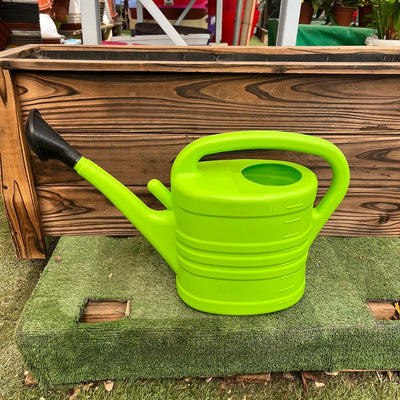 funnel
החל מ-18.00 ₪לעמוד המוצר
