🌿 Thyme | The Complete Growing and Care Guide
 המוצר מהמדריך זמין באתר
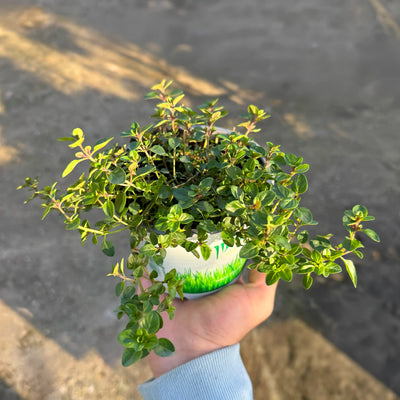
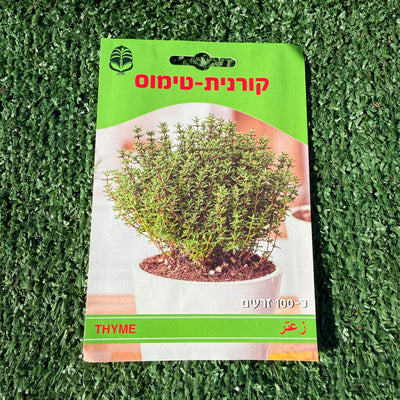
Thyme, 12 cm pot diameter (perennial for the garden)
11.50 ₪
📋 Quick Summary - Everything you need to know at a glance
Full Sun
At least 6-8 hours a day
Very sparse
Only when the soil is dry
Easy
Hardy and undemanding
Perennial herb
Mediterranean, woody
15-30 cm high
Low, wide ground cover
Friendly!
According to the ASPCA - safe for dogs and cats
🌱 Getting to know the plant
Names and Identification
- Hebrew Name: Thymus (also called Kunit)
- Scientific Name: Thymus vulgaris
- English Name: Common Thyme / Garden Thyme
- Family: Lamiaceae (same family as mint, sage, and rosemary)
- Type: Perennial herb, woody at the base
Origin and Background
Thyme originates from the Mediterranean basin and Southern Europe, and that is exactly its secret: it is built to live in strong sun, poor soil, and dry summers—which means the Israeli climate suits it perfectly. In the wild, it grows on rocky, well-drained slopes, hence its sensitivity to excess water. It is a low, woody shrub that releases a strong fragrance whenever touched.
Unique Characteristics
- 💪 Drought resistant: Stores some water and gets by with minimal irrigation
- 🌸 Blooms in spring: Tiny lilac-purple flower clusters, a magnet for bees and butterflies
- 🍃 Tiny fragrant leaves: Grayish-green, aromatic, containing essential oil (thymol)
- 🌿 Ground cover and container plant: Low and spreading - perfect for borders, rockeries, and planters
- 🍽️ Herb and medicinal: Used in the kitchen and in traditional infusions
- 🐾 Pet-friendly: Safe for dogs, cats, and horses
⚠️ Please note - Don't confuse the plants
In Hebrew and in the kitchen, there is often confusion between three Mediterranean herbs that look similar, but actually belong to different types:
- Thyme / Thymus (Thymus vulgaris) - The plant in this guide: tiny elongated leaves, sharp and slightly spicy taste.
- Za'atar / Syrian Oregano (Origanum syriacum) - A completely separate plant, the base for the "Za'atar" spice blend. Similar in taste but not the same plant.
- Marjoram / Sweet Marjoram (Origanum majorana) - A closer relative, milder and sweeter in taste. Some Hebrew sources mistakenly call it "Kunit".
They are all in the Lamiaceae family and love sun and drainage - but they have different tastes, leaves, and uses. This guide covers Thymus vulgaris only.
💚 Why choose Thyme?
Strong sun and dry summer is its home
Perfect for those who forget to water
Pick straight for stews, meat, or soup
Helps the garden and pollination
Fills borders, rockeries, and planters
Friendly to dogs and cats
🌾 Common varieties and types
The Thymus genus includes dozens of varieties. These are the most common in the garden and kitchen:
Common Thyme
Thymus vulgaris - The classic culinary variety, upright and woody, sharp and rich taste.Lemon Thyme
Thymus × citriodorus - Pleasant lemony scent, excellent for fish, chicken, and tea.Creeping Thyme
Thymus serpyllum - Very low and spreading, great as ground cover between stones and paving.🌤️ Detailed growing conditions
☀️ Light
- Full sun - this is a requirement, not a recommendation. At least 6-8 hours of direct sun a day.
- The more sun, the stronger the taste and smell (the concentration of essential oil increases).
- In shade or partial shade, the plant weakens, stretches, and loses flavor. Avoid this.
💧 Watering
This is where the only real risk lies: excess water. Thyme is drought-resistant but highly sensitive to moisture, and most plants that fail, rot from overwatering, not from dryness.
Sparse watering, about once a week - and only after the soil has dried.
Hardly water at all. Rain is enough; extra water in cold soil is dangerous for the roots.
How do you know it's time? Stick a finger 2-3 cm into the soil. Dry? You can water. Still damp? Wait. It is always better to keep it a bit too dry than too wet.
🌡️ Temperature
Thyme is very flexible: it withstands the heavy heat and dry winds of the Israeli summer, and is also resistant to cold and winter frost (hardy in the wild to climate zones much colder than Israel). In mountains and valleys where frost occurs on winter nights, the plant usually survives without damage.
Note: In Israel, the danger is not the cold but the combination of cold and humidity. Cold, wet soil in winter = root rot. Good drainage solves this.
🌍 Soil and Drainage
- Excellent drainage = rule #1. Sandy, rocky, or gravelly soil that dries quickly.
- For heavy or clay soil: mix in perlite, tuff, or coarse gravel (up to a quarter of the volume) to improve drainage.
- Prefer neutral to alkaline pH (above 6.0). Thyme actually prefers poor soil - not fertilized and not too rich.
- In pots and planters: drainage holes are mandatory, and use a light, sandy cactus/herb soil mix.
🌿 Fertilizing
Thyme is a plant of poor soils - excessive fertilization actually harms it and weakens the flavor. Less is more.
Light, diluted fertilizer once every month or two, or a little compost at the beginning of spring. Don't overdo it.
Stop fertilizing entirely. The plant slows its growth rate and needs nothing.
Recommended fertilizer type: balanced organic fertilizer or herb fertilizer. Better to give too little than too much.
✂️ Pruning, maintenance, and harvesting
- Pruning after flowering: When flowering finishes (and the bees are done), prune the plant lightly. This encourages new, dense growth and prevents it from becoming too woody or bald.
- Against woodiness: Thyme tends to become woody and hard over the years. Light pruning in early spring and summer keeps it soft, green, and young. After a few years, it is sometimes worth simply replacing it with a young plant.
- Harvesting for use: You can harvest stems at any time. The rule: do not harvest more than a third of the plant at once, and leave a leaf base so it can recover.
- When is it tastiest: The highest concentration of aromatic oil is just before flowering - this is the ideal time to harvest for drying and storage.
🌱 Propagating the plant
The easiest and recommended way to propagate thyme is by cuttings (seeds germinate slowly and unevenly). Here is how:
- Cut a 10 cm stem cutting from the tip of a healthy branch, preferably in spring or early summer.
- Remove the leaves from the bottom part of the cutting, leaving leaves only at the very top.
- Dip the cut tip in rooting hormone (increases the chances, but is not mandatory).
- Insert into a small pot with a sandy, well-draining mix and water sparingly.
- Keep in a bright, warm place but not in direct scorching sun, until rooted (usually within a few weeks).
Other methods that work: layering (pegging a stem to the ground until it roots) and dividing a mature shrub in spring.
🔧 Common problems and solutions
🦠 Blackening stems / plant collapsing
Cause: Root rot from excess water or poorly draining soil - the #1 problem with thyme.
Solution: Reduce watering immediately, ensure drainage and holes, and in severe cases, replant in dry, sandy soil.
🍂 Woody stems and bald in the center
Cause: Natural aging and lack of pruning.
Solution: Prune lightly after flowering and in spring. After a few years - replace with a young plant.
🌿 Plant stretching and pale, little taste
Cause: Too little sun.
Solution: Move to a spot with 6-8 hours of full sun a day.
💧 Leaves wilting despite damp soil
Cause: Almost always overwatering, not dryness.
Solution: Let the soil dry out well before the next watering.
🐛 Pests
Good news: Thyme is quite hardy and usually does not suffer from significant pests - its strong scent actually repels some of them. However, in unsuitable conditions (high humidity, stressed plant, or poor ventilation) the following might appear:
- Red spider mite: Common mainly in very dry heat and stressed plants. Sign: fine webs and yellowing. Solution: increase ventilation, wash with water, or neem oil.
- Aphids: Sometimes on fresh, soft growth. Solution: wash with water or a mild soap solution.
- Rot and gray mold: Not a pest but a fungus from excess moisture. The solution is the same: less water, more air, and better drainage.
🍽️ Uses - In the kitchen and traditional medicine
👨🍳 In the kitchen
- Excellent seasoning for meat, chicken, and fish dishes.
- Soups, sauces, marinades, and savory baking.
- Pizza, pasta, roasted potatoes, and roasted vegetables.
- Withstands long cooking - add whole sprigs and remove at the end.
🌿 Traditional uses
- Thyme infusion (tea) is traditionally used to soothe throats and coughs.
- The essential oil in thyme (thymol) is known as a substance with antiseptic properties.
- Pleasant scent - also used in soaps and natural fragrance blends.
* General information only, not a substitute for medical advice. Concentrated essential oil is not intended for pets.
❓ Frequently asked questions
Very little. In summer, about once a week and only after the soil has dried, and in winter almost never. The rule: water only when the soil is dry 2-3 cm deep. Better too little than too much.
This is almost always root rot from overwatering or poorly drained soil. Reduce water, ensure drainage holes and sandy soil, and in severe cases, repot it. Thyme dies much more from moisture than from dryness.
Absolutely. It does excellent in a pot or planter, as long as there are drainage holes, a light sandy mix, and a spot with 6-8 hours of sun. It will thrive on a sunny balcony.
You can harvest stems throughout the year for fresh use. The rule: do not harvest more than a third of the plant at once. The flavor is strongest right before blooming - the best time to harvest for drying.
No. Thyme (Thymus vulgaris) is a separate plant from za'atar (Origanum syriacum) and marjoram (Origanum majorana). They are all in the Lamiaceae family and have a similar taste, but these are different species with different leaves, flavors, and uses.
📊 Summary Table
| Category | Details |
|---|---|
| ☀️ Light | Full sun, at least 6-8 hours a day |
| 💧 Watering | Very little; only when the soil is dry. Drought-tolerant |
| 🌡️ Temperature | Heat and frost-resistant; the risk is cold combined with moisture |
| 🌍 Soil | Sandy/rocky, very well-drained, neutral-alkaline pH, lean |
| 🌿 Fertilization | Minimal in spring-summer; no fertilization in winter |
| ✂️ Pruning | Light pruning after blooming and in the spring to prevent woodiness |
| 📏 Size | About 15-30 cm high, low-spreading ground cover |
| 📊 Difficulty Level | Easy - resilient and undemanding |
| ⭐ Special | Perfect Mediterranean herb for the Israeli climate, attracts bees |
🛒 Shop at Deco Garden
Want fresh thyme in your garden or balcony? Here is what you should consider:
🌿 Deco Garden - A Love for Plants
Do you have a question about growing thyme or other herbs? The Deco Garden team is here for you. We love helping your garden bloom.
📞 Contact Us | 🌱 Online nursery with home delivery
© 2026 Deco Garden - All rights reserved
This guide was written by the Deco Garden expert team
🛒 המוצרים מהמדריך
הצמחים והמוצרים שהמדריך מדבר עליהם — לחיצה על כרטיס מעבירה לעמוד המוצר.