🌿 Dieffenbachia - The Complete Guide to Growing and Care
 המוצר מהמדריך זמין באתר
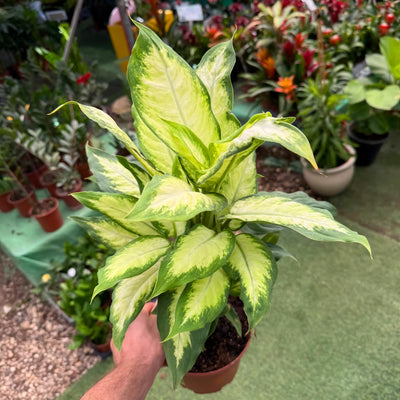
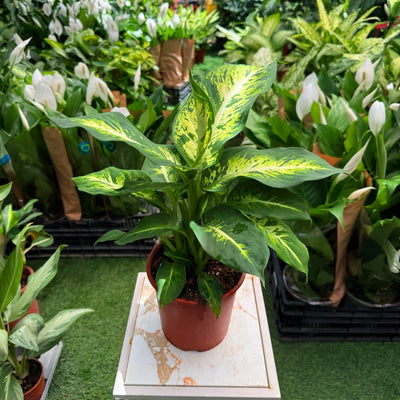
Dieffenbachia Summer Style, 15 cm pot diameter
75.00 ₪
המוצר מהמדריך זמין באתר
Dieffenbachia Summer Style, 15 cm pot diameter
75.00 ₪
📋 Quick Summary - Everything you need to know at a glance
Medium to bright
No direct sun!
Moderate
When soil is dry
Home / Office
Perfect for beginners
Very easy
Ideal for beginners!
Air purifier
🌱 Getting to know the Dieffenbachia
Names and Identification
- Common name: Dieffenbachia
- Scientific name: Dieffenbachia
- Common names: Dumb cane, Leopard lily
- Family: Araceae
Origin and History
The Dieffenbachia originates from the tropical rainforests of Central and South America - from Mexico to Argentina. Named after the gardener Josef Dieffenbach, head gardener at the Botanical Gardens in Vienna.
Why grow Dieffenbachia?
- 🌿 Impressive leaves: Large and variegated
- 💪 Very hardy: Hard to kill!
- 🏠 Fits anywhere: Tolerates low light
- ⚡ Fast growth: Immediate results
- 😌 Low maintenance: Minimal requirements
Characteristics
- Height: 30 cm to 2 meters
- Leaves: Large, oval, up to 45 cm
- Color: Green with white/yellow spots or stripes
- Stem: Thick, succulent, cane-like
⭐ Why is Dieffenbachia perfect for beginners?
It is one of the easiest houseplants to grow! Here is why:
Tolerates low light
Thrives in dark corners
Forgives neglect
Prefers drier soil
Adapts to temperature
Standard home conditions
Recovers quickly
Forgiving of mistakes
🎨 Popular Dieffenbachia Varieties
There are about 51 different species! Here are the most common ones:
🌿 Tropic / Tropic Snow
The most common! Large green leaves with white/cream streaks. Grows tall and impressive.
💛 Camille
Green leaves with a creamy/yellowish center. More compact, perfect for tabletops.
✨ Reflector
Dark leaves with light-green dots that look "glowing". Unique!
🌱 Compacta
A smaller version with denser leaves. Suitable for smaller spaces.
🐆 Exotica
Dominant ivory color with green edges. Very luxurious look.
🌟 Sterling
Delicate striped pattern, elegant look.
🌤️ Growing Conditions - The Key to Success
☀️ Light
Ideal light type: Medium to bright, filtered - very flexible!
North/East window, indoors, office
Strong direct sun (it will burn!)
How does light affect it?
- Bright light: Fast growth, vibrant colors
- Low light: Slower growth, greener leaves (less variegation)
- Direct sun: Brown spots/burns on the leaves!
💡 Tip: The plant tends to grow towards the light - rotate it occasionally for even growth!
💧 Watering - The most important principle
Golden rule: Dieffenbachia prefers relatively dry soil - less is better than more!
Watering frequency:
- Summer: Once a week (approx)
- Winter: Every 1-2 weeks
- Rule: When the top 2 cm of soil are dry to the touch
Watering method:
- Water thoroughly until water runs out of the drainage holes
- Empty standing water! Do not leave it in the saucer
- Allow soil to dry out between waterings
💨 Humidity
Requirement: Moderate humidity - 40-60% (normal home conditions are usually enough!)
How to improve humidity (optional):
- 🚿 Misting leaves in summer (recommended!)
- 🪨 Pebble tray with water
- 🌿 Grouping with other plants
🌡️ Temperature
Ideal range: 18-27°C (normal home temperature - perfect!)
- ✅ Normal home/office temperature is fine
- ❄️ Minimum: Not below 15°C
- ⚠️ Keep away from AC units and cold drafts
- ⚠️ Keep away from radiators and heat sources
🪴 Soil and Pot
Soil type:
Well-draining soil - this is most important!
- ✅ Standard houseplant potting mix
- ✅ Can add perlite for better drainage
- ✅ Slightly acidic pH (5.5-6.5)
Selecting a pot:
- Drainage holes: Mandatory!
- Size: Appropriate for the plant, not too large
Repotting:
- Every 1-2 years or when it becomes crowded
- Best done in spring
- Use a pot 2-3 cm larger
🧪 Fertilizing
Dieffenbachia does not need much fertilizer - less is more!
Fertilizing schedule:
Every two weeks to a month
Once a month
None or minimum
Fertilizer type:
- Balanced liquid fertilizer for houseplants
- Dilution: Half the recommended concentration
✂️ Pruning and Propagation
Pruning:
- Remove yellow or damaged leaves by cutting them low
- If the plant becomes tall and "leggy" - you can prune the top
- Pruning encourages bushier growth
- Use clean and sharp tools!
Propagation - easiest of all!
Method 1: Stem tip cutting
- Cut the tip with 3-4 leaves
- Place in water or moist soil
- Roots will develop in a few weeks
- Plant once roots are a few cm long
Method 2: Cane cutting
- Cut cane segments 5-7 cm long
- Place horizontally on moist soil (bury halfway)
- Leaves and roots will grow from the "nodes"
Division:
If there are multiple stems - you can divide the plant during repotting. Ensure each section has roots.
🔧 Common problems and solutions
🟡 Yellowing leaves
Possible causes:
- Overwatering - most common!
- Natural aging (lower leaves)
- Lack of light
- Temperature too low
Solution: Reduce watering, check drainage
🟤 Brown leaf tips
Possible causes:
- Over-fertilizing
- Soil/air too dry
- Irregular watering
- Salts in water
Solution: Mist leaves, use filtered water
🥀 Drooping leaves
Possible causes:
- Under-watering
- Overwatering (root rot)
- Too little light
- Cold
Solution: Check soil moisture and adjust watering
📍 Spots on leaves
Possible causes:
- Brown spots: Sunburn
- Dark spots with a halo: Fungal disease
- Center rings: Bacterial disease
Solution: Remove affected leaves, improve ventilation
🌱 "Leggy" plant
Cause: Lack of light - the plant elongates to search for light
Solution: Move to a brighter spot, prune the top
This is a natural phenomenon - the plant will lose lower leaves over time.
🪴 Base rot
Cause: Overwatering + poor drainage
Solution: Stop watering, repot into fresh, drier soil, remove rotten parts
🐛 Common pests
Fine webs, yellow dots.
Solution: Increase humidity, rinse with water
White, cotton-like clumps.
Solution: Alcohol + cloth, neem oil
Hard brown bumps.
Solution: Manual removal, potassium soap
Small green insects, honeydew.
Solution: Potassium soap, rinsing
🌬️ Dieffenbachia purifies the air!
A NASA study identified Dieffenbachia as one of the most effective houseplants for air purification!
Formaldehyde
From furniture and building materials
Xylene
From paints and materials
Adds humidity
Through leaf transpiration
Reduces stress
Green is soothing!
❓ Frequently asked questions
This is normal! Dieffenbachia naturally loses its lower leaves as it grows. Simply remove them.
Yes, but rarely indoors. The flowers resemble Spathiphyllum - not particularly impressive. Most people grow it for the foliage.
Relatively fast! In good light, it can produce a new leaf every few weeks during the growing season.
Yes! Dieffenbachia adapts to artificial lighting, though growth will be slower and the leaves less colorful.
Prune it! Cut the top, and the plant will branch out and become bushier. The cutting can be planted separately.
Yes! This is "guttation" - the plant excretes excess water in the morning. If there are many salts in the soil, the drops might burn the leaf tips.
🌟 Interesting facts
The plant is considered to bring good luck and ward off evil spirits! It is paired with rosemary and chili peppers in a lucky pot.
Named after Joseph Dieffenbach - the head gardener of the Imperial Botanical Gardens in Vienna in the 19th century.
"Leopard Lily" - because of the spotted pattern on the leaves.
🛒 Recommended products from Deco Garden
Dieffenbachia
In a variety of cultivars
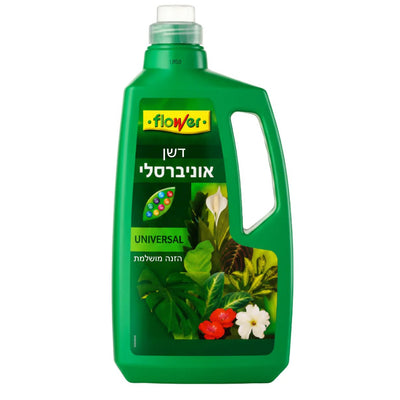
Foliage fertilizer
Balanced for houseplants
Mister
For spraying leaves
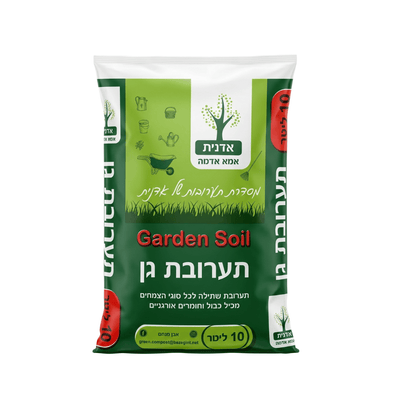
Houseplant soil
Well-draining
Decorative pots
With drainage
Pruners
For pruning and propagation
📊 Summary table - all info in one place
| Category | Details |
|---|---|
| ☀️ Light | Medium to bright, no direct sun |
| 💧 Watering | When soil is dry to the touch, ~once a week |
| 💨 Humidity | Moderate, 40-60% (standard home conditions) |
| 🌡️ Temperature | 18-27°C, minimum 15°C |
| 🧪 Fertilizing | Every 2-4 weeks in summer, diluted |
| 🌱 Soil | Well-draining, standard |
| 📏 Size | 30 cm - 2 meters |
| 📊 Difficulty | Very easy - perfect for beginners! |
| 🌬️ Special benefit | Air purifier (NASA) |
🌿 Deco Garden - Loving plants
Do you have questions about growing Dieffenbachia? Need help? We are here for you!
📧 Contact us | 📱 Follow us on socials | 🌱 Shop plants and products
© 2025 Deco Garden - All rights reserved
This guide was written by the Deco Garden expert team
🛒 המוצרים מהמדריך
הצמחים והמוצרים שהמדריך מדבר עליהם — לחיצה על כרטיס מעבירה לעמוד המוצר.