The Comprehensive Guide to Caring for Philodendron Micans
 המוצר מהמדריך זמין באתר
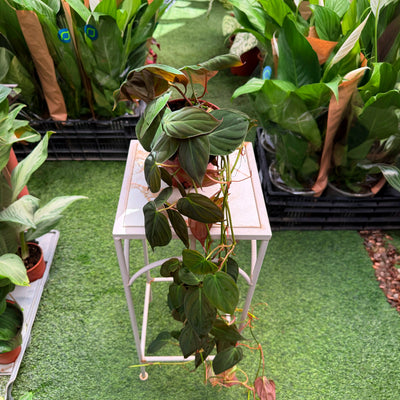
Trailing Philodendron Micans, 12 cm pot diameter
30.00 ₪
המוצר מהמדריך זמין באתר
Trailing Philodendron Micans, 12 cm pot diameter
30.00 ₪
Philodendron micans is a trailing or vining philodendron with heart-shaped, velvety leaves in shades of green, copper, and burgundy that shift with the age of the leaf and the light. It can be grown in a hanging basket or on a shelf, or trained to climb upwards on a support.[1][2][3]
The trade name Philodendron micans remains common, but the Royal Botanic Gardens, Kew’s Plants of the World Online accepts it as a synonym for Philodendron hederaceum var. hederaceum. This guide presents both names so that the reader can find the plant without having to invent a new identity.[1][2][3]
Quick Care for Philodendron Micans
| Light | Bright indirect light for dense growth; tolerates medium light but not constant darkness.[4][3] |
|---|---|
| Watering | Water when the top layer has dried slightly, until runoff, with no standing water.[4][2] |
| Growth Habit | Trailing from a shelf or climbing on a support; tip pruning encourages branching.[2][4] |
| Substrate | Organic, airy, and well-draining mixture in a pot with holes.[4][2] |
| Temperature | Stable household warmth, above 15°C (59°F) and free from direct AC drafts.[4][3] |
Light for Velvety Leaves and Short Internodes
A well-lit spot with filtered light keeps the internodes shorter and promotes full growth. In very low light, the stems elongate and new leaves tend to be small; strong sun on the delicate leaves can leave burns.[3][4][2]
Micans can survive in low light, but survival is not optimal growth. If moving to a brighter spot, do so gradually and check the side facing the window.[3][4][2]
Precise Watering for Thin Stems
Check the top of the substrate and the weight of the pot. When the top layer has dried slightly, water until runoff and empty the excess. Substrate that is soggy for a long time suffocates roots; repeated, deep drying causes soft leaves and crispy edges.[4][2]
In a hanging pot, air surrounds the container, and it may dry out faster than a pot on the floor. This is a reason to check, not to set a fixed watering day.[4][2]
Trailing or Climbing: How to Choose
For a trailing look, let the stems hang from a shelf or hanging basket and prune long ends above a node to encourage branching. For a climbing look, gently tie to a wide support without choking the stem.[2][4]
The plant produces roots along the nodes. Support and stable moisture around them can aid grip, but do not leave a pole or substrate wet continuously if the pot itself does not drain.[2][4]
Humidity and Temperature
Average household humidity is fine, and higher humidity can support softer leaves if there is good ventilation. Keep away from AC units, heaters, and cold drafts.[4][2][3]
A stable temperature above 15°C (59°F) is preferred. In cold and low light, the plant consumes less water, so reduce watering based on the rate of drying rather than the calendar.[4][2][3]
Substrate and Pot
Choose a well-draining mixture for houseplants with coarse ingredients that maintain air between the roots. The container must have drainage holes, and cover pots should also be emptied after watering.[4][2]
Repot when roots are crowded or the substrate breaks down, moving to a pot only slightly larger. A hanging pot that is too large remains wet in the center for a long time, even when the edges look dry.[4][2]
Fertilizing and Leaf Size
During active growth, you can fertilize with a general houseplant fertilizer according to the label and at a moderate dosage. Fix light and water issues first; fertilizer will not turn a stem that has elongated in the dark into a dense one.[4][3]
Do not fertilize a dry plant, damaged roots, or immediately after repotting. Flush the substrate if a salt crust appears or burnt edges appear after fertilizing.[4][3]
Pruning and Propagation from Stem Cuttings
Cut a clean stem below a node, leaving at least one node and healthy leaves. Root in water or in airy, lightly moist substrate, in indirect light and protected from cold.[2][4]
Tip pruning on the mother plant removes apical dominance and can encourage lower eyes to develop. Do not remove too much foliage from a weak plant all at once.[2][4]
Why the Name Micans Appears in Different Forms
Kew notes that the name Philodendron micans is a synonym for Philodendron hederaceum var. hederaceum. At the same time, a historical UF/IFAS publication uses the name P. scandens micans and describes the plant as a juvenile stage with velvety green leaves and a coppery underside.[1][3][2]
This is not a contradiction in care but a taxonomic change over time. For search purposes and customer service, it is correct to present the trade name Micans, and in the scientific information, to note the currently accepted name.[1][3][2]
Troubleshooting Micans
Frequently Asked Questions
Is Philodendron micans a separate species?
According to Kew, Philodendron micans is a synonym for Philodendron hederaceum var. hederaceum.[1]
Is Micans better trailing or climbing?
Both are fine. Hanging emphasizes the trailing habit; support allows stems to grip and sometimes develop larger leaves.[2][4]
How much light does Micans need?
Bright indirect light for dense growth. It tolerates medium light, but in constant darkness, the stems elongate and the leaves are small.[3][4]
When should I water Philodendron micans?
When the top of the substrate has dried slightly. Water until runoff and empty standing water.[4][2]
Why are new leaves small?
Low light, lack of support, lack of active roots, or unbalanced fertilizer can contribute. Start with light and roots.[3][4]
How can I make Micans denser?
Prune ends above a node, root the cuttings, and plant them back around the base of the pot in suitable light.[2][4]
The Plant and Products Suitable for this Guide

Trailing Philodendron Micans, 12cm Pot Diameter
The plant discussed in this guide, when available in stock.
₪30.00
View Product
Philodendron Imperial Red, 12cm Pot Diameter
Another philodendron suitable for a bright indoor corner with indirect light.
₪30.00
View Product
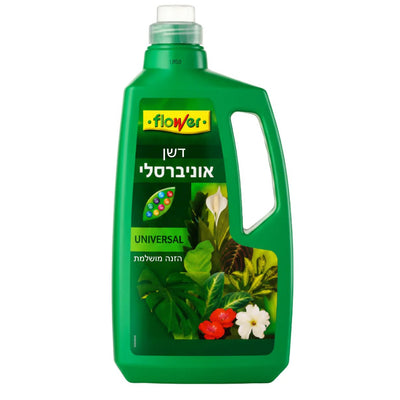
Universal Fertilizer, 1.2 Liters
For measured fertilization during active growth only, according to product instructions and the guide.
₪45.00
View ProductSources and Information Verification
- Philodendron micans Klotzsch ex K.Koch
- Philodendron hederaceum
- Cultural Guidelines for Commercial Production of Interiorscape Philodendron
- How to grow philodendrons
Updated:
🛒 המוצרים מהמדריך
הצמחים והמוצרים שהמדריך מדבר עליהם — לחיצה על כרטיס מעבירה לעמוד המוצר.