🤍 Stephanotis (Madagascar Jasmine) | The Complete Growing and Care Guide
 המוצר מהמדריך זמין באתר
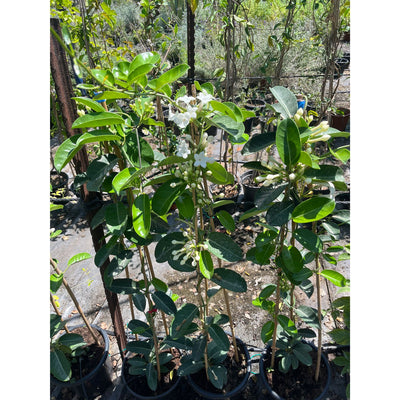
Stephanotis 24 cm pot (10 liters) (perennial for the garden)
115.00 ₪
📋 Quick Summary - Everything you need to know at a glance
Bright, filtered light
Some gentle morning sun for blooming, avoid harsh midday sun
Moderate and regular
Only when the soil starts to dry out
Medium-High
Sensitive to changes and being moved while blooming
Woody climber
Evergreen, vines climb on support
Climbs several meters
In nature, can reach up to 6m
🌱 Getting to know the plant
Names and Identification
- Hebrew name: Stephanotis, Madagascar Jasmine
- Scientific name: Stephanotis floribunda
- English: Madagascar Jasmine, Waxflower, Hawaiian Wedding Flower, Bride's Flower
- Family: Apocynaceae
- Type: Evergreen, woody climber
Origin and Background
The plant is native to Madagascar. It is a woody liana (climber) that crawls around support using twining stems, reaching up to 6m in length in the wild. Its white, waxy, and fragrant flowers have made it a traditional choice for bridal bouquets – hence the names "Bride's Flower" and "Hawaiian Wedding Flower".
Unique Characteristics
- 🤍 Waxy, star-shaped flowers - about 3 cm, pure white, in clusters
- 👃 Strong, sweet scent - especially in the evening
- 🌿 Dark, glossy leaves - thick and leathery, about 5x9 cm
- 🌀 Natural climbing habit - stems twine around support; usually sold wrapped on a wire hoop
- 🏆 Award of Garden Merit winner from the Royal Horticultural Society (RHS)
- 🌸 Seasonal blooming - mainly in summer, a single flower can remain open for weeks
⚠️ Not to be confused: Stephanotis is not a true "Jasmine"
Despite the common name "Madagascar Jasmine", Stephanotis does not belong to the true Jasmine genus (Jasminum) or the Olive family (Oleaceae) – it belongs to the Apocynaceae family, the same family as Oleander and Periwinkle. The resemblance is solely in the sweet scent and white flowers. If you are looking for true Jasmine (Jasminum) – it is an entirely different plant with different care requirements.
💚 Why choose Stephanotis
🌿 The Stephanotis Genus - How many species are there?
The Stephanotis genus includes about 15 species, native to Madagascar and East Africa, but only one species - Stephanotis floribunda - is grown globally as an ornamental houseplant. It is essentially a monotypic plant for home gardening, not a genus with a wide range of commercial varieties like Philodendron or Calathea.
Twined on a round wire hoop in a pot - how it is usually sold in nurseries
In the garden or balcony, it can be directed to climb on a pergola, trellis, or retaining wall
🌤️ Detailed Care Conditions
☀️ Light
- Bright, filtered light is essential - this is the most important requirement for consistent blooming
- Some direct sun in the early morning or late afternoon is beneficial
- Avoid direct, harsh midday sun - it may cause leaf burn, especially in the Israeli summer
- Indoors - place near a bright window, shaded from midday sun
💧 Watering
Water when the soil starts to dry out - maintain consistent moisture, neither too wet nor completely dry
Reduce significantly - water only when the soil is almost completely dry
How to tell: Check with your finger in the soil - overwatering and soggy soil are the most common causes of plant issues (including root rot and flower drop). It is better to underwater slightly than to overwater.
🌡️ Temperature
During the growing season (spring-summer), the ideal temperature is about 21-23°C (70-73°F). In winter, it is advisable to move the plant to a cooler spot, around 13-16°C (55-61°F) - this is a rest period that actually encourages blooming the following season.
❄️ Cold warning: Below 13°C (55°F) the plant begins to suffer, and below 7°C (45°F) damage is rapid and potentially irreversible. Stephanotis is not frost-hardy. In Israel, it is a plant for the home, greenhouse, or a protected and warm balcony/garden only; in areas with winter frost risks (mountains, valleys), it should be grown in a pot and brought indoors on cold nights.
💦 Humidity
The plant enjoys high atmospheric humidity and responds well to light misting or being placed on a tray of moist pebbles, especially in a home with dry air conditioning. However, its thick, waxy leaves tolerate standard household humidity well - the main thing is to avoid placing it too close to heating or air conditioning vents.
🌍 Soil
- High-quality, organic-rich, well-draining soil
- Perlite or coarse grit can be added to the mix if it is too heavy, to improve drainage and aeration
- Good drainage is critical - continuously wet roots are the primary cause of problems
🌱 Fertilizing
Fertilize every two weeks with a potassium-rich liquid fertilizer (like tomato fertilizer) - helps with blooming
Do not fertilize at all - the plant is at rest
✂️ Pruning and Maintenance
- Flowers appear only on new growth - therefore prune gently and leave some stems unpruned so as not to damage the next bloom
- Light pruning, mainly after blooming or at the end of winter, to remove weak or damaged parts
- Tie new stems to support (hoop, trellis, pergola) while they are still soft - once the stem hardens, it is difficult to redirect
- ⚠️ Important: Do not move the pot from its place while it has buds or open flowers - changing location, lighting angle, or jarring the plant at this stage usually causes bud drop
🌿 Propagation
- Stem cuttings: Cut a part of new growth (not last year's) about 10 cm long; spring-summer is preferred
- Remove lower leaves and dip the cutting tip in rooting hormone (recommended but not mandatory)
- Plant in well-draining soil mix, keep lightly moist and warm
- Rooting takes on average about 4-6 weeks
🌱 Note: Success rates for cuttings are not particularly high, even with rooting hormone - it is advisable to try several cuttings at once. Propagation from seeds is also possible, but it takes much longer (about a year until a mature plant is obtained).
🔧 Common Problems and Solutions
🌸 Bud/Flower Drop
Reason: Moving the pot while blooming, sudden temperature changes, overwatering or underwatering, low humidity.
Solution: Choose a stable location and do not move the plant when it has buds; maintain consistent watering and stable temperature.
🥀 Yellowing leaves
Reason: In most cases - overwatering and root rot; sometimes underwatering, lack of fertilizer, pest damage, or natural aging of individual leaves.
Solution: Check the soil before watering, ensure good drainage, and check for pests.
🌼 No blooming at all
Reason: Lack of a cool rest period in winter, insufficient light, or pruning that removed the new growth on which the flowers form.
Solution: Give the plant a cool winter (13-16°C) and prune with caution only.
🍂 Total leaf drop
Reason: Usually a sudden environmental change - moving, cold, extreme light change.
Solution: Return to a stable location with suitable conditions; usually, the plant recovers with proper care and regrowth.
🐛 Pests
The most common pests on Stephanotis are Scale insects and Mealybugs, and sometimes also Thrips and Spider mites. Check the backs of the leaves and stem bases regularly, and in case of infestation - wipe with a cloth soaked in alcohol or treat with neem oil.
💍 The Wedding Flower - A bit of culture
The white, waxy flowers of the Stephanotis have become one of the most traditional bridal flowers in the world, hence the two English names "Bride's Flower" and "Hawaiian Wedding Flower". Their intense scent, combined with the clean look and the geometric shape of the flower, is the reason it is still considered a classic choice for bridal bouquets and event decorations.
❓ Frequently Asked Questions
This is the most common phenomenon in Stephanotis. The most frequent cause is moving the pot while it has buds - the plant reacts to any change in location, lighting, or temperature by dropping buds. Overwatering, extreme drought, or too-low humidity can also cause this.
During the growing season (spring-summer), water when the soil starts to dry out, on a regular basis. In winter, reduce significantly and water only when the soil is almost completely dry. Excess water is the main cause of plant problems.
Usually because it was not given a cool rest period in winter (13-16°C) - this is what encourages blooming the following season. Insufficient light and pruning that removed young growth can also lead to lack of blooming.
The plant is sensitive to cold and is not frost-hardy, so outdoor growing is suitable mainly for warm and protected areas - a covered balcony, a shaded garden corner with morning sun, or a greenhouse. In areas with winter frost risks (mountains and valleys), it is better to grow in a pot and bring it indoors on cold nights, or simply grow it as a houseplant.
No. Despite the name "Madagascar Jasmine", it does not belong to the true Jasmine genus (Jasminum) but to the Apocynaceae family. The name was given due to the similarity in scent and white flowers only.
📊 Summary Table
| Category | Details |
|---|---|
| ☀️ Light | Bright and filtered, some morning sun; avoid harsh midday sun |
| 💧 Watering | Regular when dry in spring-summer; reduced in winter |
| 🌡️ Temperature | 21-23° in summer, 13-16° during winter dormancy; damage below 13°, not frost-resistant |
| 💦 Humidity | Prefers high humidity, but standard levels are sufficient |
| 🌍 Soil | Rich, well-draining |
| 🌱 Fertilization | Once every two weeks in spring-summer, potassium-rich fertilizer; not in winter |
| 📏 Size | Climber, up to about 6m in nature without pruning |
| 📊 Difficulty Level | Medium-High - sensitive to being jostled or moved while flowering |
| ✨ Special | Traditional bridal flower, intense scent, requires support for climbing |
🛒 Shop at Deco Garden
🌿 Deco Garden - A Love for Plants
Do you have a question about your Stephanotis, or any other plant? Our team of experts is here for you - at the store, by phone, or via message. We are here to ensure every plant you bring home grows and blooms.
© 2026 Deco Garden - All rights reserved
The guide was written by the Deco Garden expert team
🛒 המוצרים מהמדריך
הצמחים והמוצרים שהמדריך מדבר עליהם — לחיצה על כרטיס מעבירה לעמוד המוצר.