🎀 Hypoestes | The Complete Growing and Care Guide
 המוצר מהמדריך זמין באתר
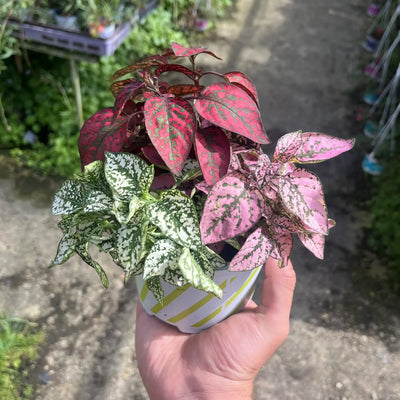
Hypoestes, pot diameter 12 cm (perennial for home and garden)
12.00 ₪
📋 Quick Summary - Everything you need to know at a glance
Bright but indirect
No direct sunlight
Even moisture
Do not let the soil dry out
Easy-Moderate
Mainly sensitive to irregular watering
Foliage plant
Spotted leaves, not grown for flowers
Approx. 20-40 cm in a pot
Compact for a desk
🌱 Getting to know the plant
Names and Identification
- Hebrew name: Hypoestes
- Scientific name: Hypoestes phyllostachya
- English: Polka Dot Plant, Freckle Face
- Family: Acanthaceae
- Type: Herbaceous perennial, grown as a houseplant
Origin and Background
The Hypoestes is a native of the rainforests of Madagascar. It has become one of the most beloved houseplants thanks to its colorful dotted pattern on the leaves - pink, white, or red on a green background - without the need for flowering to look impressive.
Unique Characteristics
- 🎨 "Spotted" leaves: Each leaf is dotted differently - no two leaves are identical
- 🌸 Color instead of flowers: The beauty comes from the leaves, not the flowers
- 🪴 Compact: Suitable for a desk, windowsill, or shelf - doesn't take up much space
- ✂️ Responds well to pruning: The more you prune, the bushier it becomes
- 🌿 Easily propagated: A simple cutting that roots in water within two weeks
⚠️ Note - Do not confuse with Polka Dot Begonia
There is another plant called "Polka Dot Begonia" (Begonia maculata) with spotted leaves that look somewhat similar.
💚 Why choose a Hypoestes
The ornament is in the leaves all year round
Perfect for a desk or windowsill
One cutting = a new plant
A pleasant way to add color to your home
Safe and visually interesting
🎨 Dotted hues
All Hypoestes seedlings are the same species (Hypoestes phyllostachya), but the dot pattern varies between individuals and groups of varieties. When choosing a pot, simply choose based on the shade that fits your corner at home:
The classic and most common pattern
A subtle contrast on a dark green background
Almost the entire leaf is pink
A mix of several colors on the same leaf
🌤️ Detailed growing conditions
☀️ Light
- The plant needs bright but indirect light to keep the colors sharp - near a window that doesn't get direct sun, or a little away from a southern window.
- Ideal location: An eastern or northern window, or a shaded corner with good daylight.
- Strong direct sunlight scorches and fades the leaves - they may shrivel and develop brown spots.
- Too little light causes colors to fade and leggy growth (stretching between nodes).
💧 Watering
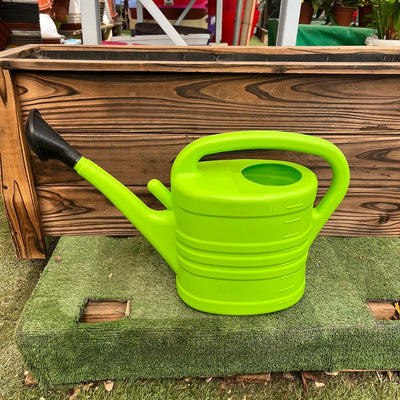
The Hypoestes likes even moisture in the soil - not soaking wet, but not dry either. It has a low tolerance for drought and tends to wilt clearly when thirsty. The most obvious sign: the plant wilts dramatically when the soil dries out - this is a helpful warning, and it usually recovers nicely after watering, but it is better not to let this happen repeatedly as it exhausts the plant.
About 2-3 times a week, when the top layer of soil (about 2-3 cm) starts to dry out
Reduce to once a week or less, depending on soil dryness
How to check: Touch the soil with your finger to a depth of about 2 cm - if it's dry, it's time to water. A pot with good drainage is important so that excess water does not cause root rot.
🌡️ Temperature
Comfort range: about 18-24°C. The plant originates from tropical regions and is sensitive to cold - growth stops below about 15°C, and below 10°C it can suffer serious damage. Frost warning: If growing on a balcony or garden, bring it inside on cold nights - especially in high altitudes where there is a risk of frost in winter.
💦 Humidity
The Hypoestes likes relatively high humidity - about 50-60%. In dry air from air conditioning/heating, the leaf tips may dry out and wrinkle. It helps to spray the leaves in the morning, place the pot on a tray with pebbles and water, or simply cluster it with other houseplants.
🌍 Soil
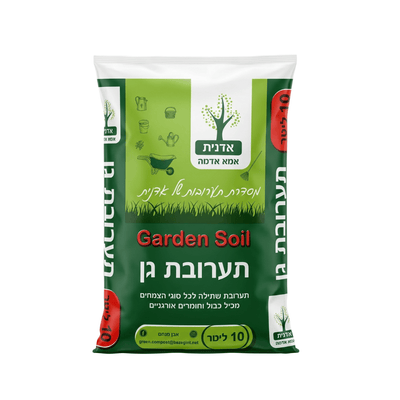
- Mix rich in organic matter, with good drainage - high-quality potting mix + perlite or vermiculite.
- Preferred pH: around 6.0-7.0 (slightly acidic to neutral).
- Root aeration is important - do not pack the soil in the pot.
🌿 Fertilization
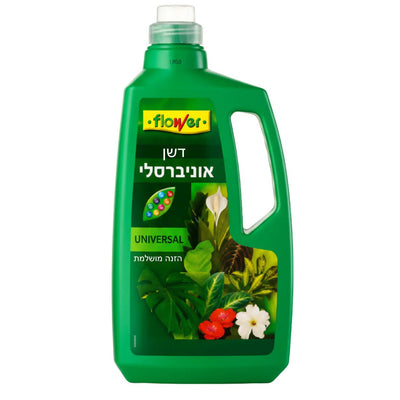
Balanced and diluted fertilizer, about every two weeks.
Reduce to once every month or month and a half, or stop completely in the cold.
✂️ Pruning and maintenance - The secret to an impressive plant
This might be the most important tip in the whole guide: the Hypoestes tends to become leggy and sparse over time, especially when it flowers. The flowering of the Hypoestes is not particularly ornamental - it actually "drains" energy from the colorful leaves.
As soon as you see a flower bud, snip it off - this redirects energy back to the colorful leaves
Lightly pinching the tip of the stem encourages branching and makes the plant bushier
Ongoing pruning, not just once a year - keeps the plant compact over time
🌱 Propagation
The easiest and fastest way to propagate a Hypoestes is via stem cuttings - and this is also an excellent solution when the mother plant starts to look sparse:
- Cut a stem piece about 10-15 cm long, just below a leaf node.
- Remove the lower leaves so that only 2-3 leaves remain at the top.
- Place in clean water (change every 3-4 days) or directly into moist soil.
- Roots begin to appear within about a week or two.
- When there are several roots 2-3 cm long, plant in a pot with potting mix.
Propagation from seeds is also possible, but cuttings are the simplest and fastest way for a houseplant.
🔧 Common problems and solutions
🎨 Color fading
Cause: Insufficient light (or alternatively, too much strong sun scorching it).
Solution: Move to a spot with bright, indirect light, not deep shade and not direct sun.
💧 Sudden wilting
Cause: The soil has dried out completely.
Solution: Water thoroughly immediately - the plant usually recovers. If this happens repeatedly, establish a regular watering schedule.
🦠 Root rot
Cause: Overwatering or a pot without drainage.
Solution: Let the soil dry out slightly between waterings, ensure there are drainage holes, and that the pot is not standing in water.
📏 Legginess and sparsity
Cause: Low light, flowers not removed, or the plant is simply aging.
Solution: Prune and pinch regularly. If the plant becomes too sparse, it's the perfect time to take cuttings and start a new pot.
🍂 Dry leaf tips
Cause: Air humidity is too low, especially in winter with heating.
Solution: Spray leaves, use a pebble tray with water, or bring closer to a humidifier.
🐛 Pests
❓ Frequently asked questions
Usually due to lack of light. The Hypoestes needs bright, indirect light to maintain the contrast between the green and the colorful spots - in a spot that is too dark, the color gradually fades.
There is no fixed number - it depends on the season, temperature, and pot size. The rule: check the top layer of soil, and water when it starts to dry out. In summer, this is usually about 2-3 times a week, less in winter.
Wilting is usually a sign of lack of water - the plant wilts relatively quickly when it dries out, but usually recovers within hours after thorough watering. If it stays wilted even after watering, check that the roots aren't rotting from excessive drinking.
Ongoing pruning is the solution. Pinch stem tips continuously and remove any flower stalk as soon as it appears - this returns energy to the leaves and encourages branching.
The Hypoestes is considered a short-lived perennial, and is sometimes grown as an annual - over time it tends to become sparse and leggy, especially after flowering. The best solution is to take cuttings and refresh the plant in a new pot when it starts looking tired.
📊 Summary Table
| Category | Details |
|---|---|
| ☀️ Light | Bright and indirect - no direct sun |
| 💧 Watering | Uniform moisture, do not let dry out completely; less in winter |
| 🌡️ Temperature | 18-24°C, sensitive to cold below 10°C |
| 💦 Humidity | Relatively high (50-60%) - appreciated |
| 🌍 Soil | Rich in organic matter, well-draining, pH 6.0-7.0 |
| 🌿 Fertilizing | Diluted, every two weeks in spring-summer; sparingly in winter |
| 📏 Size | About 20-40 cm in a pot, compact |
| 📊 Difficulty Level | Easy-moderate |
| ✨ Special | Leaf colors instead of flowering; responds excellently to pruning and cuttings |
🛒 Shop Deco Garden
🌿 Deco Garden - A Love for Plants
Have a question about caring for your Hypoestes? The Deco Garden team is here for you - every plant comes with real support, not just a pot.
© 2026 Deco Garden - All rights reserved
This guide was written by the Deco Garden expert team
🛒 המוצרים מהמדריך
הצמחים והמוצרים שהמדריך מדבר עליהם — לחיצה על כרטיס מעבירה לעמוד המוצר.