🌿 Silver Falls Dichondra | The Complete Guide
 המוצר מהמדריך זמין באתר
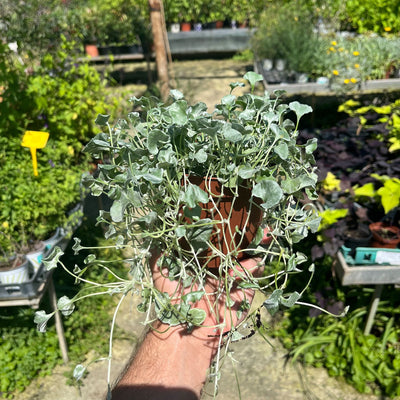
Silver Dichondra, pot diameter 12 cm (perennial for the garden)
14.00 ₪
📋 Quick Summary - Everything you need to know at a glance
Full sun to partial shade
For the silverest color - full sun, 4-6 hours or more
Low to moderate
Allow soil to dry out between waterings
Very easy!
Virtually no pests or diseases
Trailing perennial
Frost sensitive, not a succulent
5-15 cm height
Trails/spills up to about 150-180 cm
🌱 Getting to know the plant
Names and Identification
- Hebrew name: Silvery Dichondra ('Silver Falls' variety)
- Scientific name: Dichondra argentea 'Silver Falls'
- English: Silver Falls Dichondra / Silver Ponysfoot
- Family: Convolvulaceae
- Type: Creeping and trailing herbaceous perennial, frost sensitive
Origin and Background
Silvery Dichondra originates from Texas and Mexico. The 'Silver Falls' variety is the most common in ornamental gardening due to the striking metallic-silver color of the leaves and its ability to create a long, continuous silver-green "waterfall" from a pot, planter, or wall. Globally, it is considered one of the most popular "spiller" plants in container gardening.
Unique Characteristics
- ✨ Metallic-silver leaves: Small fan/kidney-shaped leaves, soft to the touch, in a platinum-silver shade that glimmers in the sun
- 💦 Heat and drought tolerance: Once established, it manages very well with heavy heat and low watering - suitable for sun-drenched balconies in Israel
- 🌊 Dramatic "waterfall" effect: Long stems that trail downward from the pot and continue to grow throughout the season
- 🐝 Almost pest-free: According to academic agricultural extension bodies in the US, the plant has no significant pests or diseases
- ✂️ Self-branching: Splits and thickens without the need for pinching
⚠️ Don't be confused: Silver vs. Green
In the Dichondra genus, there are also green species (like D. repens / D. micrantha) used as low-maintenance lawn substitutes, which love shade and humidity. Silvery Dichondra 'Silver Falls' is an entirely different type in terms of use: it is not intended for walking, loves full sun, and is grown in hanging pots and planters rather than as grass. If you have seen a green "Dichondra" spreading on the ground like grass - that is not the same plant in this guide.
💚 Why choose Silvery Dichondra
Striking and spectacular in any garden or balcony
The more sun - the richer the silver color
Drought-tolerant once established
No pests, no necessary pruning, no heavy fertilizing
Hanging planter, tall planter, wall, ground cover
🌤️ Detailed growing conditions
☀️ Light
- Full sun to partial shade - the plant adapts to a wide range of light
- For the richest metallic-silver color and densest growth: full sun, at least 4-6 hours a day
- In partial shade, the plant will continue to grow but will be sparser and leaves will be smaller
- Excellent for Israeli balconies facing south/west that receive strong sun most of the day
💧 Watering
After the establishment period (a few weeks from planting), the plant becomes drought-tolerant. The main rule: it is better to water too little than too much - wet and waterlogged soil harms it far more than temporary dryness.
More regular watering due to the heat, but only after the top of the soil is dry
Reduce significantly; wet and cold soil increases the risk of root rot
How to know it needs watering: Stick a finger about 1-2 cm into the soil - if it's dry, it's time to water. Pots dry out faster than a garden bed.
🌡️ Temperature
The plant loves heat and handles the hot Israeli summer very well, but it is not frost-resistant - it is adapted to warm climate varieties and functions as a perennial only in areas without significant frost. In the coastal plain and central region, it will usually hold up through most of the winter; in mountainous regions (Jerusalem, Golan Heights) and especially cold nights, it may be damaged by frost and require protection, covering, or treatment as an annual replaced in the spring.
🌍 Soil
- Well-drained soil - this is the most critical condition for this plant
- Prefer sandy-loose soil over heavy soil that retains water
- In a pot: light growing mix with good drainage and drainage holes at the bottom
- Not sensitive to low humidity - manages well with the dry air typical of Israel in summer
🌿 Fertilization
Light, balanced fertilization during the active growing season can support density and color, but the plant is not demanding and is content even in relatively poor garden soil
Do not fertilize - the plant is in a resting period and does not need extra food
No need for heavy or frequent fertilization - this is one of the advantages that makes the Silvery Dichondra such an easy-care plant.
✂️ Pruning and Maintenance
The plant branches and thickens on its own without the need for pinching tips. However, light pruning encourages denser and more "bushy" growth and faster coverage of the planter. It is recommended to:
- ✂️ Prune tips occasionally to shape and encourage thickening
- 🍂 Remove dry or frost-damaged stems at the end of winter to clear space for new growth
- 📏 If stems have become too long - moderate trimming restores them to a tidy appearance in a short time
🌱 Propagation
The easiest and fastest way to propagate Silvery Dichondra is stem cuttings - the plant roots relatively quickly:
- Choose a healthy stem about 10-15 cm long from the end of the plant
- Cut below a leaf node using a sharp, clean tool
- Remove the lower leaves so only the top part remains above the soil
- Plant in well-drained, slightly moist soil (or in water until rooting) and place in a bright location but not in strong direct sun
- Keep gently moist until rooted, then continue with regular care
Another option (less common at home) is sowing: early indoor sowing, about 12 weeks before the last frost, at a warm germination temperature (around 24°C), with germination within 1-2 weeks.
🔧 Common problems and solutions
🍂 Yellow leaves or rotten stems
Reason: Overwatering or poor drainage.
Solution: Reduce watering, ensure there are drainage holes, and let the soil dry out between waterings.
🌥️ Sparse growth and faded color
Reason: Lack of sunlight.
Solution: Move to a location with more direct sun - this is also the key to the rich silver color.
🥀 Wilting during the hottest midday hours
Reason: Extreme and direct heat during a heatwave.
Solution: The plant usually recovers by evening; if it repeats, you can water early in the morning and provide light shading during the harshest hours.
❄️ Damage to stem tips in winter
Reason: Frost or unusual cold, especially in mountainous areas.
Solution: Prune the damaged parts in spring - the plant usually renews from the base.
🐛 Pests
According to two academic agricultural extension bodies in the US (North Carolina State University and University of Wisconsin), Silvery Dichondra has no known significant pests or diseases - it is one of the "cleanest" plants from problems in the garden.
🎨 Ideas for use in the garden and home
- 🪴 Hanging planter: The classic choice - silver stems spill like a waterfall
- 🏺 Tall planter or pillar: Creates a dramatic look as the plant spills from top to bottom
- 🧱 Garden wall or stone steps: Climbs and spills between gaps and steps
- 🌿 Spot ground cover: Among green plants - the silver creates a beautiful contrast
- 🎨 Combination in a mixed pot: A perfect "spiller" alongside upright and green plants - its silver color stands out next to almost any flower color
❓ Frequently Asked Questions
The more, the better for the color. The plant adapts to partial shade but thrives in full sun (4-6+ hours a day) - this is also the condition that brings out the richest metallic-silver color.
After the plant is established, water only when the top of the soil is dry. In the hot summer, it needs more frequent watering, but it is always better to miss one watering than to keep the roots too wet.
The most common reason is overwatering or poor drainage. Reduce watering, ensure there are drainage holes in the planter, and let the soil dry out between waterings.
Not particularly - it is a frost-sensitive plant. In coastal and central areas, it usually survives the winter fine, but in mountainous areas and with strong nighttime cold (like Jerusalem or the Golan), it may be damaged by frost and require protection or treatment as a seasonal plant.
No. It is the same botanical genus (Dichondra) but a completely different species and usage - the silver one grows as a trailer in pots and loves sun, while the green species are used as a low-lying lawn substitute that spreads on the ground and prefers more shade.
📊 Summary Table
| Category | Details |
|---|---|
| ☀️ Light | Full sun to partial shade; full sun (4-6 hours+) for richest color |
| 💧 Watering | Low-moderate; let dry between waterings; drought-tolerant after establishment |
| 🌡️ Temperature | Loves heat; not frost-resistant - be careful in mountain regions during winter |
| 💦 Humidity | Not sensitive - manages well with dry air |
| 🌍 Soil | Well-drained, sandy-loose soil preferred |
| 🌿 Fertilization | Not demanding; light fertilization in spring-summer only, none in winter |
| 📏 Size | Height 5-15 cm; trails/spills up to about 150-180 cm |
| 📊 Difficulty | Very easy - almost no pests or diseases |
| ✨ Special | Metallic silver leaves; perfect "spiller" for a hanging basket or wall |
🛒 Shop at Deco Garden
🌿 Deco Garden - A Love for Plants
Do you have a question about Silver Dichondra or any other plant? The Deco Garden team is here for you - we'd be happy to help you create the perfect silver waterfall for your balcony or garden.
© 2026 Deco Garden - All rights reserved
This guide was written by the Deco Garden expert team
🛒 המוצרים מהמדריך
הצמחים והמוצרים שהמדריך מדבר עליהם — לחיצה על כרטיס מעבירה לעמוד המוצר.