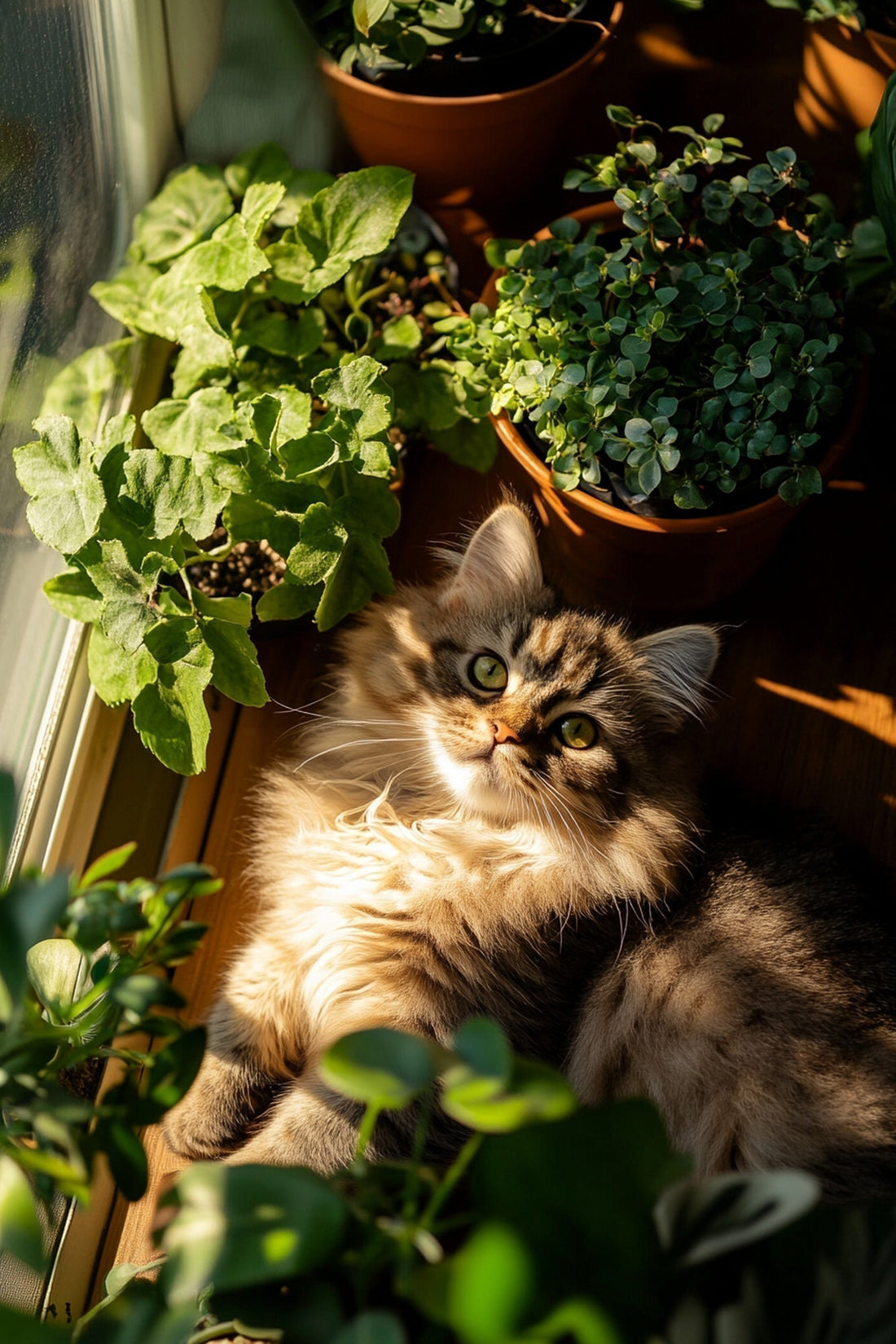
צמחים בטוחים לחתולים - איך לשמור על בית ירוק ובטוח

Plants Safe for Cats - How to Keep a Green and Safe Home

Cats are naturally curious – they love to explore, sniff, and sometimes even chew on leaves. If you have a cat at home, you’ve probably wondered: “What plants can I plant without worrying about their health?”
The good news: There are a variety of beautiful, green, and cat-safe house and garden plants that not only add life and design, but also give you peace of mind.

In this guide, we have compiled for you the plants that you will find in our garden - beautiful, green, add life to the home, and most importantly - non-toxic to cats.

The safest plants you will find with us according to the ASPCA

Yerka (Chlorophytum comosum) – “Spider Plant”

A light and lush plant that is suitable for high shelves or hanging planters. Provides powerful greenery in the home – and the cat can safely roam around it.

Calathea insignis

A colorful leafy plant with special patterns that adds a tropical atmosphere to any living room. It's not called the "prayer plant" for nothing – in the evening its leaves close in an impressive manner.

Peperomia

Compact, delicate, and comes in a variety of shapes and leaves. Suitable even for those who don't have much space at home, and it's completely safe for cats.

Hypoestes (Polka Dot)

A leafy plant dotted with vibrant colors of green, pink, or red. Brings joy and uniqueness to the space – without worrying about the cat.

Areca palm

A beautiful palm that adds a tropical touch to your living room or office. Relatively durable and adds an impressive green presence. Safe for your pets.

basil

Not just in the kitchen! You can also plant it on a windowsill or in a pot on the balcony. Wonderful scent, useful for cooking – and not dangerous to cats.

rosemary

An extremely hardy herb that adds a Mediterranean scent to your home or balcony. Suitable for both full sun and near your cat.


Plant name Unique appearance Recommended use Safety for cats
Yarka (spider plant) Green leaves drooping Hanging planters, shelves insurance
Calathea insignis Colorful leaves with a pattern Living room, bedroom insurance
Peperomia Compact leaves Small spaces, shelves insurance
Hypoestes Leaves dotted with different colors Colorful corners insurance
Areca palm Tropical and rich look Living room, office insurance
basil Green herb Kitchen, window sill insurance
rosemary A spice shrub with a strong aroma Balcony, outside insurance


Tips for incorporating safe plants into a home with a cat

  • Even when a plant is not poisonous, it is a good idea to keep it away from the cat's favorite place to prevent unnecessary chewing.
  • Combine safe plants with decorative vases and planters - this way the house is both green and decorated.
    Want a rich look? Combine several types together – Yerka goes great with colorful peperomia or hypoestes.
  • Avoid using essential oils and concentrated extracts – they can be dangerous to cats even if the plant itself is safe.

Frequently Asked Questions About Plants Safe for Cats

Is saliva safe for cats?
Yes, the herb is considered one of the most popular houseplants – and it is not toxic to cats.

Is Calathea suitable for a home with a cat?
Absolutely. The calathea is a colorful plant that is safe for cats, and you can place it in the living room or bedroom without worries.

What is special about peperomia?
Peperomia is a small, compact plant, comes in a wide variety of leaves and colors, and is not dangerous to cats.

I want a large and safe plant – what should I get?
Areca palm is an excellent solution: tropical appearance, rich green, and non-toxic to cats.

Can I plant herbs like basil and rosemary if I have a cat?
Yes, both of these plants are non-toxic to cats, so you can enjoy both a great aroma and fresh home cooking.

What is also important to know about “non-toxic” plants?
Plants that are not toxic to cats may still cause mild irritation or vomiting if your cat chews too much. It is always a good idea to monitor and contact your veterinarian if any unusual signs appear.

⚠️ Please note

The information here is general only and should not be considered medical advice/recommendation. Even with non-toxic plants, excessive chewing may cause vomiting or diarrhea. If you are concerned that your cat has swallowed parts of a plant, contact your veterinarian.

For more information, visit the official website of the ASPCA (American Society for the Prevention of Cruelty to Animals), which maintains a database of plants that are poisonous and non-poisonous to pets , located here:

ASPCA – Toxic and Non-Toxic Plants List

In conclusion

Do you want a greener, more stylish and safer home for your cats?
All the plants mentioned here are now available on the website – with fast delivery to your home.
Enter the house plants category, choose your favorites and enjoy a perfect combination of nature, beauty and safety for your pets.

Back to Blog