
- Light: Shade to filtered morning sun. More sun tolerant than regular basil, but still avoid direct midday sun.
- Watering: Regular! Keep soil moist but not wet. As a quick-drying plant - don't wait!
- Temperature: 18-27°C ideal. Sensitive to cold - bring indoors below 10°C
- Humidity: Likes high humidity. Spraying helps on hot days
- Soil: Rich, well-drained, rich in organic matter
- Fertilization: Fertilizer for flowering once every two weeks in spring-summer for maximum flowering.
- Cleaning: No need to remove wilted flowers - cleans itself!
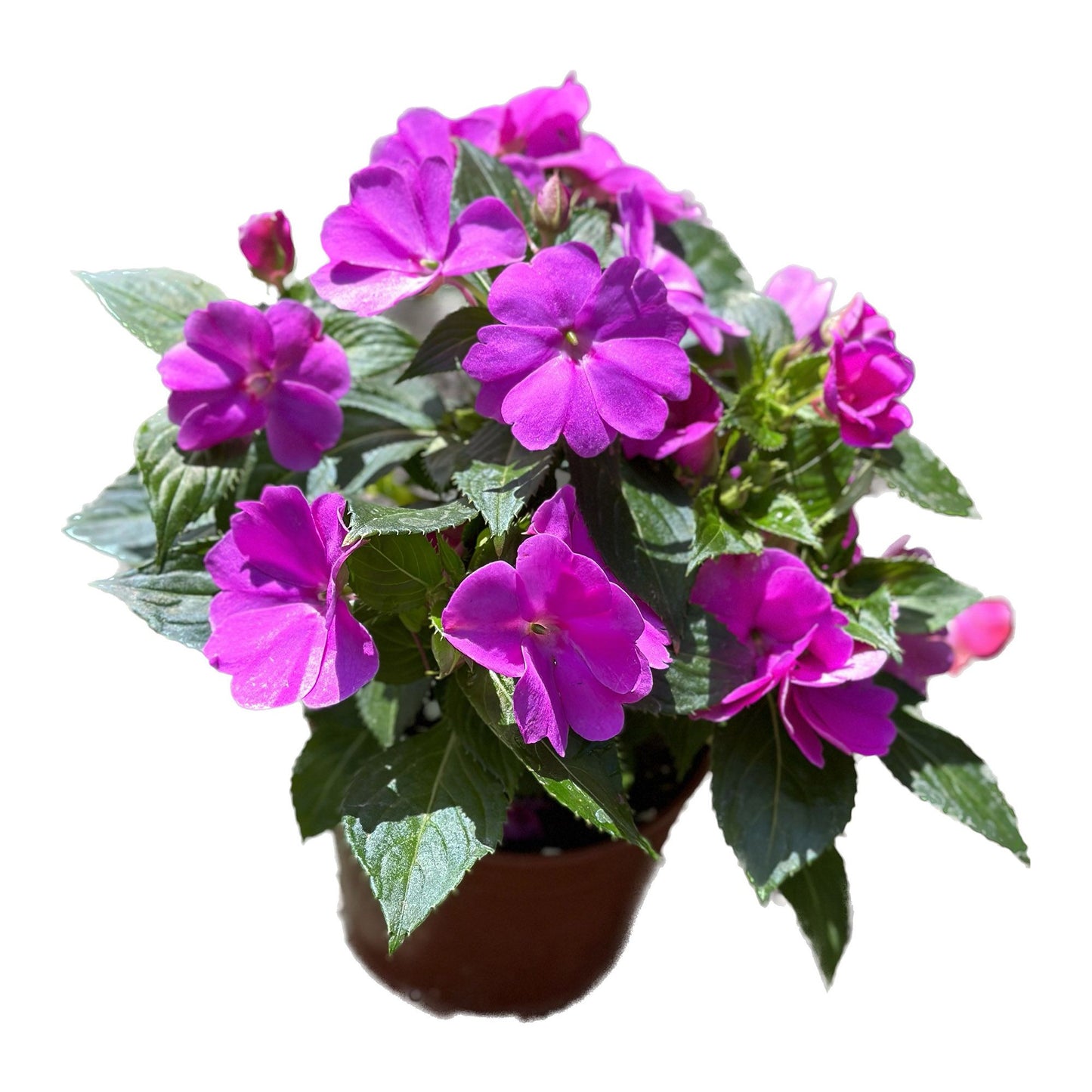
New Guinean basil, pot diameter 14 cm (perennial for the garden)
New Guinean basil, pot diameter 14 cm (perennial for the garden)
Regular price
38.00 ₪
Regular price
Sale price
38.00 ₪
Unit price
per
Including VAT
Shipping is calculated at a fee.
תנאי משלוח
משלוח להרצליה ב2 ימי עסקים, לערים אחרות מלאו את שם העיר למטה, ㅤㅤㅤㅤㅤㅤㅤㅤㅤㅤㅤㅤ התמונות באתר הן להמחשה בלבד
לבדיקת זמינות משלוח וזמן הגעה
כל מה שהצמח החדש שלך צריך 🌱
תיאור מלא של המוצר לחץ לתיאור
Location
Exterior / Interior
Shade to partial sun
lighting
Shade until morning sun
Tolerates more sun than regular perfume
Irrigation
Regular
Loves humidity
Level of care
easy
Continuous flowering
Pets
Safe ✓
Non-toxic to pets
New Guinea basil is the star of shady corners! Large, spectacular flowers in all the colors of the rainbow - pink, red, orange, purple, white and more - that bloom non-stop from spring to fall. A big advantage over regular basil: decorative foliage in shades of dark green to bronze, and better sun resistance! Perfect for pots, planters, hanging baskets and shady corners of the garden.
🌱 Growing conditions
⚠️ Common problems and solutions
- Sudden wilting: lack of water! Water immediately - usually recovers within hours
- Yellow leaves: Overwatering or poor drainage. Reduce watering and check drainage.
- Sparse flowering: lack of light or lack of fertilization. Move to a brighter location and fertilize.
- Leaf burns: Too much direct sun. Move to a more shaded location.
- Elongated and thin plant: lack of light. Move to a brighter location.
- Aphids: Check under the leaves. Treat with potassium soap.
- Red spider mite: Common in dry air. Regular spraying prevents
- Gray mold: high humidity + poor ventilation. Improve ventilation and reduce spraying.
💚 Why choose New Guinean perfume?
- 🌸 Large flowers: Flowers larger than regular basil - up to 6 cm!
- 🌈 Variety of colors: pink, red, orange, purple, white, two-tone and more
- 🍃 Decorative foliage: large, shiny leaves in dark green to bronze
- ☀️ More tolerant of the sun: also does well in morning sun - more so than regular basil.
- 🔄 Continuous flowering: blooms non-stop from spring to fall
- ✨ Self-cleaning: wilted flowers fall off on their own - no need to clean
- 💪 Disease resistance: Resistant to powdery mildew that attacks ordinary sorghum
- 🦋 Butterfly attractant: source of nectar for butterflies and bees
- 🐾 Safe for pets: Non-toxic to dogs and cats!
📋 Plant information
- Scientific name: Impatiens hawkeri
- Family: Balsaminaceae (Basame family)
- Origin: New Guinea and Solomon Islands
- Height: 30-60 cm
- Width: 30-50 cm
- Growth rate: Fast
- Plant type: Perennial (grown as an annual in Israel outdoors)
- Flowering: Spring to fall (almost year-round indoors)
- Other names: New Guinea Impatiens, Busy Lizzie
🎨 Uses in the garden and home
- Flowerpots and planters: perfect for pots on shady balconies
- Hanging Baskets: Spectacular Spilling Blooms!
- Shady borders: to brighten shady corners in the garden
- Combinations: with ferns, begonias, coleus for a colorful flowerbed
- Houseplant: Near a north or east window
- Shaded Entrances: To illuminate a north entrance to a house
💡
Professional tip
The secret to crazy blooms? Fertilizer for blooms once every two weeks - it makes all the difference! Saving a camphor plant: If you have a camphor plant - don't throw it away! Water it well and place it in the shade. In 90% of cases, it will recover within hours. Extending the season: Before the first frost, move pots inside to a bright window - you will continue to enjoy blooms until spring! Advantage over regular camphor: New Guinea camphor is resistant to downy mildew that destroyed most regular camphor plants - a safer choice!